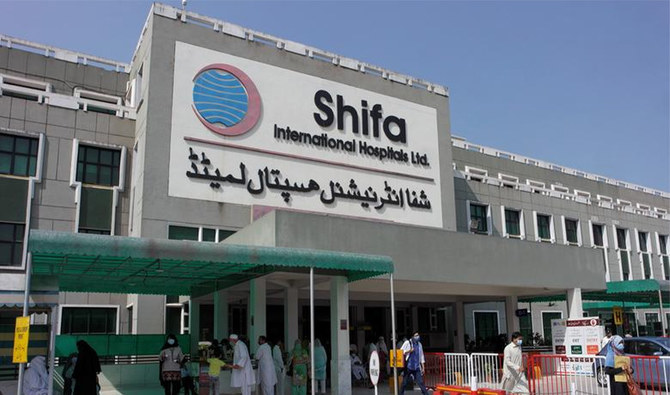

LAHORE: Doctors in green scrubs and sneakers darted in and out of specifically designated rooms at Shifa International Hospital in Islamabad one nippy morning last month, attending to volunteers participating in late-stage clinical trials for a Chinese coronavirus vaccine.
Pakistan launched the trial in September for Ad5-nCoV, a vaccine candidate co-developed by CanSino Biologics and a Chinese military-backed research unit. The tests are being led by Pakistan’s National Institute of Health (NIH) and the Chinese company’s local representative.
This month’s announcement by Pfizer that its experimental COVID-19 vaccine was more than 90% effective based on initial trial results has been hailed as a major victory in the war against a virus that has killed over a million people and battered the world’s economy.
Though scientists, public health officials and investors have welcomed the first successful interim data from a large-scale clinical test as a watershed moment, they also say several vaccines will be necessary to meet massive global needs.
In Pakistan, the government plans to administer the experimental Chinese vaccine to at least 10,000 volunteers, doctors in charge of the program said.
Shifa International, the first of five trial sites, has repurposed a building previously used for COVID-19 testing for the trial. There are two more trial centers in Karachi and two in Lahore.
“There is a criterion that each volunteer has to fulfil,” Dr. Ejaz Khan, the chairman of infection control at Shifa Hospital, told Arab News.
Volunteers can arrive by appointment, or simply walk in, but must be over 18 years of age, willing to participate, have no major diseases and not have been infected with the coronavirus, Khan, who is heading the trials, said. Pregnant women cannot take part in the exercise.
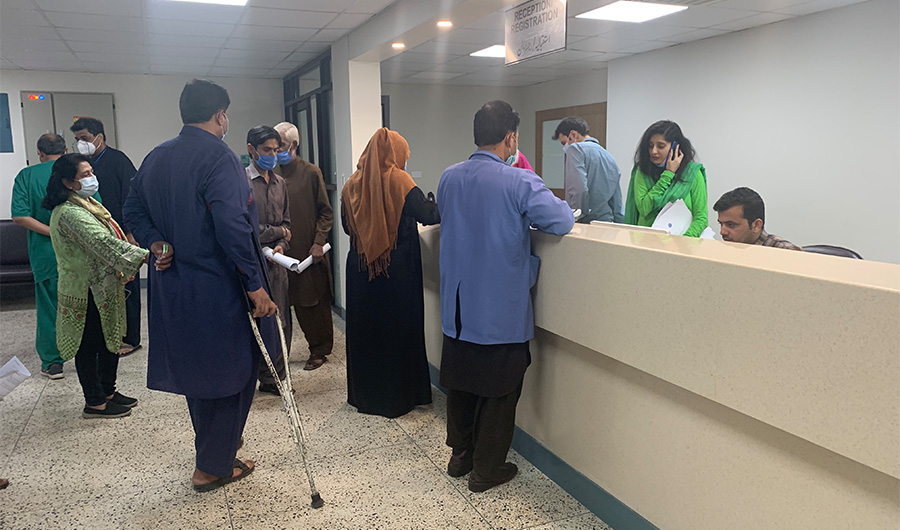
Volunteers register for Chinese coronavirus vaccine trials at Shifa International Hospital in Islamabad, Pakistan, on October 27, 2020. (AN photo by Benazir Shah)
“Also, he or she must be able to participate for more than one year,” Khan added.
Doctors administering the trials said they had to ensure that each volunteer was first counselled on what to expect from the process, asked to sign a document of consent and have his or her basic health examined. Next, blood samples were taken, and then a colorless liquid — the vaccine — injected in the upper arm.
Since September 22, Khan said 4,020 people had taken part in the trial across the country, including at Shifa Hospital where doctors work from 9a.m. to 5p.m. every day to register volunteers’ data and store their samples.
During the year’s course, the volunteers will be monitored through weekly messages and monthly phone calls.
Each participant receives a one-time travel and food allowance of Rs3,000 on the first visit and Rs5,000 on the second, a year later, when he or she must provide a second blood sample.

Dr. Ejaz Khan, the chairman of infection control at Shifa International Hospital in Islamabad, Pakistan, talks to Arab News at his office on October 27, 2020. (AN photo by Benazir Shah)
Last month, sisters Urmila, 18, and Faiza, 20, who had arrived to volunteer for the trials, said they had come to know about the process from a neighbor, who told them that each candidate would receive a travel allowance.
“Yes that [the money] is one reason,” said Urmila when asked why she was volunteering, holding her national identity card, a pen and a questionnaire in her hands.
The form required basic contact details and a brief health history to be filled out before a candidate could be approved for the trial. “I don’t know what to write,” Urmila said. “I am not literate, you see.”
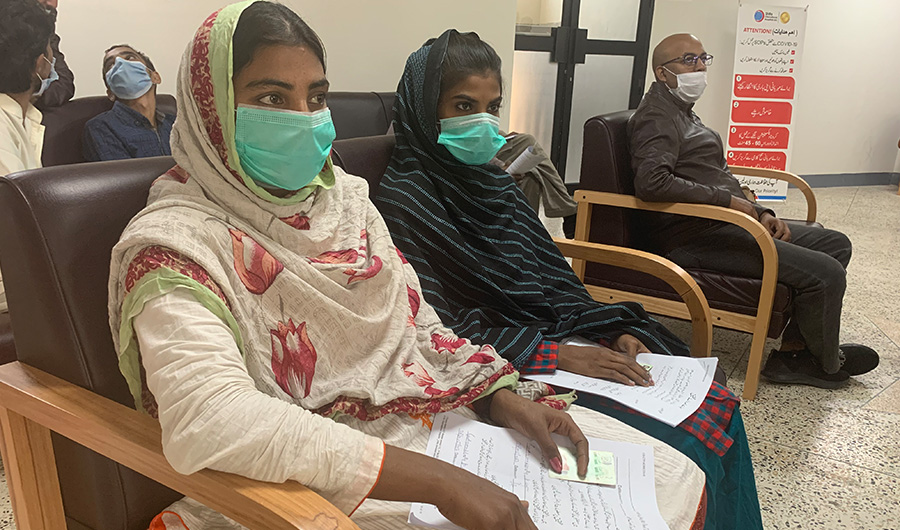
Sisters Urmila and Faiza volunteer for Phase III trials of a Chinese coronavirus vaccine at Shifa International Hospital in Islamabad, Pakistan, on October 27, 2020. (AN photo by Benazir Shah)
Seated behind her was Sumaira Shafiq, a middle-aged housewife who unlike Urmila was still unsure whether she should participate in the trial. “I am observing right now,” she said. “Who knows, I might just slip out before my turn.”
If Shafiq ends up participating in the trial, her blood samples, like those of all participants, will be shipped to Dalhousie University in Canada, which will independently review the data to determine the vaccine’s efficacy.
By early next year, interim results are expected to become available.
“Let’s say three months from now, they [the university] will tell us okay this vaccine is not effective, stop the trials, or the vaccine is effective, let’s move to Phase IV,” Khan said.
Phase IV is when the vaccine will be prepared for manufacturing, marketing and distribution.
Pakistani officials have said once proven, they expect Pakistan will be provided with several million doses of the vaccine on a priority basis by CanSinoBio.
The Chinese vaccine, one of the nine developed worldwide that are considered safe, will be tested on 40,000 people in several countries.
So far only 10 percent of the participants have developed adverse reactions to the vaccine, Khan said: “These include pain in the injection area, body ache and fever.”