




RIYADH/MAKKAH: Eid Al-Fitr, which marks the end of Ramadan and is one of the most significant occasions in the Islamic calendar, is being celebrated across Saudi Arabia.
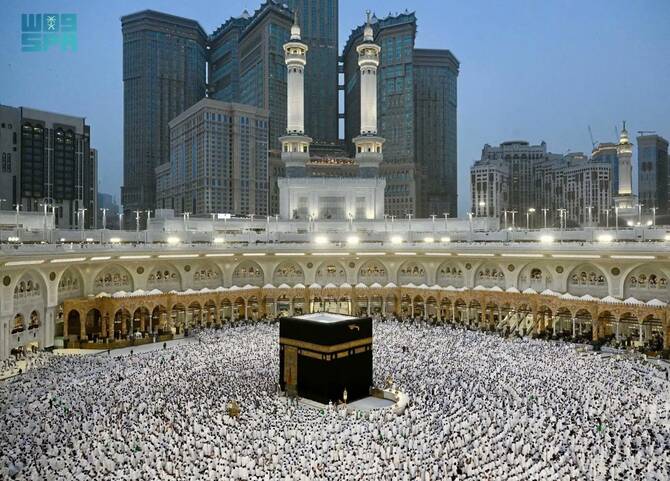
Islam’s two holiest cities were at the heart of global prayers and festivities as Eid began with Friday’s early-morning prayers, 5 minutes after sunrise in accordance with the Umm Al-Qura calendar.
Pre-dawn worshippers filled designated prayer halls and mosques in cities, governorates and villages across the Kingdom and Crown Prince Mohammed bin Salman prayed at the Grand Mosque in Makkah, joining a massive congregation.
Thousands of Muslims filled the Grand Mosque and the Prophet’s Mosque in Madinah in an atmosphere of faith, joy, security and tranquility.
In his sermon at the Grand Mosque, Imam Sheikh Osama Khayyat described the occasion as a divine reward for worship, emphasizing that the true essence of Eid lay in heartfelt purity, forgiveness, strengthening family ties and supporting those in need through Zakat Al-Fitr donations.
In his sermon at the Prophet’s Mosque, Imam Sheikh Salah Al-Budair called for patience, forgiveness and the rejection of conflict as essential Islamic virtues.
Minister of Defense Prince Khalid bin Salman prayed at the ministry’s headquarters in Riyadh alongside military and civilian personnel.
Following the prayer, the minister held a video conference with senior ministry leaders to convey the greetings of King Salman and the crown prince, praising the armed forces’ role in preserving national stability and defending the homeland against Iranian aggression.
Minister of Interior Prince Abdulaziz bin Saud also met with senior ministry and security officials to praise the country’s security forces for maintaining national stability.
Umrah pilgrims from every corner of the world gathered in Makkah, finding themselves swept into a deeply spiritual experience.
“Eid means something different when you are spending it in Makkah,” said Khalid Al-Malki, head of the city's Umrah Center.
“The goal is a complete experience. Not just worship, but real engagement with the customs and traditions that define this city, its generosity, and social fabric.”
That social fabric is most visible in the old quarters. Fahd Al-Harbi, mayor of the Dhakhir district, said Eid traditions in these historic pockets of the city have remained faithful to tradition.
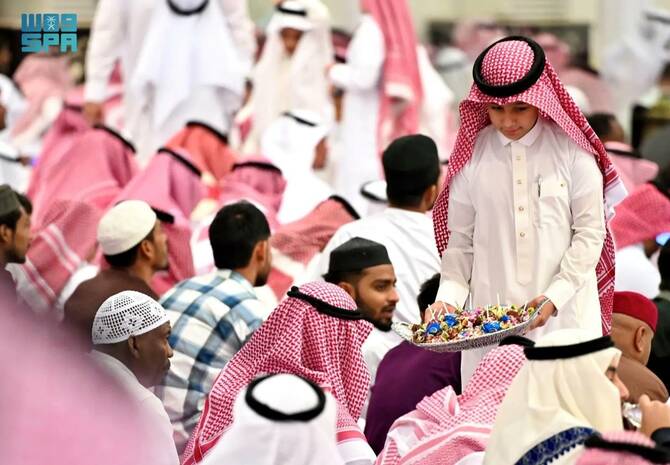
After the morning prayer, residents flood the streets to exchange greetings, lay out platters of traditional food, and invite any pilgrim or visitor within earshot to join.
“Many residents make a point of inviting pilgrims to join them in celebrating,” Al-Harbi said.
“Whether it is offering Saudi coffee and sweets or introducing them to ancient Makkan customs, these gestures reflect the spirit of a community that has been welcoming pilgrims for hundreds of years.”
Fatima Al-Ahmari, who manages a property near the Grand Mosque, described an effort to bring Eid indoors — traditional dishes like dubiyazah and Makkan halawah served at tables, cultural corners featuring local heritage, and social events that drew pilgrims of dozens of nationalities into the same room.
“It gives them a window into Makkah beyond the mosque,” Al-Ahmari said.
For Mohammed Fadl, a Tunisian pilgrim marking his first Eid in the holy city, that window opened wider than he expected.
“I was not prepared for how warm people would be,” he said. “Strangers greeting you, families pulling you in. Even inside the hotel, it felt like home.”
What struck him most, Fadl said, was the ease with which people connected despite speaking different languages and coming from different worlds: “That closeness, you cannot manufacture it. It stays with you.”
Riyadh resident Sara Aiman spoke to Arab News about her Eid celebrations, saying the holiday “is a time of vibrant tradition and heartwarming connection.”
“As worshippers rise between Fajr and Eid prayers, a special atmosphere fills the air, where warm greetings are exchanged, homes are adorned with festive displays, children gleam in new clothing and Eid gifts are lovingly prepared for awaiting guests,” she said.
The tradition of giving Eidiyah (Eid gifts) remains one of the most prominent social customs associated with Eid Al-Fitr, reflecting a long-standing heritage of joy and family bonding. Typically consisting of small amounts of money or symbolic presents, these are eagerly anticipated by children after the Eid prayer and during festive visits.
“One of the most beloved Eid Al-Fitr customs is exchanging Eid gifts, or Eidiyah, as a sincere way to express gratitude and love to family and friends,” said Thamr Al-Otaibi, a Riyadh resident.
Comprehensive civil and security arrangements to ensure the festivities can be enjoyed safely.
The Saudi capital also features special decorations, including banners bearing “Eid Saeed” on the city’s main roads, while streets in major cities including Jeddah and Dammam have been decorated with colorful lights.


