

Saudi Arabia’s virus recovery rate inches higher as numbers settle

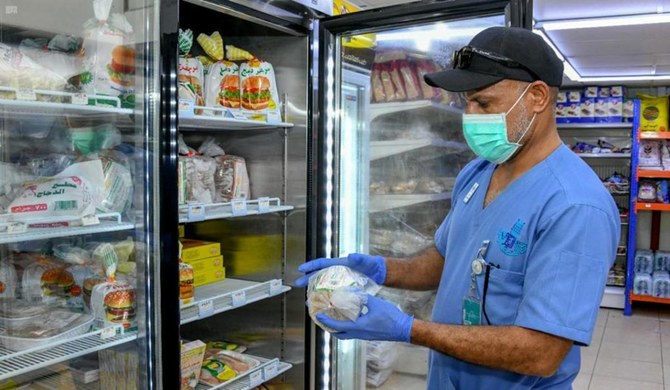
Saudi Arabia announced 19 deaths from COVID-19 and 407 new infections on Saturday. (File/SPA)
Short Url
Updated 07 November 2020
Follow

Saudi Arabia’s virus recovery rate inches higher as numbers settle

  • The total number of recoveries in the Kingdom has increased to 336,966
  • A total of 5,525 people have succumbed to the virus in the Kingdom so far

JEDDAH: Saudi Arabia reported 407 new confirmed cases of COVID-19 on Saturday, with fewer than 10 cities across the Kingdom recording cases in the double digits.
As of Saturday, there have been 350,229 total confirmed cases in the Kingdom since the start of the pandemic. Meanwhile, 19 new deaths were reported, raising total death numbers during the pandemic to 5,525.
There are 7,738 active cases in the Kingdom, 758 of which are in critical care. The total number of recoveries in the Kingdom rose to 336,966 after 433 new recoveries were recorded. The Kingdom’s infection rate is stable following the public’s adherence to social distancing and precautionary measures.
Over the past day, 53,726 new polymerase chain reaction tests were completed, raising the total number of tests conducted in the Kingdom to 8.44 million.
The Ministry of Health published a set of health information guidelines for coronavirus patients who are in home quarantine.

INNUMBERS

350,229 Total cases

336,966 Recoveries

For those suffering from shortage of breath, it is advised to remain calm and sit in an upright position while relaxing the shoulders, inhaling from the nose and exhaling from the mouth. For those with a cough, it is recommended to lay on your side or sit upright and avoid laying back. As for those suffering from a fever, the ministry encourages bed rest, drinking lots of fluids to avoid dehydration and taking fever medicine such as paracetamol.
The ministry is calling on anyone who suffers severe symptoms to contact its 937 hotline or head to the nearest emergency room.


Economic growth and resilience at heart of 2nd AlUla Emerging Market Economies Conference

Updated 03 February 2026
Follow

Economic growth and resilience at heart of 2nd AlUla Emerging Market Economies Conference

  • Event on Feb. 8 and 9 will bring together ministers, governors of central banks, policymakers, economic experts and international financial institutions
  • Emerging-market economies a ‘pivotal element’ in global economic system due to effect they have on growth and stability, says Saudi Finance Minister Mohammed Al-Jadaan

RIYADH: The second annual AlUla Conference for Emerging Market Economies, which Saudi Arabia will host next week, offers a platform to exchange views on global developments and discuss policies and reforms that support inclusive growth and strengthen economic resilience, the Kingdom’s finance minister said.

The event on Feb. 8 and 9 will bring together finance ministers, governors of central banks and policymakers, alongside economic experts and representatives of international financial institutions.

Organized by the Saudi Ministry of Finance in partnership with the International Monetary Fund, it takes place as emerging-market economies face mounting challenges amid rapid global economic change.

Finance Minister Mohammed Al-Jadaan said the decision to host the conference reflects Saudi Arabia’s ongoing commitment to efforts that support global financial and economic stability, and highlights the growing influence of emerging economies on worldwide growth.

Emerging-market economies represent a “pivotal element” in the global economic system due to the direct impact they have on economic growth and stability, he added.

“The AlUla Conference for Emerging Market Economies provides a unique platform for exchanging views on global economic developments, and discussing policies and reforms that will support inclusive growth and enhance economic resilience, in light of broader international cooperation that contributes to confronting common challenges,” Al-Jadaan said.

Kristalina Georgieva, managing director of the IMF, said the event would help emerging economies deal with growing uncertainty driven by technological change, demographic shifts and geopolitical tensions.

“The AlUla conference provides a vital platform for emerging economies to discuss how they can navigate the risks and embrace the opportunities ahead,” she said.

“In these times of sweeping transformations in the global economy, policymakers face a more challenging and uncertain environment. Countries should work together to strengthen resilience through sound macroeconomic and financial policies.”