Sikh body remains in control of temple in Kartarpur, Pakistan tells India

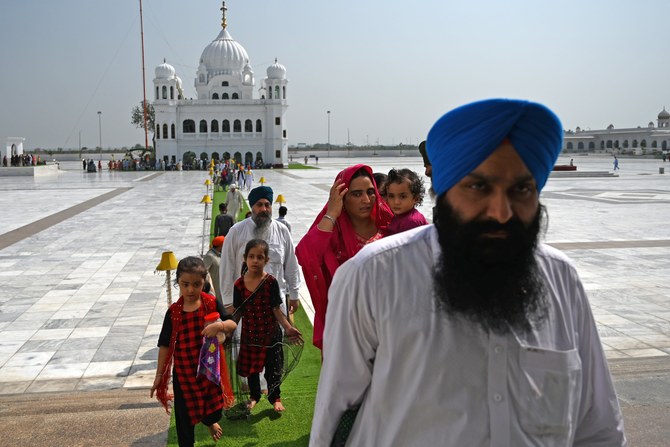
Sikh pilgrims arrive to take part in a religious ritual on the occasion of the 481th death anniversary of Baba Guru Nanak Dev Ji, the founder of Sikhism, at the Gurdwara Darbar Sahib in Kartarpur near the India-Pakistan border on September 22, 2020. (AFP)
Short Url
Updated 06 November 2020
Follow

Sikh body remains in control of temple in Kartarpur, Pakistan tells India

  • Pakistan Sikh Gurdwara Prabandhak Committee remains responsible for arrangements related to Sikh rituals in the country
  • Gurdwara Darbar Sahib in Kartarpur is of particular importance to Sikhism as it was built in tribute to its founder, Guru Nanak

ISLAMABAD: Pakistan's foreign office on Thursday rejected Indian reports that the Pakistani Sikh community had been deprived of control over the Kartarpur gurdwara, one of the holiest shrines of Sikhism.
India's foreign ministry on Thursday said that it had received complaints from members of the Sikh community that Pakistan had transferred control of the gurdwara from a Sikh body to a separate trust, which was against "the religious sentiments of the Sikh community at large."
In response, the Pakistani foreign office issued a statement saying that "any insinuations regarding 'transferring' the affairs of the Gurdwara Darbar Sahib Kartarpur" from the Pakistan Sikh Gurdwara Prabandhak Committee (PSGPC) to a unit of the Evacuee Trust Property Board (ETPB) are not only contrary to the facts but also aimed at creating religious disharmony."
ETPB is a government body that administers evacuee properties, including religious trusts, left behind by Hindus and Sikhs who migrated to India in 1947 when the two countries gained independence from Britain.
"The PSGPC remains responsible for carrying out rituals in Gurdwara Sahiban, including Kartarpur as per Sikh Rehat Maryada. The Project Management Unit (PMU) under the Evacuee Trust Property Board (ETPB) has simply been created to facilitate the PSGPC in this regard," the foreign office said.
It added: "The Sikh community from all over the world remains greatly appreciative of the efforts made by Pakistan to complete the Kartarpur Sahib Corridor Project."
In November last year, Pakistan opened a visa-free passage, the Kartarpur corridor, connecting Gurdwara Darbar Sahib to the border with India and allowing Indian Sikh pilgrims to visit the site.
The opening of the corridor on Nov. 9, 2019 marked the first time Sikh pilgrims from India could enter Pakistan without a visa since 1947.
Gurdwara Darbar Sahib in Kartarpur is of particular importance to the Sikh community, as it was built in tribute to Guru Nanak, the founder of the Sikh religion who established the town of Kartarpur in 1515.


Pakistan steps up EU trade engagement as India deal raises export fears

Updated 6 sec ago
Follow

Pakistan steps up EU trade engagement as India deal raises export fears

  • Deputy PM chairs inter-ministerial meeting, calls GSP+ “crucial” for growth
  • Move follows India–EU trade pact that industry warns could hit exports, jobs

ISLAMABAD: Pakistan’s Deputy Prime Minister and Foreign Minister Mohammad Ishaq Dar on Friday chaired a high-level inter-ministerial meeting to review and strengthen trade and economic relations with the European Union, as Islamabad scrambles to safeguard market access following India’s new trade deal with the bloc.

The meeting is part of a broader diplomatic and policy push this week after India and the EU confirmed a free trade agreement granting Indian exporters sweeping tariff-free access to Europe — a development Pakistani exporters and analysts warn could erode Pakistan’s competitiveness, particularly in textiles, its largest export sector.

The EU is Pakistan’s second-largest export market, accounting for about $9 billion in annual shipments, mostly textiles and apparel. Industry leaders have warned that India’s tariff-free access could undercut Pakistan’s long-standing advantage under the EU’s Generalized Scheme of Preferences Plus (GSP+), which allows duty-free access in return for commitments on labor rights, human rights and governance.

At Friday’s meeting, Dar emphasized the centrality of GSP+ to Pakistan’s trade strategy with Europe.

“He emphasized that GSP Plus remains a crucial framework for mutually beneficial trade and underlined the need to maximize its potential for Pakistan’s economic growth,” the Foreign Office said in a statement.

Dar also stressed the importance of enhancing trade cooperation with the EU and exploring new avenues for economic engagement, as Pakistan assesses how to respond to shifting trade dynamics in Europe.

The inter-ministerial huddle follows a series of rapid consultations this week, including a meeting between Prime Minister Shehbaz Sharif and the EU’s ambassador to Pakistan, as well as briefings by trade bodies to Finance Minister Muhammad Aurangzeb on the potential impact of the India–EU agreement. 

Exporters have warned that unless Pakistan lowers production costs, particularly energy tariffs, and secures continued preferential access, the country could face declining market share in Europe and job losses across its labor-intensive textile sector.

Pakistan’s Foreign Office has said Islamabad is aware of the India–EU agreement and continues to view its trade relationship with the EU as mutually beneficial, but officials acknowledge that the new deal has intensified pressure to defend Pakistan’s position within the bloc.