

Pakistani pilgrims feeling ‘blessed’ as they arrive in Makkah for Umrah

1 / 6
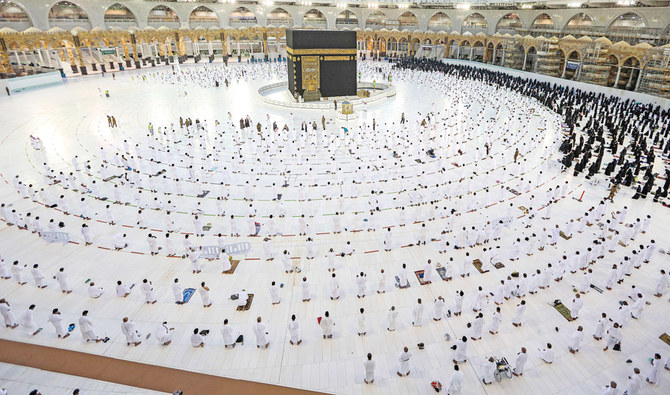
Umrah pilgrims, keeping a safe social distance, offer prayers in the Grand Mosque in Makkah. Saudi Arabia is gradually lifting restrictions imposed following the outbreak of the coronavirus pandemic. (Reuters)
2 / 6
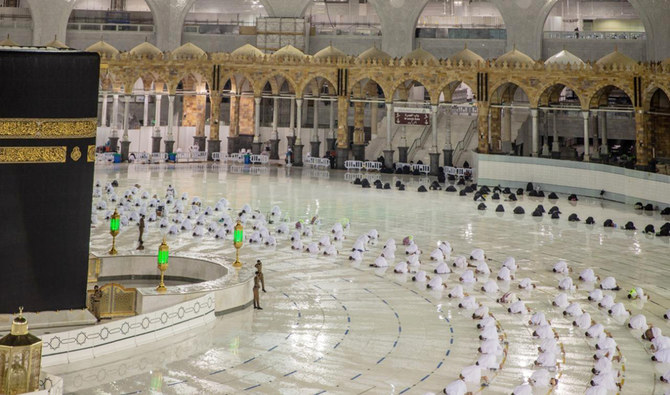
Umrah pilgrims perform prayers in the Grand Mosque amid heavy rain on and social distancing on Monday. (SPA)
3 / 6
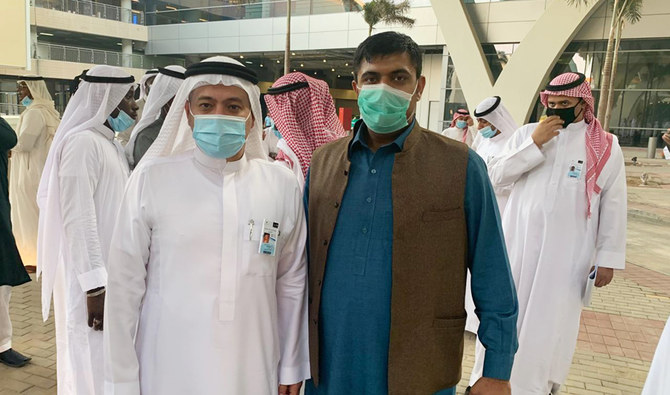
Pakistani pilgrim Umair Mushtaq pose with a Saudi official at the Jeddah airport on his arrival from Pakistan.
4 / 6
A Pakistani pilgrim transported to his hotel where he will undergo a three-day mandatory quarantine before he is allowed to perform Umrah. (Supplied)
5 / 6
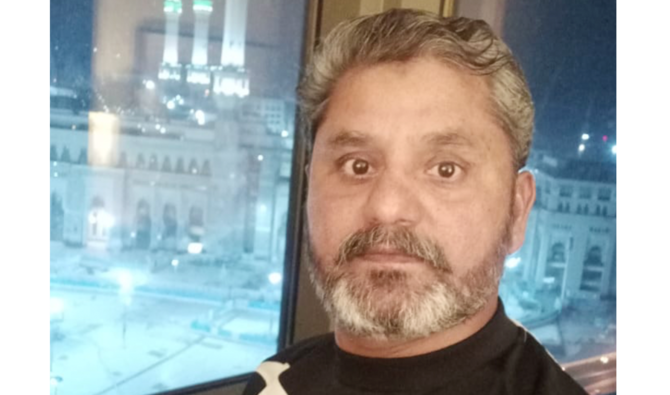
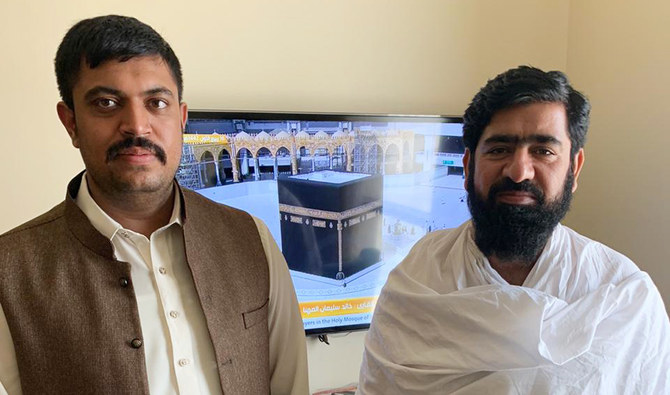
A view of the Grand Mosque for the hotel room of a Pakistani pilgrim Musadaq Malik. (Photo courtesy: Umair Mushtaq)
6 / 6
Pakistani pilgrims Umair Mushtaq and Hafiz Talha Usman arrive at a hotel in Makkah on Monday. (Photo courtesy: Umair Mushtaq)
Short Url
Updated 03 November 2020
Follow

Pakistani pilgrims feeling ‘blessed’ as they arrive in Makkah for Umrah

  • Saudi authorities praised for making foolproof arrangements to keep virus at bay

ISLAMABAD: Pakistani pilgrims arriving in Saudi Arabia this week for Umrah said they felt blessed to be among the few hundred foreigners performing the holy ritual, following a loosening of travel bans to check the spread of coronavirus.

Saudi Arabia closed its borders in February to foreign Umrah pilgrims and, in March, stopped its own citizens and residents from taking part in order to contain the spread of the virus. In July, the Kingdom allowed a limited number of domestic pilgrims to perform Hajj.

Umrah can be performed at any time of the year in contrast to Hajj, which has specific dates according to the Islamic lunar calendar. “I am feeling blessed as I was waiting for this moment for the last seven months,” Pakistani pilgrim Umair Mushtaq, who is leading a group of 38, told Arab News from Makkah.
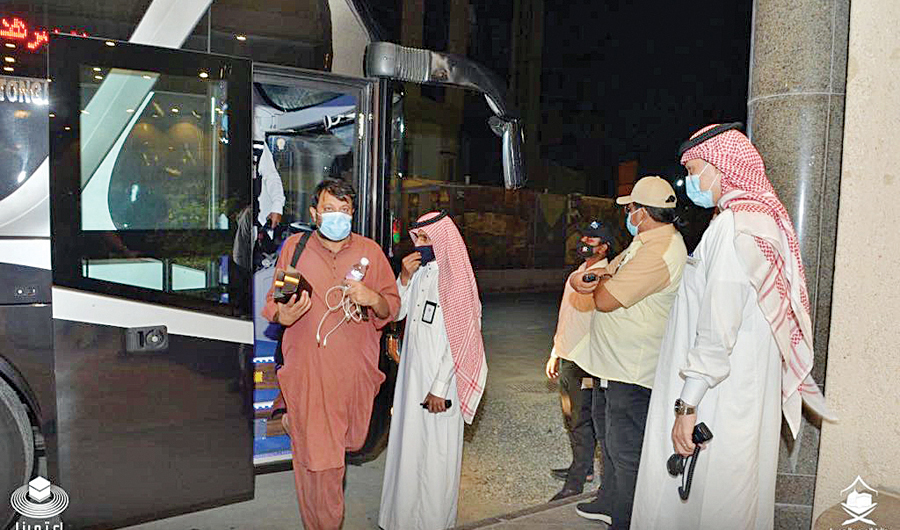
He praised the arrangements ministries had made for pilgrims at Jeddah airport.

Saudi authorities have made arrangements according to WHO instructions.

Musadaq Malik
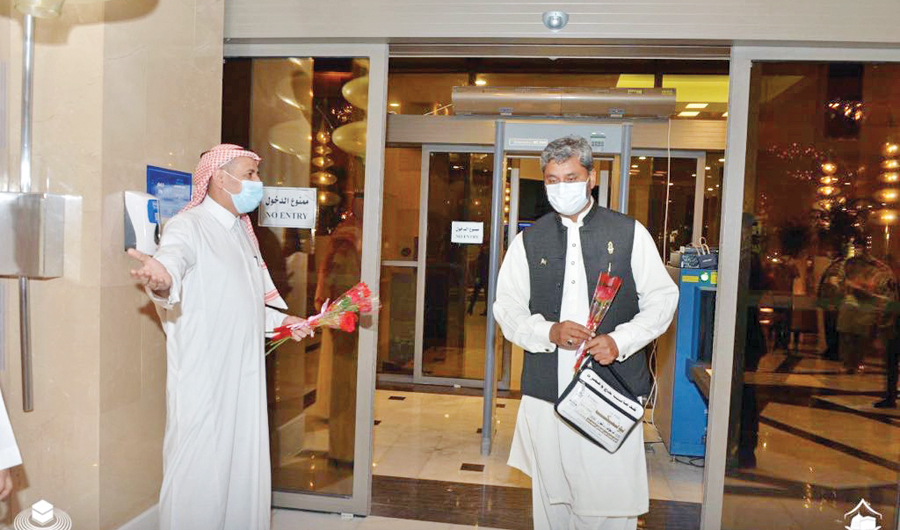


Pakistani pilgrims arrive at hotels to undergo a three-day quarantine before they are allowed to perform Umrah. (Photos/Supplied)

“The Saudi Ministry of Hajj gave us very good protocol. They are providing us food in the (hotel) room for the first three days, which is the mandatory period of quarantine.”

Pilgrims have to take a coronavirus test after three days before they are allowed into the Grand Mosque to perform Umrah.

I am feeling blessed as I was waiting for this moment for the last seven months.

Umair Mushtaq

“I feel out of this world,” Musadaq Malik said after arriving in Makkah on the first flight carrying Pakistani pilgrims. “Only a few hundred people got this chance of performing Umrah out of the total 1.5 billion Muslims in the world. I don’t have words to explain my feelings. I am waiting anxiously for the remaining two days to pass so that we can finally perform Umrah and offer prayers in the Grand Mosque.”

He thanked Saudi authorities for their welcome at Jeddah airport. “They have made arrangements according to WHO (World Health Organization) instructions,” he added.

Sajid Masood, Pakistan’s director of Hajj in Jeddah, said that Saudi Arabia had changed all protocols so that pilgrims could observe coronavirus precautions at airports.

“The arrangements are very impressive and they (Saudis) have given a warm welcome to Pakistani pilgrims at Jeddah airport,” Masood said. “I myself visited the hotel where Pakistani pilgrims are staying and it is completely disinfected.”

He said authorities had also installed thermal gates at various places to check the spread of coronavirus.


Economic growth and resilience at heart of 2nd AlUla Emerging Market Economies Conference

Updated 9 sec ago
Follow

Economic growth and resilience at heart of 2nd AlUla Emerging Market Economies Conference

  • Event on Feb. 8 and 9 will bring together ministers, governors of central banks, policymakers, economic experts and international financial institutions
  • Emerging-market economies a ‘pivotal element’ in global economic system due to effect they have on growth and stability, says Saudi Finance Minister Mohammed Al-Jadaan

RIYADH: The second annual AlUla Conference for Emerging Market Economies, which Saudi Arabia will host next week, offers a platform to exchange views on global developments and discuss policies and reforms that support inclusive growth and strengthen economic resilience, the Kingdom’s finance minister said.

The event on Feb. 8 and 9 will bring together finance ministers, governors of central banks and policymakers, alongside economic experts and representatives of international financial institutions.

Organized by the Saudi Ministry of Finance in partnership with the International Monetary Fund, it takes place as emerging-market economies face mounting challenges amid rapid global economic change.

Finance Minister Mohammed Al-Jadaan said the decision to host the conference reflects Saudi Arabia’s ongoing commitment to efforts that support global financial and economic stability, and highlights the growing influence of emerging economies on worldwide growth.

Emerging-market economies represent a “pivotal element” in the global economic system due to the direct impact they have on economic growth and stability, he added.

“The AlUla Conference for Emerging Market Economies provides a unique platform for exchanging views on global economic developments, and discussing policies and reforms that will support inclusive growth and enhance economic resilience, in light of broader international cooperation that contributes to confronting common challenges,” Al-Jadaan said.

Kristalina Georgieva, managing director of the IMF, said the event would help emerging economies deal with growing uncertainty driven by technological change, demographic shifts and geopolitical tensions.

“The AlUla conference provides a vital platform for emerging economies to discuss how they can navigate the risks and embrace the opportunities ahead,” she said.

“In these times of sweeping transformations in the global economy, policymakers face a more challenging and uncertain environment. Countries should work together to strengthen resilience through sound macroeconomic and financial policies.”