

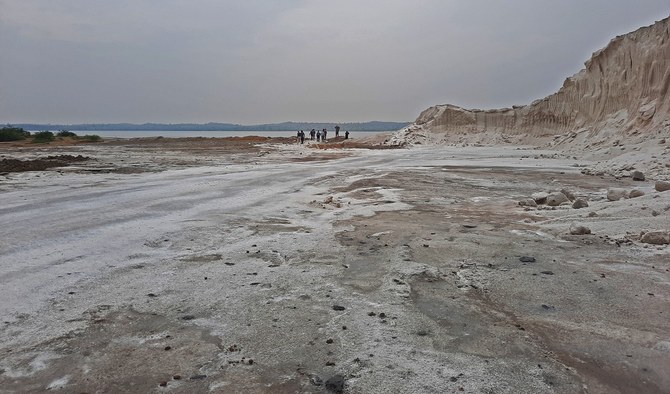

KARACHI: A new salt refinery to be set up in an Industrial zone in southern Pakistan would be the world’s largest refinery in size and make Pakistan the third biggest processor of salt on the planet, officials at the Hub Pak Salt Refinery said.
Presently, the largest salt-making facility globally is near Guerrero Negro, on the west coast of Mexico's Baja California Peninsula. It covers 86,500 acres of land and produces 10 million tons of salt a year, providing nine percent of the world’s salt for industrial use.
Pakistan, which has the world’s second largest global salt deposits, produces only four million tons of the world’s total salt, which is around 300 million tons.
Hub Pak Salt Refinery, a private venture, plans to change this, and is setting up its plant on 150,000 acres of land in the Hub Industrial zone of Balochistan, near Karachi. The facility, officials said, is expected to start production in 2023.
“$350 million is the investment cost of the project,” Ismail Suttar, CEO of Hub Pak Salt Refinery, told Arab News last week, saying the plant would increase Pakistan’s exports from 400,000 tons a year to around 30 million.
The proposed facility will make Pakistan the world’s third largest producer of salt and the second largest exporter, he added, saying the country would be able to export salt worth more than one billion dollars or four percent of its total exports.
The major destinations of Pakistani salt are currently the United States, Europe, UAE, Australia, Japan, South Korea, and African countries where it is used in the textile, leather, chemical sectors.
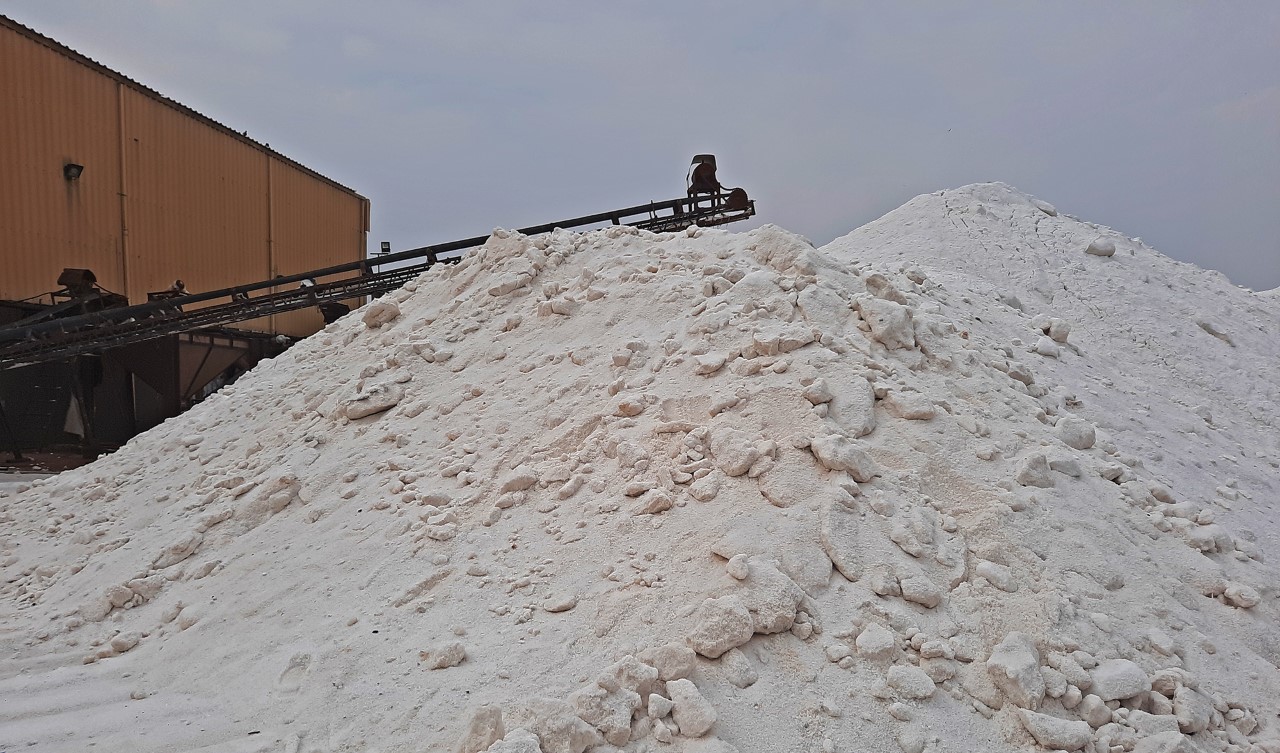
Salt harvested from Mokhai salt lake in Thar, Pakistan, waits to be moved to a nearby processing plant on Oct. 17, 2020. (AN photo by Khurshid Ahmed)
Pakistan has two major sources of salt extraction. The first is the world’s second largest salt mines, the Khewra Salt Mine, located in the Punjab province, and the main source of Himalayan pink salt.
The second source are saline lakes, landlocked bodies of water that have a concentration of salts and other dissolved minerals significantly higher than most lakes.
“There are 170 salts lakes in this part of Pakistan [Sindh province] which are producing industrial grade salts ... more than for our local requirements,” said Suttar, whose company operates two salt lake plants in remote areas of Sindh province, some 300 kilometers from Karachi.
The annual production of the two lakes alone is around half a million ton.
“It is a natural process as the rainwater flows into the lake and it takes around three to six months before it gets ready for the harvest,” said Tariq Mehmood Satti, an operations manager at the Mokhai Salt lake processing plant. “The harvested raw salt is dumped at the side of the lake from where it is moved to the processing plant for refining and packaging.”
During the harvesting season, around 800 locals are employed while 70 others remain employed on the plant through the year, Satti said.
Ismail Suttar, who is also president of the Employers Federation of Pakistan, said the proposed salt refinery in Baluchistan’s Hub industrial zone would provide job opportunities to over 2,000 people after its completion.


