

Mini-Gulf: In Pakistani desert district, one-fourth residents work in the Middle East

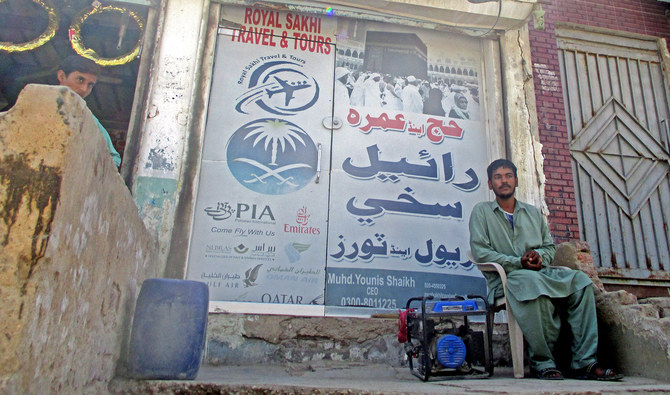
The exterior view of a travel agency located in Johi town in Sindh’s Kachho Desert, Pakistan, on October 6, 2020. (AN photo by Zulfiqar Kunbhar)
Short Url
Updated 17 October 2020
Follow

Mini-Gulf: In Pakistani desert district, one-fourth residents work in the Middle East

  • People from Johi district started moving to Saudi Arabia and other Gulf countries in the 1970s after the Middle East oil job market boomed
  • Every household in the impoverished region has one or two family members living and working in Gulf countries, locals say

JOHI: One-fourth of the population of a remote desert district in southern Pakistan lives and works in Saudi Arabia or the United Arab Emirates, locals said, throwing a lifeline to the barren land and earning it the moniker Pakistan's "Mini-Gulf."
Like other areas surrounding the vast Kachho Desert, Johi in Dadu district too relies on rainwater for agriculture. But rains are rare and long spells of drought have often pushed local communities into hunger. Change, they say, came in the 1970s with a boom in the Middle East oil job market.
"Out of Johi subdistrict’s total estimated population of 300,000, there are around 60,000 to 80,000 people in the Gulf,” said Shahmeer Gadehi, who worked in the UAE for two decades and now manages a travel agency that specializes in sending people to the Middle East. "It is the local-expat population ratio that has made Kachho’s Johi region earn the 'Mini-Gulf' title by the public."


Sanaullah Lashari, who returned from Saudi Arabia after working for six years, poses next to a water treatment plant, located in Kachho Desert’s Wahi Pandhi area in Sindh, Pakistan, on October 7, 2020. (AN photo by Zulfiqar Kunbhar)

Every household in the region, Gadehi added, had one or two family members living and working in Gulf countries.
The travel agent’s business, located near Jeddah Bazaar in Johi, has quickly picked up since Saudi Arabia relaxed coronavirus-related travel restrictions last month, and he has already sent 400 workers to the Middle East since. Prior to the coronavirus outbreak, Gadehi said he would send 50-60 workers abroad a day.
Most laborers from Johi who travel with Gadehi’s company go to Saudi Arabia, currently home to over three million Pakistanis expats.
One of them, a driver called Altaf Gadehi, said he had secured a work visa and would be leaving for the Kingdom this week.
“At home, my earnings from driving are not enough to make ends meet," the 30-year-old, who supports his own family and siblings, said. "I have decided to try my luck at Saudi Arabia like many other people from the area."
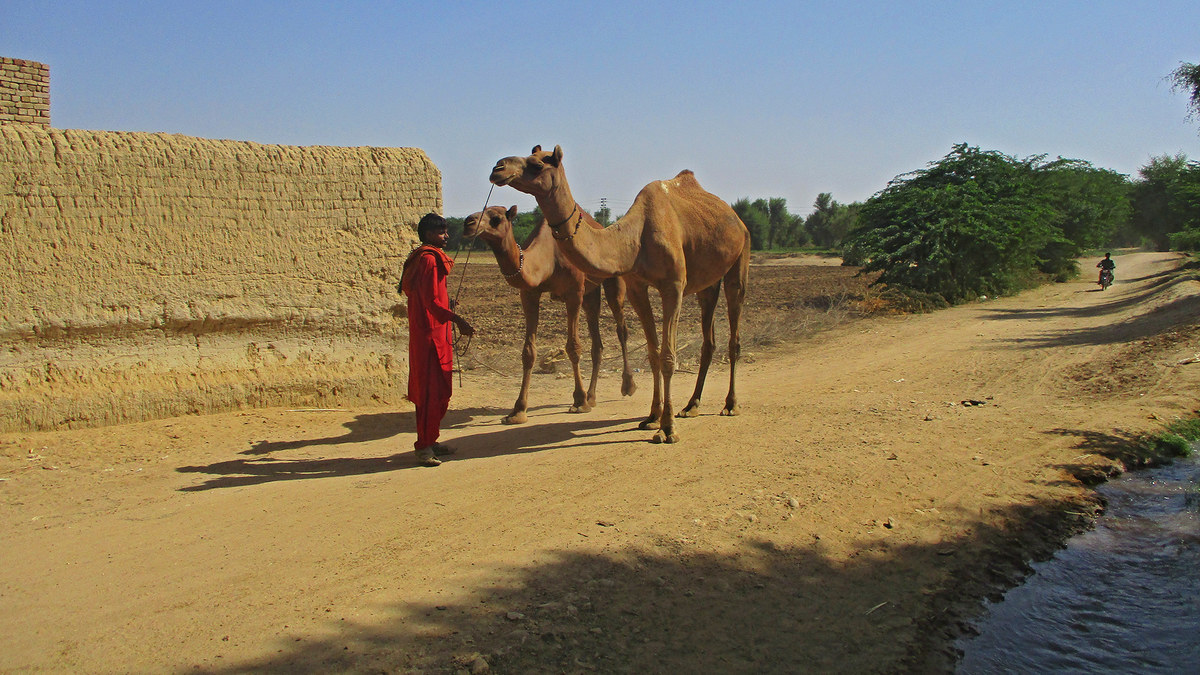


A herdsman walks with camels near the Wahi Pandhi area of Sindh’s Kachho Desert, Pakistan, on October 7, 2020.  (AN photo by Zulfiqar Kunbhar)

Many, like Shaukat Ali Gedehi, also opt to move to the UAE.
“As visas are open now, many of my Johi friends have already reached Dubai again after a break," said Gedehi who worked in Dubai as a caretaker of racing camels before he lost his job to the coronavirus outbreak.
He said he was sure he would find a new job in Dubai with the help of his ‘Mini-Gulf’ community there.
"After reaching Dubai I will hunt for a job, taking the help of my Johi family and friends already present there," Gedehi said.
Indeed, helping the community back home is a common story for Johi locals.
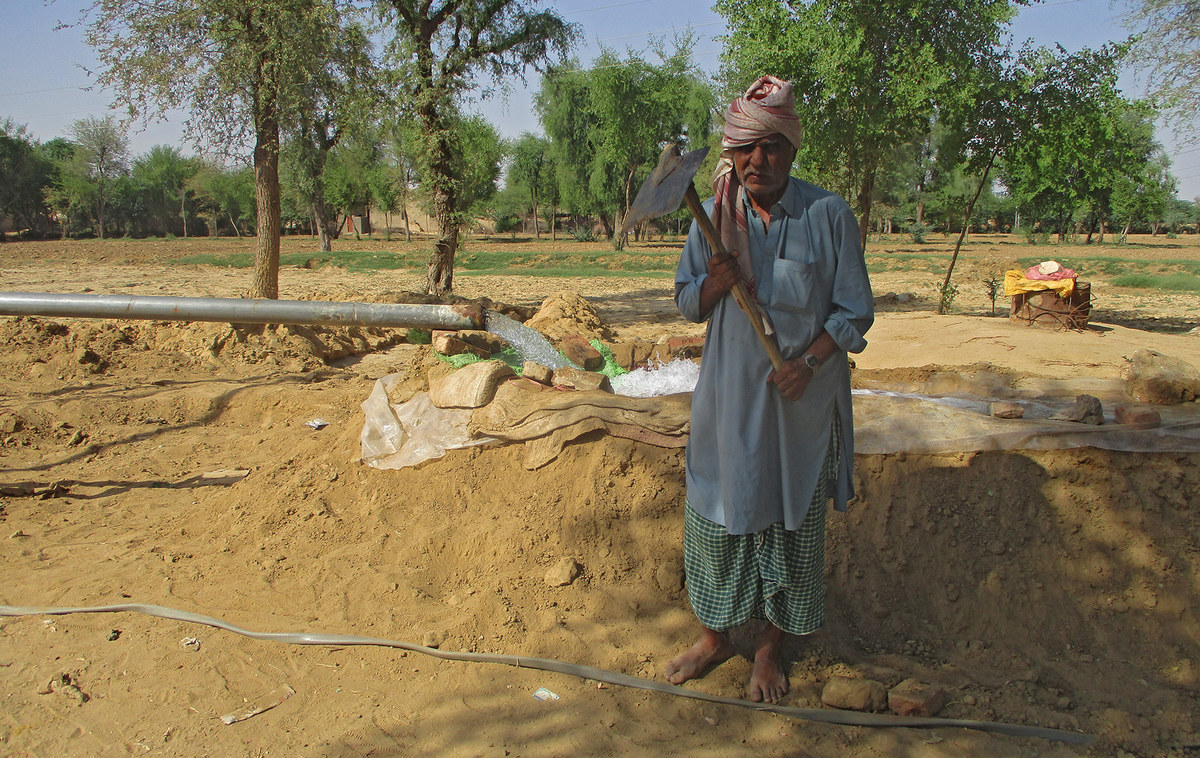


A farmer poses at a tube well installed at an agricultural field near the Wahi Pandhi area of Sindh’s Kachho Desert, Pakistan, on October 7, 2020.  (AN photo by Zulfiqar Kunbhar)

Haji Beero, 70, traveled to Saudi Arabia via ship in the early 1970s on an Umrah pilgrimage visa, which he later converted into a work visa. He did odd jobs, and even worked as a watchman, but once he was settled, he and 60 others from Johi helped others from their hometown find work abroad.
“Lack of water and prolonged droughts brought joblessness … our agriculture sector was not flourishing. It brought extreme poverty," Beero said. "I used my reference to bring around 2,800 Johi locals to Saudi Arabia for jobs."
There are also those who have returned home after years of working in the Gulf, wanting to give back to their parched hometown.
Sanaullah Lashari spent six years working as a driver in Jeddah and is now back in Johi where he oversees a government-owned groundwater pump in Peer Baksh Lashari village that he says he repaired using his own savings and donations from other locals.
"Government is not doing any help in this regard, so we have to manage ourselves,” Lashari said, standing next to the pump wearing a traditional Saudi thobe. "When I returned from Saudi Arabia, I saw the plant was dysfunctional. I spent eighty thousand rupees from my remittance savings and collected money from other area people to make this pump run."


Pakistan reassures investors after Barrick announces review of Reko Diq project after attacks

Updated 4 sec ago
Follow

Pakistan reassures investors after Barrick announces review of Reko Diq project after attacks

  • Mining giant announced it would reassess all aspects of project after coordinated Jan. 30-31 assaults killed 58 in Balochistan
  • Copper-gold project’s development long overshadowed by decades-long separatist insurgency in remote province

ISLAMABAD: Pakistan has assured foreign investors it has the “capacity and capability” to secure the multibillion-dollar Reko Diq copper-gold mine, Balochistan Chief Minister Sarfraz Bugti said on Monday after Canada’s Barrick Mining Corporation ordered a review of the project following deadly separatist attacks in the province last month.

The mining giant announced it would reassess all aspects of the project after coordinated Jan. 30-31 assaults by the Baloch Liberation Army (BLA) killed 36 civilians and 22 security personnel across multiple districts of the remote southwestern province. Pakistani authorities say 216 militants were killed in follow-up operations.

The Reko Diq mine, one of the world’s largest undeveloped copper and gold deposits, is a cornerstone of Pakistan’s efforts to attract foreign investment and expand mineral exports after a prolonged economic crisis. Islamabad hopes the mines will generate $70 billion in free cash flow and $90 billion in operating cash flow. The project, expected to begin production in 2028, is jointly owned by Barrick Gold and the governments of Pakistan and Balochistan.

The project’s development, however, has repeatedly been overshadowed by security concerns in Balochistan, a sparsely populated province bordering Iran and Afghanistan that has faced a decades-long insurgency in which separatist groups target security forces, infrastructure and projects linked to foreign investment. Militants accuse the state of exploiting local resources without benefiting residents, an allegation the government denies.

“Of course, the government of Balochistan is concerned [about security], it’s not that they aren’t,” Bugti told Arab News in an interview in Islamabad.

“Barrick Gold has a very large investment and we have other international partners in that [Reko Diq mining project]. We want to assure them through your platform as well and also when our meetings will take place that we have the capacity and capability to protect our foreign investors.

“The state is intact, the government is intact. There is a functional government, there is a functional state in Balochistan.”

Bugti said authorities were redesigning security arrangements for the project, including raising a dedicated protection force in mineral-bearing areas and strengthening border controls. However, he acknowledged that attacks affected investor confidence.

“Yes, [attacks] do make a dent, when your country or province takes off [economically],” he said. “It does impact the perception.”

However, Bugti refused to describe the coordinated January attacks as a “security failure.”

“A security failure is when the [army’s] corps headquarters is captured ... when someone seizes control of the biggest cantonment in Quetta, or for that matter, captures our IG [Inspector-General of Police] headquarters, or the IG FC [Frontier Corps] headquarters, you call it a security failure,” the chief minister said. 

“I say it was a success of security forces that within hours, as I told you, other than Nushki, everything was clear.” 

The minister accused Pakistan’s neighbor and archival India of supporting insurgent groups in Balochistan, an allegation New Delhi has repeatedly denied.

“What evidence do you need? Kulbhushan Jadhav was not here to sell chickpeas. It is on record that he was an intelligence officer who came to support Baloch insurgents, and the way he was arrested highlighted this,” he said.

Jadhav is an Indian national arrested by Pakistan in 2016 and convicted by a military court on espionage charges. India disputes the allegations and challenged the case at the International Court of Justice, which ordered Pakistan to review the conviction but did not rule on guilt or innocence.

Ultimately, Bugti said long-term stability in Balochistan depended on pursuing economic development alongside security operations.

“See there is a development paradigm and the security paradigm. Both should be carried forward together,” he said. 

“My vision is that meritocracy and an anti-corruption drive are key to success in Balochistan.”