'Gift from Pakistan': Free medical center built by expats opens in Dubai 

Short Url
Updated 15 October 2020
Follow

'Gift from Pakistan': Free medical center built by expats opens in Dubai 

  • Pakistan Medical Center has nine clinics and more than 150 specialist doctors have volunteered their time and skills
  • People of all nationalities who cannot afford health care will be treated at the facility, its medical director says 

DUBAI: Pakistani expats in the United Arab Emirates have come together to build a first-of-its-kind free medical facility, the Pakistan Medical Center (PMC), in Dubai, where people of all nationalities who can not afford health care will be served.

PMC, which opened on October 5 and is located in the premises of the Pakistani Association Dubai (PAD), is the Gulf region’s first not-for-profit center built by Pakistani expats, “a gift of the Pakistani nation and the Pakistan association to the United Arab Emirates,” the center’s medical director, Dr. Nasim Sabir, said. 
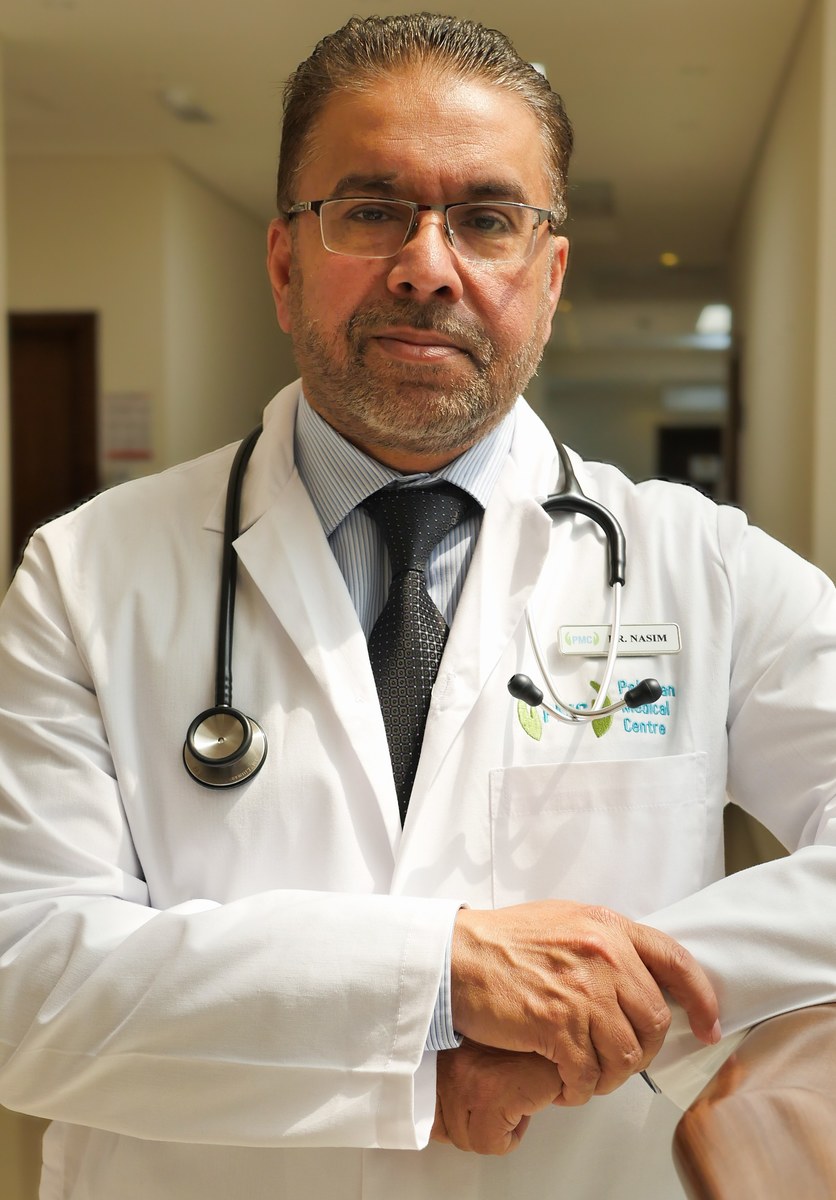


In this undated picture, Dr Nasim Sabir, medical director of the Pakistan Medical Center, is seen at his workplace in Dubai. (Photo courtesy: Pakistan Association Dubai) 

“Patients who cannot afford to pay will be given free medical treatment while others from low-income groups will get treatment at subsidized rates,” he said. “The PMC also has a welfare department that looks after the finances of those who are unable to afford medical treatment.”

The center, built at a cost of Dh20 million, operates six days a week, from 9 a.m. to 9 p.m., as an outpatient clinic. Already, doctors at the facility are seeing around 15 to 20 patients daily.

The project was launched on August 14, 2016, under the theme of “one nation one dream,” and its foundation stone laid by Sheikh Nahyan Bin Mubarak Al Nahyan, minister of tolerance, on August 14, 2018. Community members were invited to “own a brick” worth Dh1,000 as part of their contribution to the construction of the center. Those who bought the brick were also given a 10-year membership of PAD.

The project includes the medical center, the Shahid Afridi Health and Fitness Center, the Hub47 business incubation center, the Hunarkadah platform for women entrepreneurs, Brick Café, Arts Corner, seminar and prayer rooms and an administration block. 
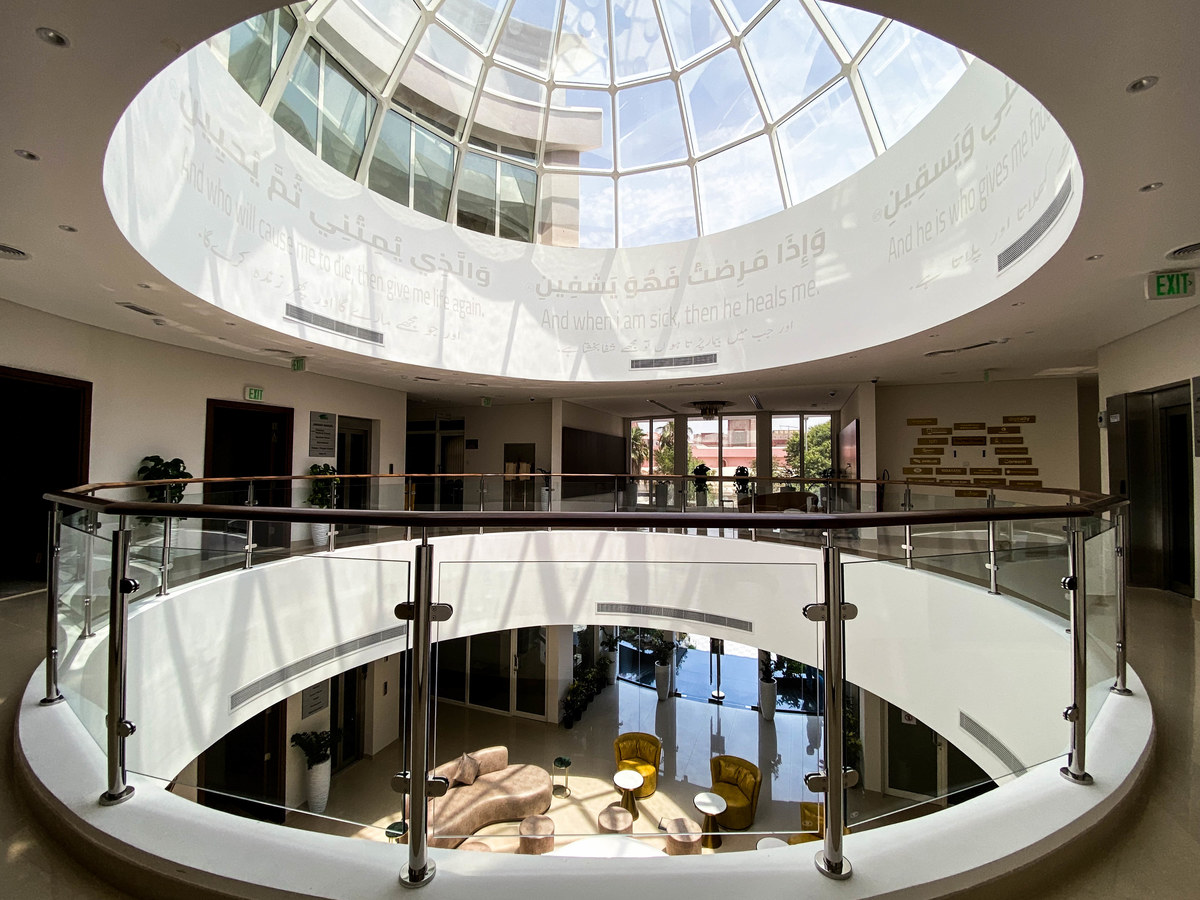


This undated picture shows the central entrance of the Pakistan Medical Center located at the Pakistan Association Dubai in Oud Metha, Dubai. (Picture courtesy: Pakistan Association Dubai) 

The medical center itself has nine clinics in addition to labs and X-ray facilities, and full-time staff as well as more than 150 specialist doctors who have volunteered their time and skills. In-house laboratory and radiology services are also available. 

The concept of PMC was conceived by the Medical Wing of the Pakistan Association, which first launched a free once-a-month medical camp for eligible patients. The doctors and health care professionals involved were all volunteers who soon realized that the camp was not enough, and a permanent health care facility was required. Since 2009, the Association has received more than 30,0000 patients at its free medical camps.

Pakistani celebrities have also endorsed the cause.

Pakistani writer and poet, Anwar Maqsood, said during a visit to Dubai: “It’s such a proud feeling to see Pakistanis build a center for themselves; brick by brick this building will give you a sense of ownership and your generations will take pride in claiming their parents were part of such a great cause.”

Other celebrities, such as Pakistani cricketer Shahid Afridi and actor Bushra Ansari, have also lent support to the center. 



This undated picture shows the central entrance of the Pakistan Medical Center located at the Pakistan Association Dubai in Oud Metha, Dubai. (Picture courtesy: Pakistan Association Dubai) 

Speaking at Pakistan’s National Day this year, UAE minister of tolerance Shaikh Nahyan said: “I admire your initiative in establishing the PMC and commend the spirit of tolerance that will be at the heart of its operations.”
Air pollution cuts average Pakistani life expectancy by 3.9 years — report

Updated 5 sec ago
Follow

Air pollution cuts average Pakistani life expectancy by 3.9 years — report

  • Pakistan’s first city-level emissions mapping links smog to transport and industry
  • Lahore residents could gain up to 5.8 years of life with cleaner air, report says

ISLAMABAD: Air pollution is shortening the lives of millions of Pakistanis, reducing average life expectancy by almost four years and up to six years in smog-choked cities like Lahore, according to a new national assessment.

The study, titled Unveiling Pakistan’s Air Pollution and published by the Pakistan Air Quality Initiative (PAQI) this week, includes Pakistan’s first multi-sector, city-level emissions mapping, ending years of speculation over what drives the country’s chronic smog. 

Researchers identified transport, industry, brick kilns, power generation and crop burning as Pakistan’s largest contributors of PM2.5, which is hazardous fine particulate matter less than 2.5 micrometers wide that penetrates deep into the lungs and bloodstream, increasing the risk of heart disease, lung cancer and early death. The dominant sources varied by city, giving a data-based picture of pollution patterns for the first time.

The report calls particulate pollution the country’s most damaging environmental hazard. 

“Pollution reduces the life expectancy of an average Pakistani by 3.9 years,” the report states, noting the impact is more severe than food insecurity. 

“Particulate pollution is the greatest external threat to life expectancy in the country. While particulate pollution takes 3.3 years off the life expectancy of an average Pakistani resident, child and maternal malnutrition, and dietary risks reduce life expectancy by 2.4 and 2.1 years, respectively.”

The report findings suggest major health gains would follow even modest pollution cuts. 

“In Lahore, the country’s second most populous city, residents could gain 5.8 years of life expectancy,” it notes, if air quality met global safety standards.

Beyond health, the study frames smog as an economic and governance crisis. Researchers argue that Pakistan’s response has focused on optics like temporary shutdowns, anti-smog “sprays” and road-washing rather than long-term emissions control, vehicle regulation or industrial monitoring.

The assessment characterises pollution as an invisible national burden: 

“Poor air quality is Pakistan’s most universal tax, paid by every child and elder with every breath.”

Pakistan regularly ranks among the world’s most polluted countries, with Lahore, Karachi, Peshawar and Faisalabad repeatedly classified as high-toxicity zones during winter. The new mapping highlights how industrial output, diesel trucking, unregulated kiln firing, and seasonal stubble burning drive smog cycles, knowledge the authors say should guide enforceable policy rather than short-term bans.

The report concludes that reducing PM2.5 remains the single most powerful health intervention available to Pakistan, with improvements likely to deliver life expectancy gains faster than nutrition, sanitation or infectious-disease efforts.