Umrah app adds new permits for prayers in holy mosques

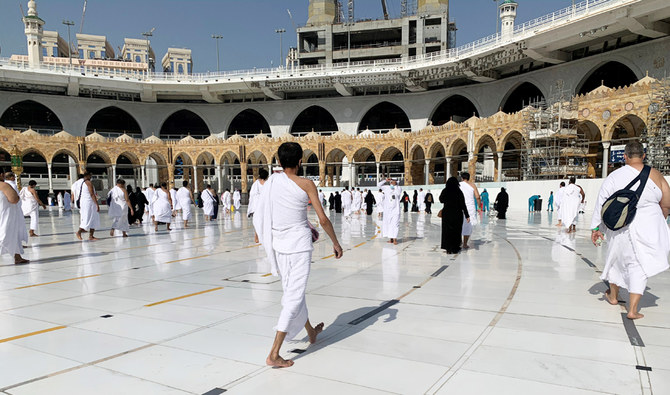
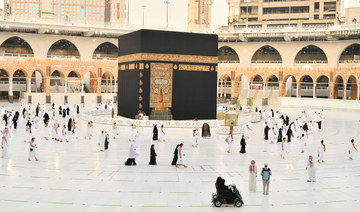
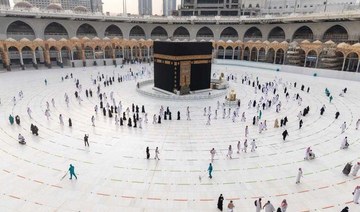
Visits and prayers in the holy mosques are planned according to available capacity approved by the authorities. (Reuters)
Short Url
Updated 14 October 2020
Follow

Umrah app adds new permits for prayers in holy mosques

  • The Eatmarna app is available on smartphones

JEDDAH: A new set of permits was added for pilgrims in the Umrah app Eatmarna on Tuesday, the undersecretary of the Ministry of Hajj and Umrah and supervisor of the app, Abdulrahman Shams, announced.
“The new permits include one for prayers in the Grand Mosque, one (for) prayers in the Prophet’s Sacred Chamber in the Prophet’s Mosque, and one for greeting the Prophet,” he said.
Shams added that the app, which started with the Umrah permit only, will add new permits gradually.
The Eatmarna app is available on smartphones (Android and via the App Store) and aims to enable pilgrims to plan their Umrah during the coronavirus disease (COVID-19) pandemic in advance.
Visits and prayers in the holy mosques are planned according to available capacity approved by the authorities, ensuring the provision of a spiritual and safe atmosphere that adheres to precautionary measures.
Meanwhile, Saudi Arabia announced on Tuesday 19 new COVID-19-related deaths. The Kingdom’s death toll now stands at 5,087.
There were 474 new cases reported across the country, meaning 340,089 people had now contracted the disease. There were 8,663 active cases, with 839 in critical condition.
According to the Ministry of Health, Makkah recorded the highest number of cases in the Kingdom with 59, while Madinah reported 58, and Riyadh 29.
In addition, 500 more patients had recovered from COVID-19, taking the total number of recoveries in the Kingdom to 326,339.
Saudi Arabia has so far conducted 7,109,978 PCR tests, with 49,495 carried out in the last 24 hours.


Al Akaria signs SR1.2bn agreement lease with Amsa Hospitality 

Updated 7 sec ago
Follow

Al Akaria signs SR1.2bn agreement lease with Amsa Hospitality 

  • Project, located in Riyadh Diplomatic Quarters, spans approximately 40,000 sq. meters and includes 240 modern residential units, comprising 176 apartments and 64 villas and townhouses
  • CEO of Amsa Hospitality Muin Serhan: We have a certain commitment to deliver to the community and to the project in particular

RIYADH: The Saudi Real Estate Co., also known as Al Akaria, recently announced the signing of a lease agreement for the Amsa Vue Residential Compound in Riyadh with Amsa Hospitality, with the total value of the project estimated at around SR1.2 billion ($320 million). 

Spread across 20 years, the cost reflects the long-term nature of the investment and its focus on value, sustainability, and operational quality.

The project, located in Riyadh Diplomatic Quarters, spans approximately 40,000 sq. meters and includes 240 modern residential units, comprising 176 apartments and 64 villas and townhouses.

Acting CEO of Al Akaria Khalid Al-Sehaibany stated that the project embodies the company’s approach to developing residential communities that focus on an integrated experience built on quality planning and comprehensive facilities, elevating the standard of living in Riyadh.

CEO of Amsa Hospitality Muin Serhan told Arab News that the core philosophy behind the project is to create a space that focuses both on individuals and community values. 

Serhan pointed out that this strategy is central to a broader ambition to redefine hospitality in Saudi Arabia by embedding the hallmark of Arabian hospitality into the brand’s identity.

“We have a certain commitment to deliver to the community and to the project in particular. Year on year, we're adding value to the landlord and the owners of the assets,” he said. 

He outlined a clear vision for the company’s legacy, aiming to set a new standard for hospitality management in the region. The goal, he said, is to be the go-to partner for developers and asset owners seeking to integrate hospitality elements into their projects.

Serhan confirmed that this vision is currently being brought to life through close collaboration with contractors and designers. 

He emphasized that the process is a “moving journey,” where the designer, the brand, and the location converge to create a product that truly reflects the local narrative.