ISLAMABAD: About 60 percent of Pakistanis experienced moderate to high levels of mental health issues while eight in 10 individuals showed some symptoms of mental illness during the coronavirus pandemic, according to a global research firm, IPSOS, which recently carried out a study for an organization affiliated with the Pakistan Mental Health Coalition.
“The purpose of this survey was to check serious mental health problems that were caused by challenges posed by lockdowns, confinement, financial distress, job losses and fear of getting COVID-19,” said Irfan Mustafa, whose organization, Taskeen, commissioned the study.
Talking to Arab News ahead of International Health Day today, he said the telephonic survey was carried out with a nationwide representative sample of individuals belonging to underprivileged communities at the end of June this year. However, the result of the study was released earlier this month.
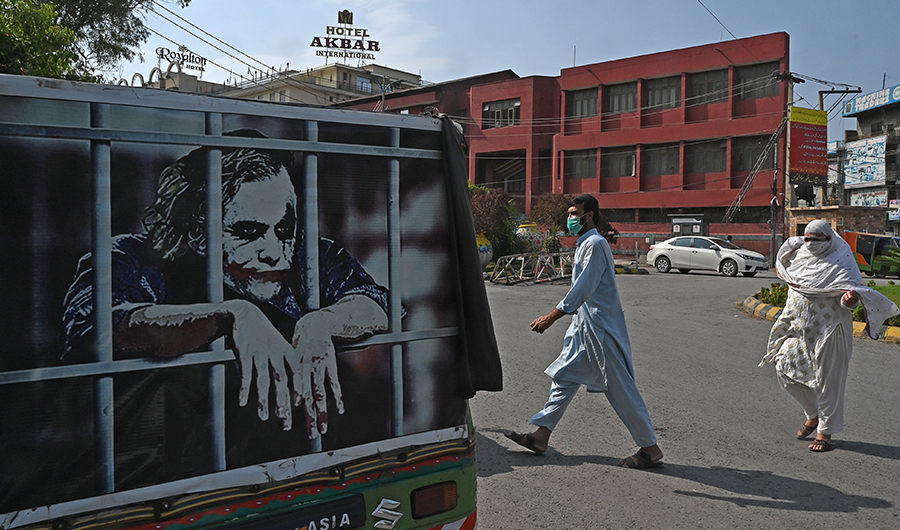
People wearing facemasks cross a street beside an auto-rickshaw with a graffiti depicting actor Heath Ledger (L) in his role as the Joker, in Rawalpindi on June 26, 2020. (AFP)
Mustafa said his organization focused on promotion of mental health and prevention of psychological illnesses through education, awareness and advocacy.
He claimed that survey results were accurate since the margin of error was between three and four percent, adding that any statistical deviation within that range was accepted internationally for such surveys.
According to the study, 44 percent people either lashed out at others or indulged in substance abuse as a coping mechanism whilst 26 percent engaged in self-harm. The survey described economic downturn as a major reason for stress since 72 percent of the respondents complained of anxiety and depression due to the financial challenges caused by COVID-19. Among those who participated in the survey, 67 percent said that government statements and media messages increased their stress level.
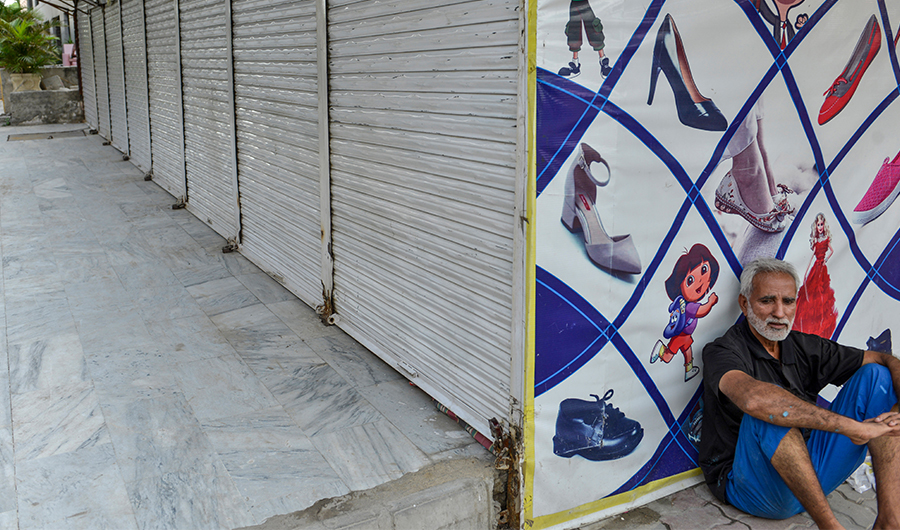
A shopkeeper sits next to a shuttered market in Rawalpindi on July 29, 2020. (AFP)
Dr. Rizwan Taj, head of the psychiatry department at the Pakistan Institute of Medical Science (PIMS), said the health ministry was ready to deal with mental health issues from the beginning of the pandemic.
“All viral infections have their mental health effects which include depression and anxiety,” he told Arab News. “The coronavirus situation is novel and more serious because it has affected life around people. It has turned it upside down.”
Taj said the government had launched a program for health workers, which was attended by over 10,000 doctors and paramedics, to help them deal with stress-related issues.
“We were able to hold a large number of sessions, workshops and created a 24-hour helpline for health care professionals in Islamabad,” he informed. “Now, we are looking at the second part of the problem which is the mental health issues of general public.”
According to the World Health Organization, mental disorders account for more than four percent of the total disease burden in Pakistan and approximately 24 million people in the country need psychiatric assistance. However, the global agency also claims that allocated resources for screening and treatment of mental health disorders are not enough to meet the burgeoning need.
The WHO also maintains that Pakistan only has 0.19 psychiatrists per 100,000 inhabitants, which is among the lowest across the world.
COVID fatigue and the mental health pandemic