

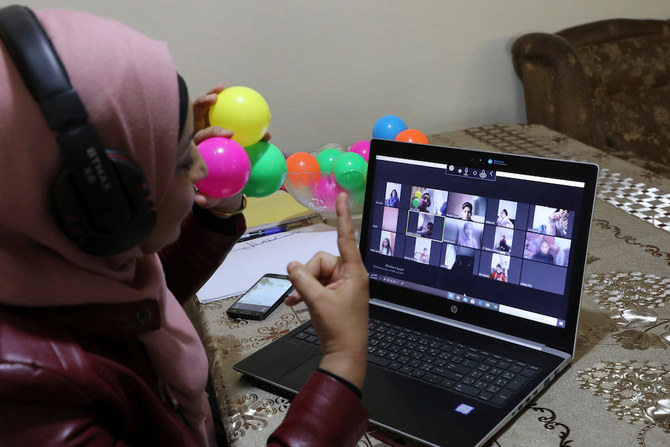

KUWAIT: The Middle East and North Africa (MENA) region was quick to adopt and adapt to an online learning model — even as the pandemic was at its height. Now, with economies opening up, the region has an open-ended view on school closures.
According to a UN policy brief released in August 2020, the the coronavirus outbreak has caused unprecedented disruption to education systems around the world, affecting almost 1.6 billion students in more than 190 countries. In the MENA region alone, the pandemic was responsible for shutting down learning facilities for almost 100 million students aged between 5 and 17.
Governments in the more affluent countries of the region have been quick to opt for several multi-modal approaches, mostly online, to make up for lost classroom time. Many countries like the UAE, Kuwait and Saudi Arabia promoted the use of e-learning platforms, with the Kingdom opening up its national education portal Ain for more than 6 million users and providing 30,000 devices for students in need.
In Egypt and Palestine, governments provided free SIM cards for students and professors to access learning platforms, while telecom operators in Tunisia and Morocco offered free access to online educational portals.
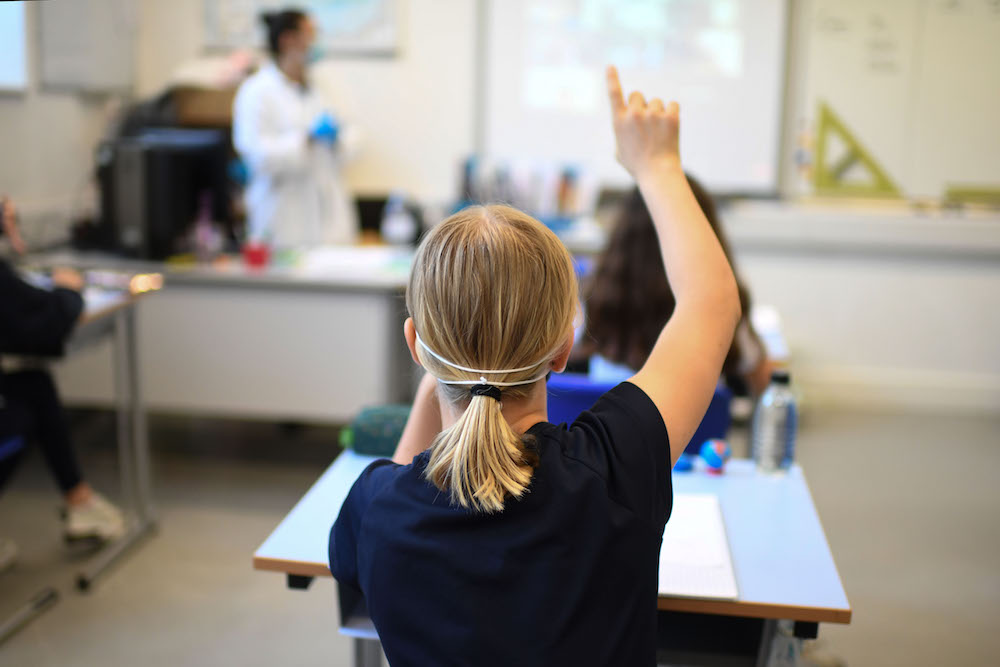
Even as schools have started to reopen across the globe, most countries in the MENA region have opted for a more cautious approach. (AFP/File Photo)
Jordan, one of the first countries in the region to respond to the crisis by closing all educational institutions, developed a learning platform called Darsa, and dedicated two TV channels to facilitate classes and lectures for students lacking access to online facilities.
For now, these efforts are impressive, in the sense that they facilitate a temporary learning environment for millions of students who would otherwise have lost out on schooling.
Even as schools have started to reopen across the globe, most countries in the MENA region have opted for a more cautious approach — to continue with an exclusively online model or to go hybrid with smaller class sizes in order to reduce the physical presence of students as much as possible.
Parallel to the online model is the shadow of cybercrime as students and teachers join Zoom or Microsoft Team sessions, exchanging details and personal information. While adults are aware of the risks associated with online engagements, students need guidance and monitoring, even as they adapt to this kind of learning model.
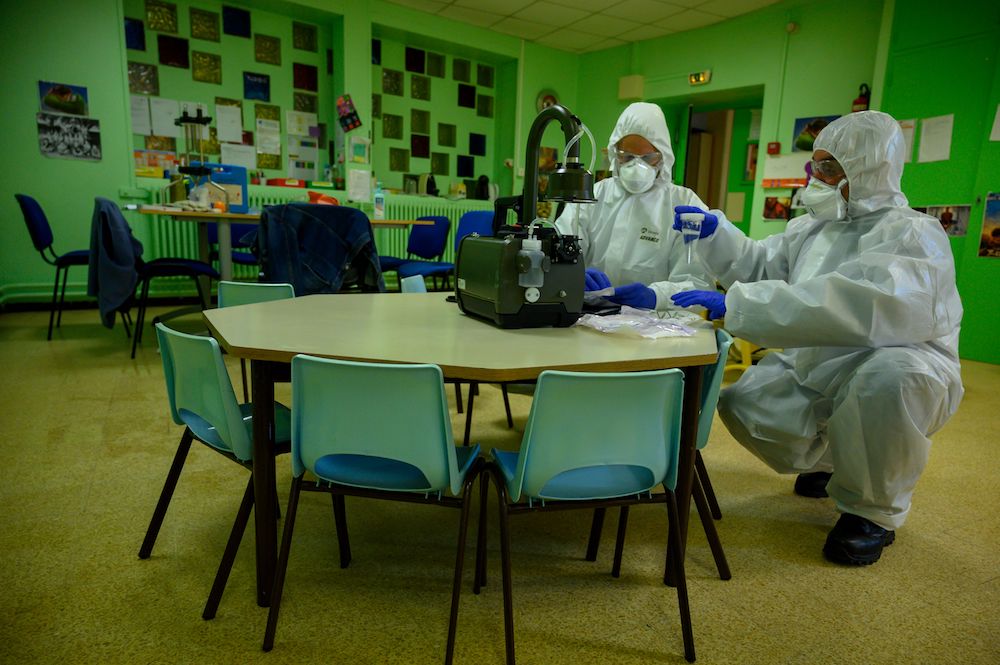
According to a UN policy brief released in August 2020, the the coronavirus outbreak has caused unprecedented disruption to education systems around the world, affecting almost 1.6 billion students in more than 190 countries. (AFP/File Photo)
Countries such as the UAE and Saudi Arabia have basic security and confidentiality laws with special emphasis on social media and defamatory behavior online.
The UAE has released an official manual titled “Students’ Behavior Management,” listing what can be regarded as online offenses and outlining the responsibilities of all stakeholders.
As the new school year starts in the region, some countries have opted to reopen with health measures in place, while others such as Kuwait and Saudi Arabia plan to continue with e-learning as a primary tool.
With the online model here to stay, some countries have also introduced supplementary add-ons, such as Rawy Kids (Egypt) or Kitabi Book Reader (Lebanon), to diversify distance-learning tools. Partnerships such as the agreement between UNESCO Beirut and Education Cannot Wait will to ensure remote continuity.
*****
READ MORE: UNESCO praises Saudi Arabia for keeping education going during COVID-19 lockdown
*****
The UAE’s Knowledge and Human Development Authority has launched “In This Together Dubai,” a collaboration between the government, private organizations and institutions across the globe that will deliver free access to websites, apps and other educational resources.
Bahrain’s education ministry has set up a dedicated platform in conjunction with international cloud computing platform Amazon Web Services that will cater to about 146,000 students and more than 18,000 teachers, according to Oxford Business Group estimates.
Eventually, all schools are expected to reopen. For now, as the region braces itself for the fallout from the dip in oil prices, the implications of a post-pandemic economy and the approaching flu season, countries have opted for a more conservative mode of teaching in lieu of taking risks.
---------------------
This report is being published by Arab News as a partner of the Middle East Exchange, which was launched by the Mohammed bin Rashid Al Maktoum Global Initiatives to reflect the vision of the UAE prime minister and ruler of Dubai to explore the possibility of changing the status of the Arab region.


