
KARACHI: The chief of the Pakistan Poultry Association (PPA) said the poultry sector foresaw ‘difficult’ prospects for increasing exports to Kuwait despite the country lifting a ban on the import of Pakistani poultry products after almost 16 years.
The Trade Development Authority of Pakistan (TDAP), the country’s export promotion arm, announced the Kuwaiti government’s decision last week, saying a “ban on imports of all kind of birds meat (fresh, chilled, frozen, processed), all products, derivatives and eggs from Pakistan” had been lifted.
Pakistani poultry imports were banned by many middle eastern countries, including UAE, Saudi Arabia and Kuwait, after the outbreak of bird flu in 2004. Many countries like Saudi Arabia and UAE have already lifted the ban.
Pakistani producers and exporters of poultry products said despite huge demand for halal products, the country’s exports were negligible due to tough competition abroad and rising costs of raw material in Pakistan.
#LISTEN: Despite huge demand of halal meat in the middle eastern countries, high cost of chicken feed makes it difficult for #Pakistan to compete in the global market says chairman of @PoultryPpa || #Kuwait
-
Read special by @Khurshid72: https://t.co/4Ekj3asUao pic.twitter.com/oCIbgP1GXN— Arab News Pakistan (@arabnewspk) October 2, 2020
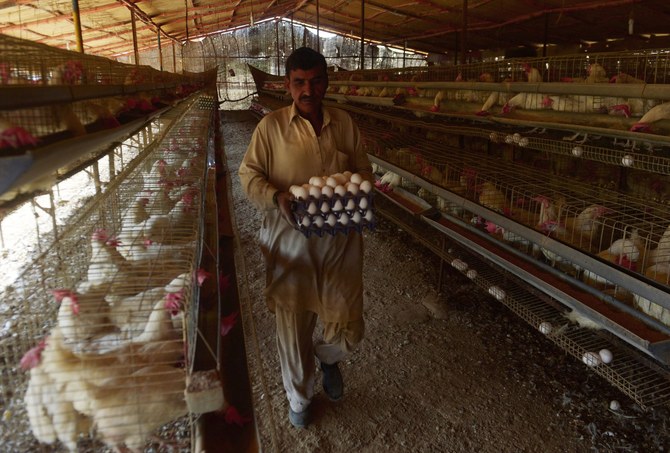
“There is huge demand for halal meat in middle eastern countries but the high cost of raw material including chicken feed is making it difficult [for Pakistan] to compete in the international market,” Khalil A Sattar, the chairman of PPA, said on Wednesday. “Our exports of poultry products are currently being made to Saudi Arabia, UAE, and Oman where very negligible quantity is marketed,” he added, saying Saudi Arabia imported hatching eggs.
Poultry farmers said the country imported most of its raw material, including feed ingredients such as soybean and other chemicals and vitamins. Around Rs190 billion worth of agriculture produce and byproducts of agriculture were being used in poultry feed in Pakistan, industry insiders said.
“Our main competitors such as India, Brazil, China , Argentina and many others are enjoying government protection and have comparative advantage,” Sattar said. “Pakistan’s government wants to enhance exports but poultry sector needs to be facilitated; at least we should be given duty drawback in order to minimize our input cost.”
Abdul Maroof Siddiqui, a member of the PPA executive committee, said though Kuwait had opened its borders for Pakistani poultry products after almost 16 years, “exports are not viable at the current price of $2.5 per kg prevailing in the international market.”
The PPA chief said that at present poultry farmers were selling eggs or chicks at much lower cost than the cost of production, in order to minimize losses.
“There is huge potential in Pakistan as the poultry sector is growing at 5-10 percent per annum,” Sattar said, “but the sector faces cycles of growth and then a long period of depression which compels farmers to sell their products below the cost of production.”
The poultry sector is one of the largest agro-based segments of Pakistan’s economy, with investment of more than Rs1.12 trillion ($7 billion). Pakistan produces 1.23 broiler chickens worth Rs383 billion annually, and 17.5 billion eggs worth Rs175 billion. The poultry sector meets 40-45 percent of the country’s total meat consumption, PPA data shows.