

Huawei chairman urges US to reconsider ‘attack’ on global supply chain

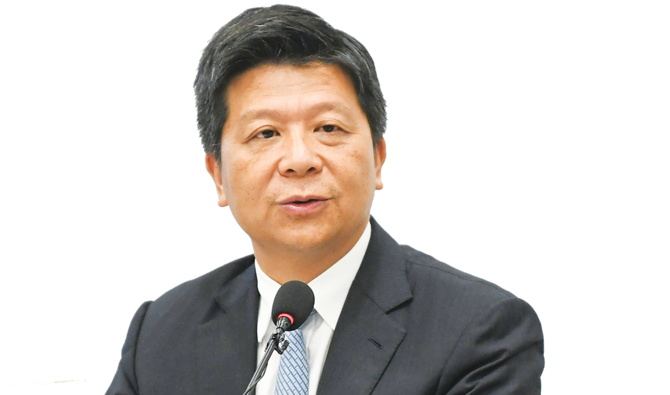
Huawei’s rotating chairman Guo Ping. (AFP)
Short Url
Updated 24 September 2020
Follow

Huawei chairman urges US to reconsider ‘attack’ on global supply chain

  • Huawei said that from Sept. 15 it would stop manufacturing its most advanced chips under its Kirin line which power its high-end phones

SHANGHAI: Chinese telecom giant Huawei Technologies said on Wednesday its supply chain was under attack from the US and called on Washington to reconsider its trade restrictions which were hurting suppliers globally.

The world’s biggest maker of mobile telecommunications equipment and smartphones is under pressure from US trade curbs designed to choke Huawei’s access to commercially available chips.

“The US has modified their sanctions for the third time and that has indeed brought great challenges to our production and operations,” Huawei Chairman Guo Ping told reporters in Shanghai.

Washington says Huawei is a vehicle for Chinese state espionage and from Sept. 15 imposed new curbs barring US companies from supplying or servicing the company. Huawei has repeatedly denied being a national security risk.

Guo said that although Huawei had sufficient chips for its business-to-business operations, including its 5G network enterprise, it was feeling the pinch of the US restrictions on its smartphone chip stocks.

It understood that suppliers such as Qualcomm were applying for US licenses which would allow them to continue serving Huawei, he added.

Intel has already received licenses to supply certain products to Huawei, while China’s Semiconductor Manufacturing International Corp, which uses US-origin machinery to produce chips for Huawei, has applied for a license, Reuters has previously reported.

Huawei was willing to use Qualcomm chips in its smartphones should Qualcomm get a license to sidestep the restrictions, Guo added. Qualcomm did not immediately respond to a request for comment.

“We hope the US government can reconsider its policy and if the US government allows it we are still willing to buy products from US companies,” Guo said on the sidelines of its annual Huawei Connect conference.

Huawei has said that from Sept. 15 it would stop manufacturing its most advanced chips under its Kirin line which power its high-end phones. Analysts expect its existing supply of Kirin chips will run out next year.

Consumers have rushed to buy Huawei phones amid concerns its mobile division is about to fold. Vendors say that prices have spiked by as much as 500 yuan ($74) for some devices.

Washington has shown little sign that it is willing to back down from its fight with Huawei, which comes at a time when relations between the US and China are at their worst in decades.

The United States said last month it would expand a program it called “Clean Network” to prevent various Chinese apps and telecoms companies from accessing sensitive information on American citizens and businesses.

David Wang, a Huawei executive director, said that the company hoped that countries would introduce “rational standards” for 5G. Huawei had yet to see any adverse impact on its global 5G business from the US program, he said.


Saudi Arabia’s cultural sector is a new economic engine between Riyadh and Paris, says ambassador

Updated 25 January 2026
Follow

Saudi Arabia’s cultural sector is a new economic engine between Riyadh and Paris, says ambassador

RIYADH: Culture has become a fundamental pillar in bilateral relations between France and Saudi Arabia, according to the French Ambassador to the Kingdom, Patrick Maisonnave.

Maisonnave noted its connection to the entertainment and tourism sectors, which makes it a new engine for economic cooperation between Riyadh and Paris.

He told Al-Eqtisadiah during the opening ceremony of La Fabrique in the Jax district of Diriyah that cultural cooperation with Saudi Arabia is an important element for its attractiveness in the coming decades.

La Fabrique is a space dedicated to artistic creativity and cultural exchange, launched as part of a partnership between the Riyadh Art program and the French Institute in Riyadh. 

Running from Jan. 22 until Feb 14, the initiative will provide an open workspace that allows artists to develop and work on their ideas within a collaborative framework.

Launching La Fabrique as a space dedicated to artistic creativity

The ambassador highlighted that the transformation journey in the Kingdom under Vision 2030 has contributed to the emergence of a new generation of young artists and creators, alongside a growing desire in Saudi society to connect with culture and to embrace what is happening globally. 

He affirmed that the relationship between the two countries is “profound, even cultural par excellence,” with interest from the Saudi side in French culture, matched by increasing interest from the French public and cultural institutions unfolding in the Kingdom.

Latest estimates indicate that the culture-based economy represents about 2.3 percent of France’s gross domestic product, equivalent to more than 90 billion euros ($106.4 billion) in annual revenues, according to government data. The sector directly employs more than 600,000 people, making it one of the largest job-creating sectors in the fields of creativity, publishing, cinema, and visual arts.

Saudi Arabia benefiting from French experience in the cultural field

Maisonnave explained that France possesses established cultural institutions, while Saudi Arabia is building a strong cultural sector, which opens the door for cooperation opportunities.

This comes as an extension of the signing of 10 major cultural agreements a year ago between French and Saudi institutions, aiming to enhance cooperation and transfer French expertise and knowledge to contribute to the development of the cultural system in the Kingdom.

He added that experiences like La Fabrique provide an opportunity to meet the new generation of Saudi creators, who have expressed interest in connecting with French institutions and artists in Paris and France.

La Fabrique encompasses a space for multiple contemporary artistic practices, including performance arts, digital and interactive arts, photography, music, and cinema, while providing the public with an opportunity to witness the stages of producing artistic works and interact with the creative process.