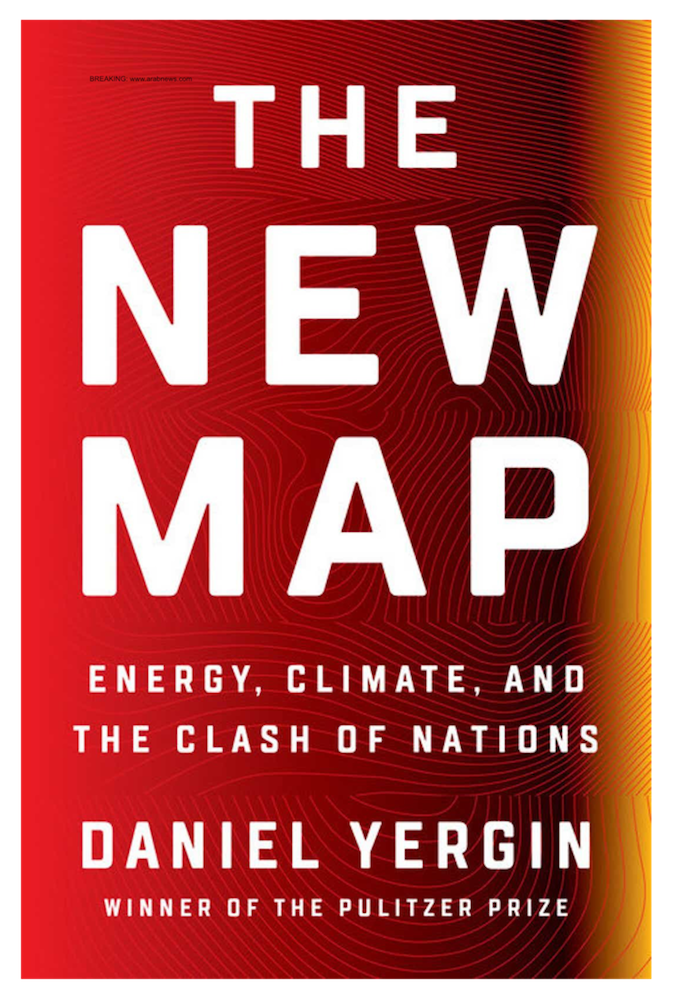
The historic deal by OPEC+, led by Saudi Arabia and Russia but brokered by the US, had resulted on the largest supply cut in the history of the oil industry. But the worst was yet to come as market turmoil reached fever pitch, resulting in “Black Monday” in April, when oil drillers paid consumers to take barrels away. Pulitzer prize-winning author Daniel Yergin, in the exclusive final excerpt from his latest book “The New Map — Energy, Climate, and the Clash of Nations,” takes up the story — and warns of the challenges ahead for oil producers in the great energy transition.
The agreement had signaled a new international order for petroleum, one shaped not by OPEC and non-OPEC, but by the US, Saudi Arabia and Russia. In the future, markets would shift; it would be a different planet again after the coronavirus; politics and prices and personalities would change over the months and years ahead. But the sheer scale of their resources, and the dramatically changed position of the US, guaranteed that these three countries, one way or the other, would have dominant roles in shaping the new oil order.
The deal was indeed historic, but it turned out to be not enough, not when measured against the ever-deepening collapse in demand — 27 million barrels down in April, more than a quarter of total world demand. After the deal, prices slid into the high teens and, in some places where oil could not be stored or transported, a lot lower. The world was now running out of storage.
Owing to an anomaly in the way the futures market worked, the price dropped to one cent and then, on April 20 — Black Monday — went “negative.” That meant that a financial investor selling a futures contract, who would be obligated to take physical delivery of oil for which they had no storage place, had on that day to actually pay a buyer to take the oil. That, too, was historic — the lowest price ever recorded for a barrel of oil — minus $37.63.
But that was not a price in the oil field, but a one-time fluke in financial markets, an aberration in a futures contract.
Meanwhile, the global calamity continued. On May 1, coronavirus cases in the world exceeded 3.2 million, with more than 1 million in the US, where more than 25 million people had lost their jobs over five weeks.
The IMF, which at the beginning of the year had predicted solid global growth of 3.4 percent, announced that the world had already entered the worst recession since the Great Depression.
May 1 was also the day that the mega-oil deal, the OPEC+ agreement, went into effect; and Saudi Arabia and Russia and the other producers began to sharply reduce production. At the same time, the brute force of economics was forcing companies to curtail output or shut down wells altogether.
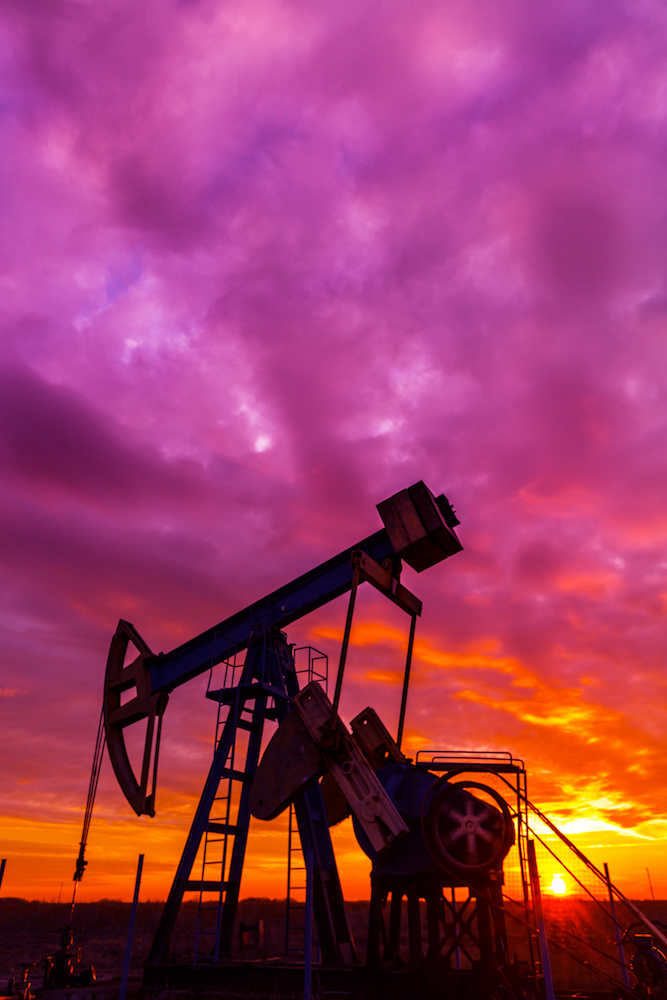
May 1 was the day that the mega-oil deal, the OPEC+ agreement, went into effect; with Saudi Arabia and Russia and the other producers sharply reducing their production. (Shutterstock)
Why sell oil for less than it cost to produce — assuming you could find a buyer or storage — when you could, in effect, store it in the ground — allow the oil to “shelter in place” — and wait for prices to recover?
The biggest market-driven curtailments by far were in the US, followed by Canada. In May the global combination of OPEC+ cuts and market curtailments took 13 million barrels per day of crude oil off the world market.
The planned spending by the larger US oil upstream companies was slashed in half, meaning many fewer wells would be drilled in the months to follow, ensuring that US production would slide significantly over the next year. The US would certainly remain one of the Big Three, but not as big.
By the beginning of June, the number of coronavirus cases worldwide was over 6 million, more than double what it had been a month earlier. Yet the economic darkness was beginning to lift.
*****
READ PART 1: How the coronavirus crisis forced the largest oil supply cut in history
*****
China, the first country to lock down, was the first to unlock, and it was mostly back in business. European countries were at different levels of increased activity, and the US was opening up in stages, albeit with considerable variation among states. With economies coming back, oil demand was increasing.
Consumption in China was almost back to pre-crisis levels, and the streets in Beijing and Shanghai and Chongqing were once again gridlocked as people who had the option chose to drive rather than take public transportation.
Gasoline consumption in the US, which had fallen by half at the beginning of April, was now growing again. All this pulled oil prices back up higher — to levels that not so long ago would have been considered a low-price scenario, but now a relief.
With prices rising, would OPEC+ stay together and the cut-backs hold? Key would be the restored relationship between Saudi Arabia and Russia. But also of importance would be how quickly.
US producers, who had shut down their wells, would turn around and open them again, which could renew the oversupply and deliver another blow to prices, as could low economic growth or a persisting recession — or a resurgent virus.
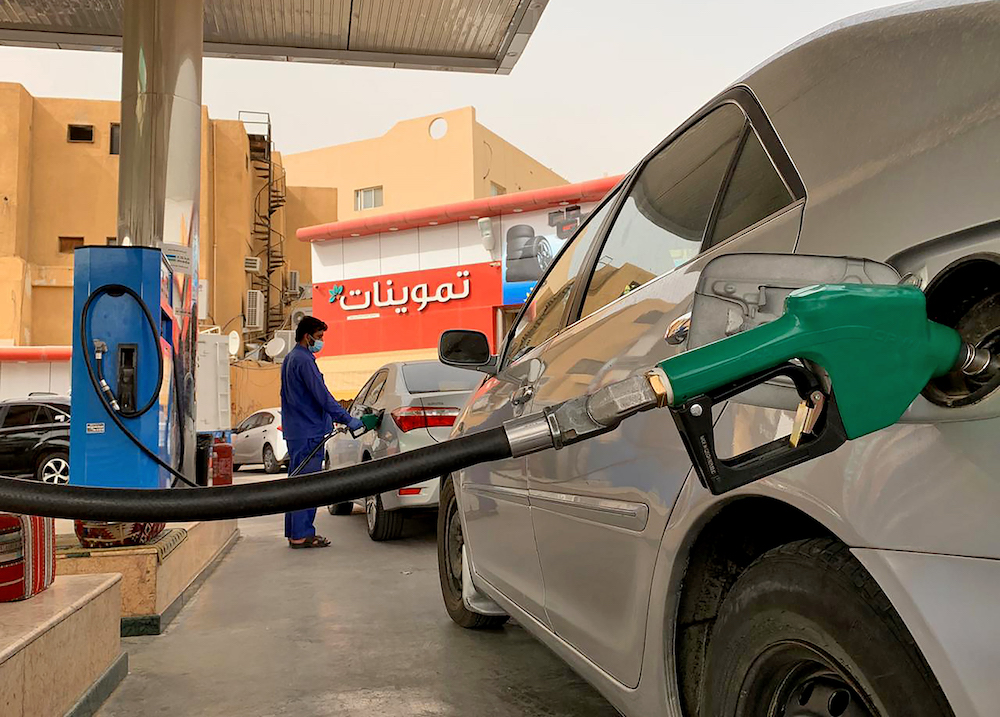
A gas station attendant refills a car at a station in the Saudi capital Riyadh on May 11, 2020. (AFP/File Photo)
And there were many perspectives on what lay ahead. Looking beyond the crisis, some thought that market cycles were over and that, even with economic recovery, oil prices would be low for a long time.
Others thought otherwise — more likely that the slashing of investment in new production would lead, with renewed economic growth, to a tightening in the balance between supply and demand that would send prices higher.
And some thought entirely differently. They sought a “green recovery:” Governments taking advantage of the crisis to reorient their energy mix away from oil and gas and hasten what they saw as the coming energy transition.
What do the changing world energy markets mean for oil-exporting countries? Markets will go in cycles.
They always have, and oil exporters will face volatility, although what happened in 2020 was never anticipated. They may well have to live with periods of lower revenues, which will mean austerity and lower economic growth, with greater risk of turmoil and political instability.
This emphasizes the need for these countries to address their over-reliance on oil.
Opinion
This section contains relevant reference points, placed in (Opinion field)
The overweening scale of the domestic oil business crowds out entrepreneurship and other sectors in many oil-exporting countries; it can promote rent-seeking and corruption. It also overvalues the exchange rate, hurting non-oil businesses.
In the future, even with a rebound in prices, countries will need to manage oil revenues more prudently, with an eye on the longer term. That means more restrained budgeting and building up a sovereign wealth fund, which can invest outside the country and develop non-oil streams of revenues, helping to diversify the economy and hedge against lower oil and gas prices.
Petroleum-exporting countries will also find themselves competing with other exporting countries for new investment by companies that will be cost-conscious, selective and focused on “capital discipline.” That will push countries to shape scale and regulatory regimes that are competitive, attractive, stable, predictable and transparent.
Experience proves how hard it is to diversify away from over-dependence. It requires a wide range of changes — in laws and regulations for small-and medium-sized companies, in the educational system, in access to investment capital, in labor markets, in the society’s values and culture.
These are not changes that can be accomplished in a short time. In the meantime, the flow of oil revenues creates a powerful countercurrent that favors the status quo.
-----------------------
Extracted from “The New Map: Energy, Climate and the Clash of Nations” by Daniel Yergin (Allen Lane). Copyright Daniel Yergin 2020.