'Great relief' as World Bank grants Pakistan six-month stay order in Reko Diq mine case

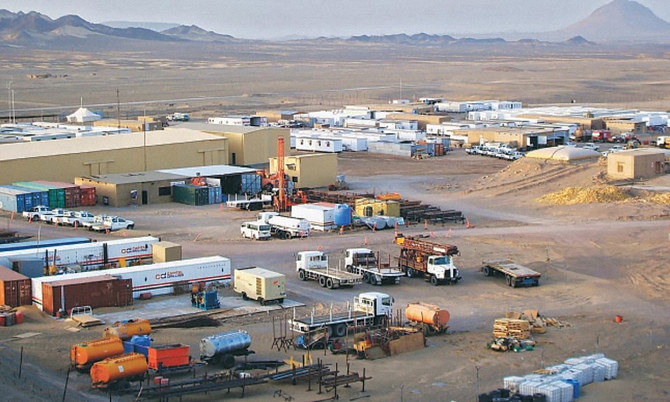
A file photo of the site of the gold and copper mine exploration project of Tethyan Copper Company (TCC) in Reko Diq, in Balochistan, Pakistan. (Photo courtesy: TCC)
Short Url
Updated 19 September 2020
Follow

'Great relief' as World Bank grants Pakistan six-month stay order in Reko Diq mine case

  • Last year, World Bank’s arbitration court ordered Pakistani government to pay damages of $5.8 billion to Tethyan Copper 
  • Reko Diq mine has become a test case for PM Imran Khan’s ability to attract serious foreign investment to Pakistan

ISLAMABAD: The World Bank’s arbitration court granting Pakistan a stay order of six months in the Reko Diq mine case was a “great relief,” chairman of the China-Pakistan Economic Corridor said on Friday.
Last year, the World Bank’s International Center for Settlement of Investment Disputes (ICSID) ordered Pakistan to pay damages of $5.8 billion to Tethyan Copper, a joint venture between Chile’s Antofagasta Plc and Canada’s Barrick Gold. 
Reko Diq is a small desert town in Pakistan’s southwestern Balochistan province, known for its vast mineral wealth.
“Reko Diq:Stay order by World Bank tribunal on $ 6 Bn award vs Pakistan is great relief,” Gen Asim Saleem Bajwa, who heads the CPEC authority, said on Twitter.
“Meanwhile PM directs to fully support GOB [government of Balochistan] for accelerated dev [development] of mineral sec [sector] in a transparent manner,structured system, best tech,involve local investors,develop own HR [human resources].”


“This is a success for Pakistan and its legal team,” the Pakistani Attorney General’s office said in a statement on Thursday.
The Reko Diq mine has become a test case for Prime Minister Imran Khan’s ability to attract serious foreign investment to Pakistan as it struggles to stave off an economic crisis that has forced it to seek an International Monetary Fund bailout.
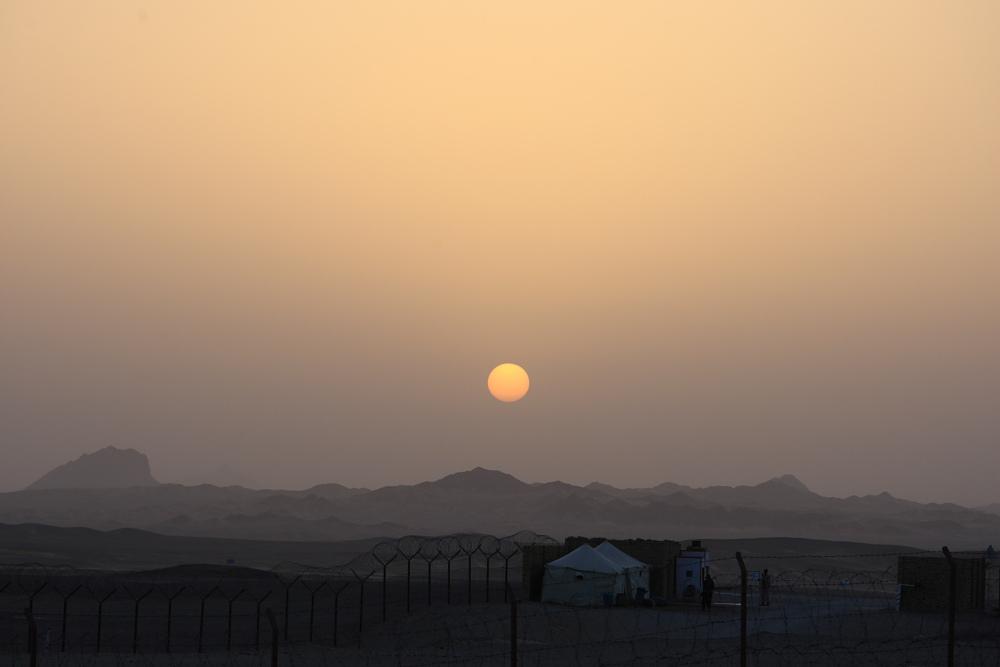


The Reko Diq copper reserve is located in the Pakistani province of Balochistan, near the border with Afghanistan. (Photo courtesy of Tethyan Copper)

State-run companies from resource-hungry China have long coveted Reko Diq and more recently Saudi Arabia has shown interest, officials say.
But the Reko Diq dispute has also been a significant foreign investment deterrent, with international businesses unnerved at how Pakistan dealt with the companies that had pledged to invest $3.3 billion to develop the country’s then-biggest mining project.
Tethyan Copper discovered vast mineral wealth more than a decade ago in Reko Diq, at the foot of an extinct volcano near Pakistan’s frontier with Iran and Afghanistan. The deposit was set to rank among the world’s biggest untapped copper and gold mines.
The company said it had invested more than $220 million by the time Pakistan’s government, in 2011, unexpectedly refused to grant them the mining lease needed to keep operating.
The World Bank’s court first ruled against Pakistan in 2017 but fixed damages in 2019. 


UN torture expert decries Pakistan ex-PM Khan’s detention

Updated 12 December 2025
Follow

UN torture expert decries Pakistan ex-PM Khan’s detention

  • Khan’s party alleges government is holding him in solitary confinement, barring prison visits
  • Pakistan’s government rejects allegations former premier is being denied basic rights in prison

GENEVA: Pakistan’s former prime minister Imran Khan is being held in conditions that could amount to torture and other inhuman or degrading treatment, the United Nations’ special rapporteur on torture warned Friday.

Alice Jill Edwards urged Pakistan to take immediate and effective action to address reports of the 73-year-old’s inhumane and undignified detention conditions.

“I call on Pakistani authorities to ensure that Khan’s conditions of detention fully comply with international norms and standards,” Edwards said in a statement.

“Since his transfer to Adiala Jail in Rawalpindi on September 26, 2023, Imran Khan has reportedly been held for excessive periods in solitary confinement, confined for 23 hours a day in his cell, and with highly restricted access to the outside world,” she said.

“His cell is reportedly under constant camera surveillance.”

Khan an all-rounder who captained Pakistan to victory in the 1992 Cricket World Cup, upended Pakistani politics by becoming the prime minister in 2018.

Edwards said prolonged or indefinite solitary confinement is prohibited under international human rights law and constitutes a form of psychological torture when it lasts longer than 15 days.

“Khan’s solitary confinement should be lifted without delay. Not only is it an unlawful measure, extended isolation can bring about very harmful consequences for his physical and mental health,” she said.

UN special rapporteurs are independent experts mandated by the Human Rights Council. They do not, therefore, speak for the United Nations itself.

Initially a strong backer of the country’s powerful military leadership, Khan was ousted in a no-confidence vote in 2022, and has since been jailed on a slew of corruption charges that he denies.

He has accused the military of orchestrating his downfall and pursuing his Tehreek-e-Insaf (PTI) party and its allies.

Khan’s supporters say he is being denied prison visits from lawyers and family after a fiery social media post this month accusing army leader Field Marshal Asim Munir of persecuting him.

According to information Edwards has received, visits from Khan’s lawyers and relatives are frequently interrupted or ended prematurely, while he is held in a small cell lacking natural light and adequate ventilation.

“Anyone deprived of liberty must be treated with humanity and dignity,” the UN expert said.

“Detention conditions must reflect the individual’s age and health situation, including appropriate sleeping arrangements, climatic protection, adequate space, lighting, heating, and ventilation.”

Edwards has raised Khan’s situation with the Pakistani government.