

Tunisian film nabs two awards at Venice Film Festival 

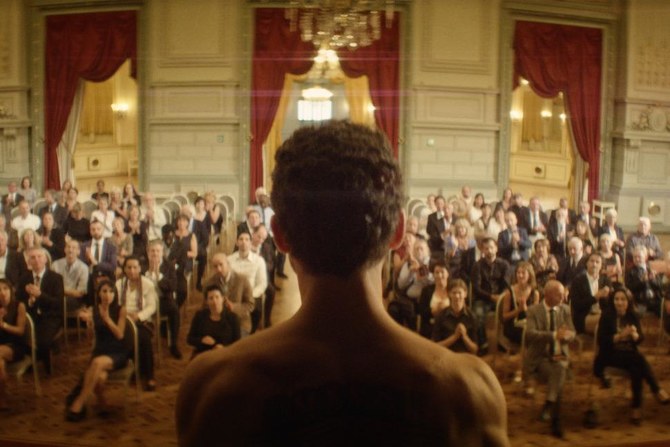
Syrian actor Yahya Mahyani plays the lead character, Sam Ali. (Venice Film Festival)
Short Url
Updated 15 September 2020
Follow

Tunisian film nabs two awards at Venice Film Festival 

DUBAI: Tunisian film “The Man Who Sold His Skin” won two awards at the Venice International Film Festival this week. 

Directed and written by Tunisian filmmaker and screenwriter Kaouther Ben Hania, the movie scored the Edipo Re Award, which is one of the festival’s collateral prizes, while its Syrian actor Yahya Mahyani was awarded the Orizzonti Award for Best Actor for his leading role in the film. 

Mahyani plays the role of Sam Ali, a young, sensitive and impulsive Syrian, who left his country for Lebanon to escape the war.

To be able to travel to Europe and live with the love of his life, Ali accepts to have his back tattooed by one of the world’s most contentious contemporary artists. Turning his own body into a prestigious piece of art, Sam will, however, come to realize that his decision might actually mean anything but freedom.

The festival is one of the first major film events to take place physically since the coronavirus pandemic hit Europe.

The Cannes Film Festival was canceled and other major international festivals in Toronto and New York opted to go mostly online.

But after Italy managed to tame its infections with a strict 10-week lockdown, Venice decided to go ahead, albeit under safety protocols that would have previously been unthinkable for a festival that has prided itself on spectacular visuals and glamorous stars.


Creators spotlight graphic novels as powerful literacy tools at Dubai literature festival

Updated 56 sec ago
Follow

Creators spotlight graphic novels as powerful literacy tools at Dubai literature festival

DUBAI: Comic creators Jamie Smart, John Patrick Green and Mo Abedin joined the Emirates Airline Festival of Literature in Dubai this week to discuss the growing role of comics in classrooms and how graphic novels are reshaping children’s relationship with reading.

Smart is the author of the bestselling “Bunny vs. Monkey” series, Green is known for his popular “The InvestiGators” books about crime-solving alligators, and Abedin is the UAE-based creator of the sci-fi graphic novel “Solarblader."


A post shared by @jamiefumboo

A key point shared by all three speakers was that comics should be valued as a complete art form rather than a stepping stone to prose. Abedin described comics as “a very high art form,” explaining that the medium taught readers how to process complex ideas such as emotion, empathy and culture through visual storytelling. 

He added that comics allowed readers to slow down and engage on their own terms because “the reader is also able to control the pace of the narrative.”

For Smart, the power of comics lies in the emotional connection they create. He spoke about how the word “comics” immediately takes him back to childhood, recalling being “eight years old and going down the newsagent” and spending hours reading. That sense of joy, he said, is what many reluctant readers respond to. He noted that parents often tell him, “My child would not read a book, a single book … until they picked up a comic,” adding that comics inform readers even when they are simply entertaining. “They can just be an emotional, heartfelt story,” he said.

Green focused on how comics function as a visual language that readers learn over time. He described them as “almost a separate language,” noting that some adults struggle at first because they are unsure how to read a page — whether to follow images or text. But that flexibility is what gives comics their strength, allowing readers to choose how they experience a story and giving them more agency than prose or film.

The panel also discussed re-reading as a powerful part of the comics experience. Children often race through a book for the plot, then return to notice visual details, background jokes and character expressions, building deeper comprehension with each reading.

By the end of the session, all three agreed that comics should be studied and respected as their own form of literature — one that welcomes readers of all levels, builds confidence and makes reading feel like discovery rather than obligation.