

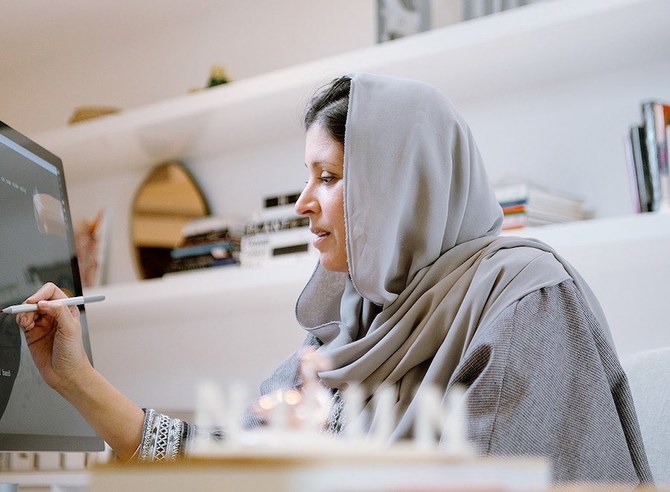
Saudi designer Princess Nourah Al-Faisal details discrimination by French newspaper

Nourah Al-Faisal is the founder of Nuun Jewels. File/Instagram
Short Url
Updated 15 September 2020
Follow

Saudi designer Princess Nourah Al-Faisal details discrimination by French newspaper

RIYADH/DUBAI: Princess Nourah Al-Faisal, Saudi founder of Paris-based fine jewelry label Nuun Jewels, took to social media this week to share an exchange between her team and French newspaper Les Echos, who, according to the designer, refused to run a portrait of her because she was wearing a hijab in the image.

“As a Saudi female jewelry designer working in Europe there have been times when I have come up against all kinds of discrimination,” she wrote in a lengthy Instagram post shared on her personal account. “Something happened today that I feel I cannot let pass,” she added.

The designer went on to detail the incident, stating that the professional headshots she provided to illustrate an interview set to run in the magazine were the subject of much furor.  


As a Saudi female jewelry designer working in Europe there have been times when I have come up against all kinds of discrimination. I have found that the best policy is to work hard and let my success speak for itself. For the most part this has served me well, however, something happened today that I feel I cannot let pass. Let me start by saying that in no way do I believe that the behavior I described represents French culture. over the years I have come to consider my friends and the people I work with in France as family. I have also found support in the French media who have accepted me as one of their own. NUUN was approached by Les Echos, and asked to submit images of some of my work for an article on jewelers. They also requested an image of me which we supplied. , they then came back to us with a request for more images, so we gave them access to the file that contained several of my professional headshots. This morning we were sent a message through the coordinating PR agency explaining that the images shared did not CONFORM to the images of the other designers and that unless we were prepared to share an image without a HIJAB, they would not be using NUUN JEWELS in their article. I am not surprised that this sort of overt discrimination exists in the world, but from a supposedly liberal media outlet it is shocking. As a Muslim woman I am proud of my religion and my culture , i have always tried to represent my culture to the best of my ability. Discrimination is insidious and ingrained in many institutions all over the world and we must expose it wherever we find it. Today I found it in LES ECHOS. On a final note, I would like to just say that what I have found most disturbing is the ease with which this request was made with no thought of right or wrong. Would they have requested that a Hasidic woman to remove her wig because no one else is wearing one? What then is the difference? Why is one culture and religion valued while another is dismissed? Why do they think this behavior acceptable and why do they not fear ramifications? This tells me that this is acceptable behavior in their world, but I am here to say it is not nor will it ever be

A post shared by Nourah Alfaisal (@itsanuworld) on

According to the designer’s Instagram post, “we were sent a message through the coordinating PR agency explaining that the images shared did not conform to the images of the other designers and that unless we were prepared to share an image without a hijab, they would not be using Nuun Jewels in their article.”

The designer spoke to Arab News to share her disappointment.

“I highlighted this incident because we can’t fight these behaviors by keeping quiet and silent. Rasicm and discrimination is everywhere around the world. It’s something we must address… as a society, we have to keep talking about it.”
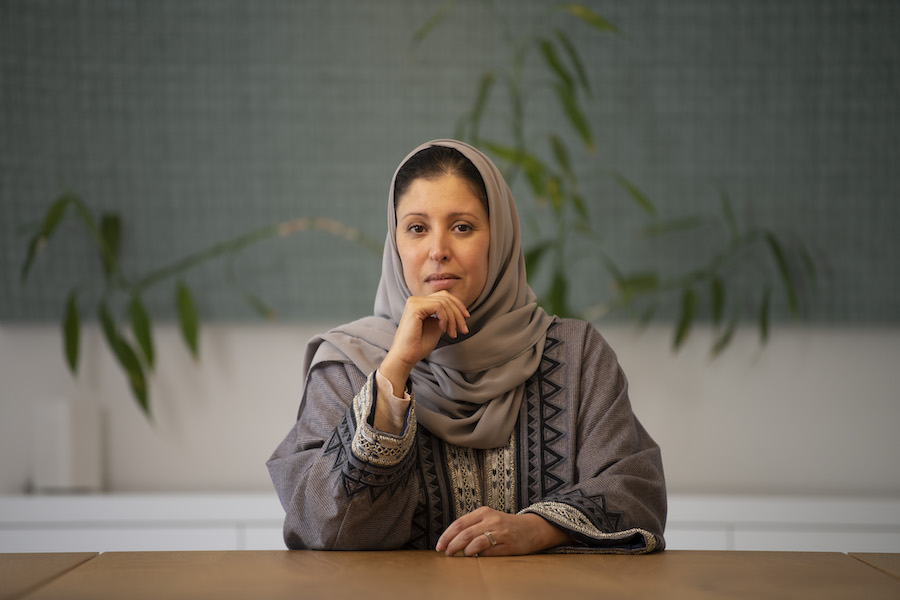


According to the designer, the newspaper refused to run a portrait of her because she was wearing a hijab in the image. Supplied

Even though the incident occurred with a French publication, the designer wants to stress that it is in no way a representation of French people or the country, making sure to point out, “My French friends and coworkers have all sent me messages saying this is not acceptable.”

Indeed, many users took to Al-Faisal’s comment section to write heartfelt messages of support and denounce Islamophobia and discrimination. 
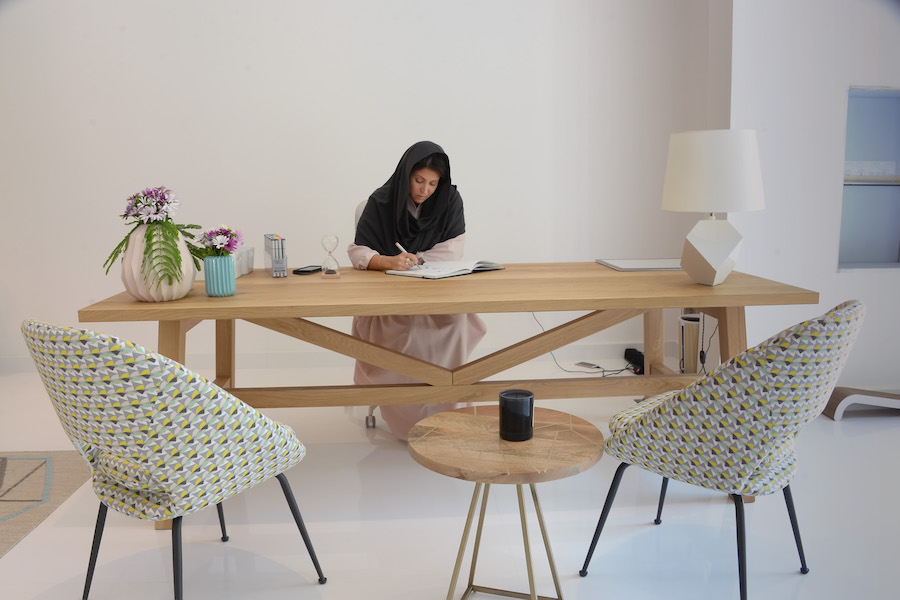


She has  received much support from people all over the world following the incident. Supplied

She has also received much support from people all over the world following the incident, and remains hopeful despite her experience with discrimination as a hijab-wearing woman.  “I’m an internal optimist,” she mused. “I fully believe that humanity is wondrous at its core.” 

“When it comes to my work I’ve always wanted to be judged by my craft. Look at the work, judge me on that and if you don’t like it, it’s fine. But don’t dismiss my work for a presumption,” she said.

Can such behavior be abolished? Al-Faisal believes so. “Racism is a taught behavior,” she stated. “You can unteach it."


Review: Netflix docuseries highlights the ugly truth of ‘America’s Next Top Model’

Updated 57 min 53 sec ago
Follow

Review: Netflix docuseries highlights the ugly truth of ‘America’s Next Top Model’

DHAHRAN: Out this month, nearly a decade after the successful show went off air, there is understandably a lot to unpack in Netflix’s three-episode documentary series “Reality Check: Inside America’s Next Top Model.”

Premiering in 2003 and running for 24 seasons until 2018, “America’s Next Top Model” invited aspiring models from across America to compete for a coveted modeling contract, and a glossy magazine cover (remember those?).

All this while juggling growing pains, random challenges cooked up by producers, marvelously messy makeovers, photoshoots, and living — and competing — with fellow contestants.

What could go wrong? Turns out — plenty. The show’s intimate format made for compelling TV.

Tyra Banks, one of America’s top models, was the show’s brainchild.

The young contestants were impressionable and eager, full of sky-high dreams and sky-high heels. They came from fractured backgrounds or from small towns. They were meant to have a mentor in Banks.

Instead, their deepest, most shameful moments were broadcast for the world to see. To my knowledge, while some contestants became semi-successful, none truly reached the “top model” level.

The docuseries hits like a punch in the face. And maybe that is the point.

Three episodes, each just an hour long, barely scratches the surface of the trauma, chaos, and behind-the-scenes drama on and off the screen.

The series is essentially a catwalk down nostalgia lane — but the road is uneven and swerving, much like the show itself. The style of filming is also similar to the show, which makes it all the more compelling for avid fans.

Designed for the TikTok-and-meme generation, these bite-sized scenes in the docuseries are tailor-made for viral clips.

Banks appears alone in every scene. Speaking directly at the camera, she seems to shrug through every apology and justify her past behavior.

The docuseries highlights interviews with main judges: Jay Manuel, Nigel Barker, and most prominently, a shocking update on beloved judge J. Alexander, known as “Miss J.” All claim to be estranged from Banks.

A few former contestants are also featured, each seated alone as tears or rage bubble to the surface. Nobody speaks favorably about Banks, especially while replaying clips showing her old judging panels.

Was this backlash justified? Are the vicious things said about Banks fair? The docuseries offers viewers the chance to be the judge in what invariably turns into a trial of Banks and her role on the show.

The docuseries ends on a cliffhanger, teasing a possible revival for cycle 25. Mixed feelings aside, there is clearly an audience for it.