JEDDAH: Drone technology has come on leaps and bounds in the past decade, bridging the gap from niche and military use to business and personal.
In 2010, a French company released the first ready-to-fly drone fully controlled using a smartphone, and the world has never been the same since.
Its commercial success was immediate and since then, drones have developed in many ways, from size to quality and function, from use a delivery tools to mobile cameras.

The idea of working amidst the clouds appealed to Nezar Tashkandi, a native of Jeddah, ever since he worked as a flight paramedic in Omaha, Nebraska, responding to emergency rescues while working as an assistant director at a media production company on the side.
“Most of my work was in the helicopter responding to a lot of cases. I saw that the vision from the sky is different from the ground. So I thought there should be some way I could make a film from the air,” Tashkandi told Arab News.
“I realized that drones were an opportunity for me to expand my knowledge and my vision,” he added.
He started as an assistant director then headed straight for the drone industry. “My first job was a reporter drone pilot to respond to crime scenes and film them with the drone, and I started doing that for news companies.”
He bought his first drone in 2017, and had a rough start, not knowing it would be his ticket to stardom.
“As soon as I flew it, I crashed it, and I was so devastated that I wouldn’t be able to continue. But the curiosity and the vision I had, it was all through the drones, and I had to learn the basics,” he said.
Throughout his journey, he has crashed many drones and faced many financial challenges to purchase more.
As soon as I flew it, I crashed it, and I was so devastated that I wouldn’t be able to continue. But the curiosity and the vision I had, it was all through the drones, and I had to learn the basics.
Nezar Tashkandi, Drone director
“None of my friends supported my idea, not even my family,” he said. “No one knew what I was going through with the drones. I was so ambitious to learn a lot about drones, it was so difficult to learn as well as there weren’t many people that had knowledge on them at that time. And I knew it was the opportunity for me to expand my vision and career in the media production field.”
He took his drone piloting career to the next level when he photographed the Rocky Mountain National Park, Colorado.
“I didn’t realize that this kind of career was so beautiful, but at the same time I took it to the next level when I made my first Rocky Mountain National Park aerial footage. I received some support from the park in Colorado, where they gave me access to the whole community.”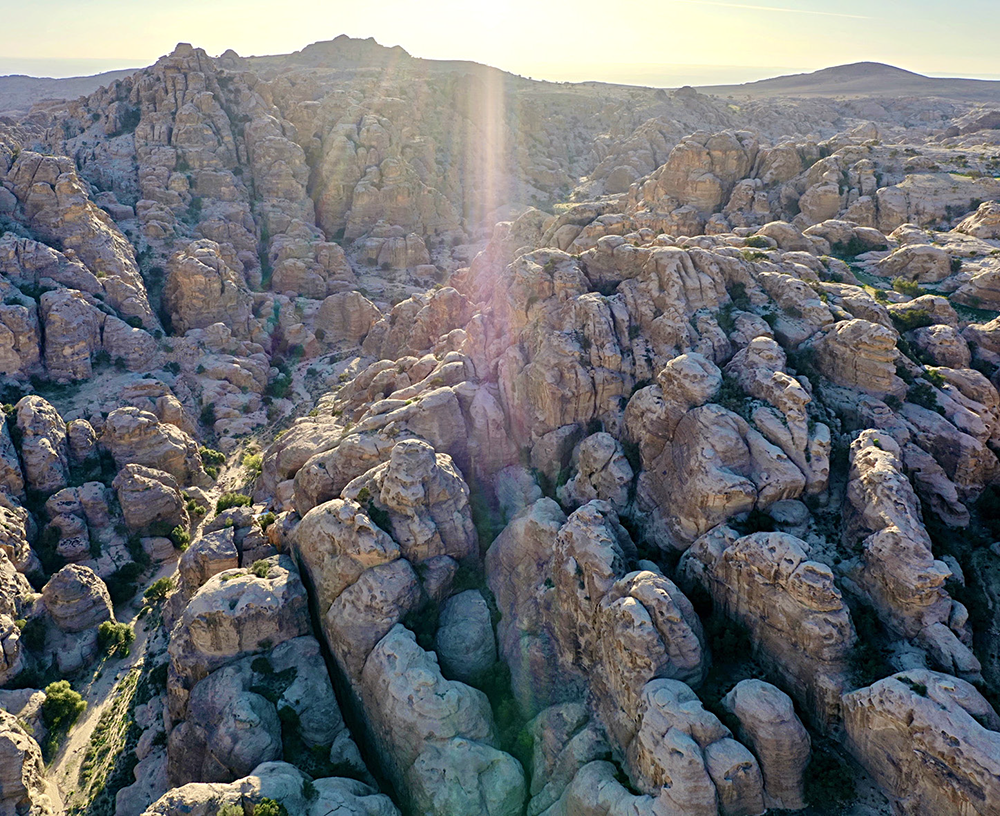
He added: “After a while, my friends and family started to notice and thought: ‘You know what? You actually might have a career in this thing, but stick to plan A as a flight paramedic because it has more income and a better life.’”
After working in the US as a drone pilot for two years, he came back to the Kingdom and worked as a paramedic at the Saudi Red Crescent Authority for a while. “The moment I came back to the country, I made connections to shoot films,” he added.
Through his knowledge and skill in the drone industry, he created an exceptional portfolio and showreel, which later gained him profound recognition as the first Saudi aerial director in August of 2019.
He’s worked with the Ministry of Tourism shooting aerial photos and videos of top tourist destinations since then, covering historical and ancient sites such as AlUla and areas unknown to many such as Dee Ain.
The ancient 600-year-old village in Al-Baha is surrounded by magnificent mountains with homes climbing upwards to resemble a high fortress. Tashkandi’s 360 degree view of the fortress has placed the village in the spotlight as a depiction of what ancient history the Kingdom can truly offer to its visitors.