

Saudi economic recovery picks up as lockdowns ease

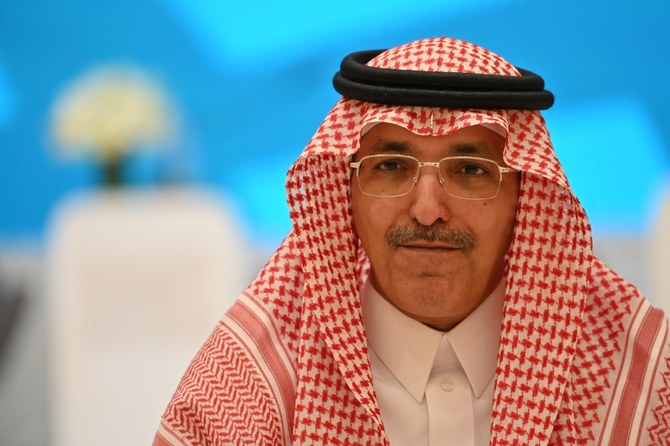
Mohammed Al-Jadaan said some sectors were showing signs of a post-lockdown recovery. (AFP/File)
Short Url
Updated 04 September 2020
Follow

Saudi economic recovery picks up as lockdowns ease

  • Khalid Al-Falih, minister of investment, said that 506 new business licences were granted in first half of 2020
  • Finance Minister Mohammed Al-Jadaan said some sectors were showing signs of recovery as lockdowns ended

RIYADH: Early evidence of economic recovery in Saudi Arabia came in statements from two ministers at the sharp end of the Kingdom’s strategy to combat the effects of the coronavirus disease (COVID-19) pandemic.

Saudi Minister of Investment Khalid Al-Falih announced that 506 new business licenses were granted in the first half of this year, with a burst in activity in June partly compensating for a big fall-off in April and May when lockdowns severely curtailed global investment activity.

The minister said he was “encouraged by the resilience demonstrated by the Saudi economy in the first half of 2020.”

He added: “The positive economic data for June gives us confidence that the Saudi economy is rebounding from the impact of COVID-19 and that growth in foreign investment will begin to regain the strong momentum we have seen in recent years.”

Separately, Mohammed Al-Jadaan, the minister of finance and economic planning, told a virtual forum that some sectors were showing signs of recovery as lockdowns and curfews ended toward the end of the first half.

Domestic tourism was ahead 18 percent in June over last year, while hotel occupancy – virtually at zero earlier in the spring – was back to between 85 and 90 percent, Al-Jadaan said.

“We think the results are very positive for June since we reopened the economy. We’re getting back, but we need to be cautious and remember we are not out of the woods yet.”

That note of cautious optimism was echoed by Al-Falih. “This has undoubtedly been a year of unprecedented challenges – and the path of the economy in the near term will depend on the virus,” he said.

The Ministry of Investment highlighted more encouraging evidence of a recovery. “Other recent data also pointed to an increase in economic activity toward the end of Q2 (the second quarter of the year) – suggesting that the economy may be experiencing significant catch-up growth as the Kingdom cautiously lifts some lockdown measures,” a ministry statement said.

It quoted figures from the Saudi Arabian Monetary Authority (SAMA) showing that point-of-sale transactions witnessed a 78.5 percent year-on-year jump in June to a record level of $9.9 billion (SR37 billion), following sharp declines in April and May.

Likewise, data released by the Ministry of Industry and Minerals Resources showed that investments by newly licensed industrial factories amounted to $581 million in June, following a sharp slowdown in April and May.

Al-Jadaan said that the COVID-19 outbreak had hit the Saudi economy “like a steam train” in March. “We did not really expect that. It has been the most challenging year for 100 years, and everyone in the world has suffered,” he told an online forum organized by financial information firm Euromoney.

The finance minister added that the Vision 2030 reforms had helped the Kingdom implement its response to the pandemic and he underlined the strength of the financial reserves held by SAMA and other financial institutions.

He noted that around 50 countries had been downgraded by credit ratings agencies because of the economic hit from the pandemic but that Saudi Arabia had retained “stable” status, and he highlighted the resilience of local debt markets and the good reception given by international markets to Saudi Arabian bond issuance.

American, British, and Indian firms were the biggest contingent in the new license data, investing in entrepreneurship, education, financial services, and housing, as well as industrial, manufacturing, and information technology.

Al-Jadaan praised the work of the G20 – the leaders’ organization due to meet in Riyadh in November – in raising funds for medical projects including the search for a vaccine against the virus.


First EU–Saudi roundtable on critical raw materials reflects shared policy commitment

Updated 16 January 2026
Follow

First EU–Saudi roundtable on critical raw materials reflects shared policy commitment

RIYADH: The EU–Saudi Arabia Business and Investment Dialogue on Advancing Critical Raw Materials Value Chains, held in Riyadh as part of the Future Minerals Forum, brought together senior policymakers, industry leaders, and investors to advance strategic cooperation across critical raw materials value chains.

Organized under a Team Europe approach by the EU–GCC Cooperation on Green Transition Project, in coordination with the EU Delegation to Saudi Arabia, the European Chamber of Commerce in the Kingdom and in close cooperation with FMF, the dialogue provided a high-level platform to explore European actions under the EU Critical Raw Materials Act and ResourceEU alongside the Kingdom’s aspirations for minerals, industrial, and investment priorities.

This is in line with Saudi Vision 2030 and broader regional ambitions across the GCC, MENA, and Africa.

ResourceEU is the EU’s new strategic action plan, launched in late 2025, to secure a reliable supply of critical raw materials like lithium, rare earths, and cobalt, reducing dependency on single suppliers, such as China, by boosting domestic extraction, processing, recycling, stockpiling, and strategic partnerships with resource-rich nations.

The first ever EU–Saudi roundtable on critical raw materials was opened by the bloc’s Ambassador to the Kingdom, Christophe Farnaud, together with Saudi Deputy Minister for Mining Development Turki Al-Babtain, turning policy alignment into concrete cooperation.

Farnaud underlined the central role of international cooperation in the implementation of the EU’s critical raw materials policy framework.

“As the European Union advances the implementation of its Critical Raw Materials policy, international cooperation is indispensable to building secure, diversified, and sustainable value chains. Saudi Arabia is a key partner in this effort. This dialogue reflects our shared commitment to translate policy alignment into concrete business and investment cooperation that supports the green and digital transitions,” said the ambassador.

Discussions focused on strengthening resilient, diversified, and responsible CRM supply chains that are essential to the green and digital transitions.

Participants explored concrete opportunities for EU–Saudi cooperation across the full value chain, including exploration, mining, and processing and refining, as well as recycling, downstream manufacturing, and the mobilization of private investment and sustainable finance, underpinned by high environmental, social, and governance standards.

From the Saudi side, the dialogue was framed as a key contribution to the Kingdom’s industrial transformation and long-term economic diversification agenda under Vision 2030, with a strong focus on responsible resource development and global market integration.

“Developing globally competitive mineral hubs and sustainable value chains is a central pillar of Saudi Vision 2030 and the Kingdom’s industrial transformation. Our engagement with the European Union through this dialogue to strengthen upstream and downstream integration, attract high-quality investment, and advance responsible mining and processing. Enhanced cooperation with the EU, capitalizing on the demand dynamics of the EU Critical Raw Materials Act, will be key to delivering long-term value for both sides,” said Al-Babtain.

Valere Moutarlier, deputy director-general for European industry decarbonization, and directorate-general for the internal market, industry, entrepreneurship and SMEs at European Commission, said the EU Critical Raw Materials Act and ResourceEU provided a clear framework to strengthen Europe’s resilience while deepening its cooperation with international partners.

“Cooperation with Saudi Arabia is essential to advancing secure, sustainable, and diversified critical raw materials value chains. Dialogues such as this play a key role in translating policy ambitions into concrete industrial and investment cooperation,” she added.