



PARIS: Tuesday marks the centenary of the proclamation of Greater Lebanon. For Herve Gaymard, president of the Charles de Gaulle Foundation, former French Minister of Economy and Finance, and president of the Haute-Savoie departmental council, it is an opportunity not only to look back on the history of Franco-Lebanese relations, but also on de Gaulle’s brief stay in Lebanon.
“Like all French people, we are very attached to Lebanon,” Gaymard told Arab News en Francais. “We have always been closely linked to its history, especially since the 19th century, after the massacres of 1860 and the creation of the Moutassarifat in which Napoleon III was very involved. …For us Gaullists, this (period) obviously has a very special resonance.”
Gaymard said: “Everyone knows that General de Gaulle lived in Lebanon for two years, between 1929 and 1931, and that those years were very important in his life. Not only did he discover Lebanon and Syria, but he also went to British Palestine. At the time, he already had the issue of Jewish communities and Palestinians at heart.
“He also went to what was known as ‘Geziré’ or ‘Upper Mesopotamia,’ since we know that he went to the northeast of Syria when the demarcation between Turkey and Syria took place. British Mesopotamia later became Iraq. These two years were of great importance to de Gaulle.”
Among the three moments in the Beirut years of De Gaulle that stand out in Gaymard’s view is the speech he gave at Saint Joseph University in front of Lebanese youth. “It was no small matter for an officer who was not of high rank — de Gaulle was then an almost junior officer — to hold this astonishing conference with the Lebanese youth himself,” Gaymard said. “This was the general’s first Lebanese exposure.”
Gaymard added: “The second, obviously much more tragic, was the 1941 war against the Vichy troops, a fratricidal war between the French, which the elites and the Lebanese people had undoubtedly followed with great interest and sadness as well.
“De Gaulle’s third Lebanese moment was as President of the Republic, or rather as the last president of the Fourth French Republic. Indeed, when he returned to power at the beginning of June 1958, the summer crisis began in July, and everyone in Lebanon remembers it.
“Then came his politics as president of the Fifth Republic, until 1969, a period during which he forged very close ties with the Middle East, and Lebanon in particular. To us Gaullists, Lebanon is obviously of extreme importance. This is the reason why the Charles de Gaulle Foundation supports the project of a Charles de Gaulle Institute in Lebanon.”
In regard to present-day Lebanon, Gaymard said he had “no judgment to pass,” “especially since I love this country and its people and I am always in awe of the tenacity of this great people, who have gone through so many crises and upheavals.”
Gaymard explained: “General de Gaulle lived from 1890 to 1970, and we are in 2020. We no longer live in the same world. One would be tempted to believe that de Gaulle is ancient history, but that would be a mistake. Several sayings of the general are lessons for eternity.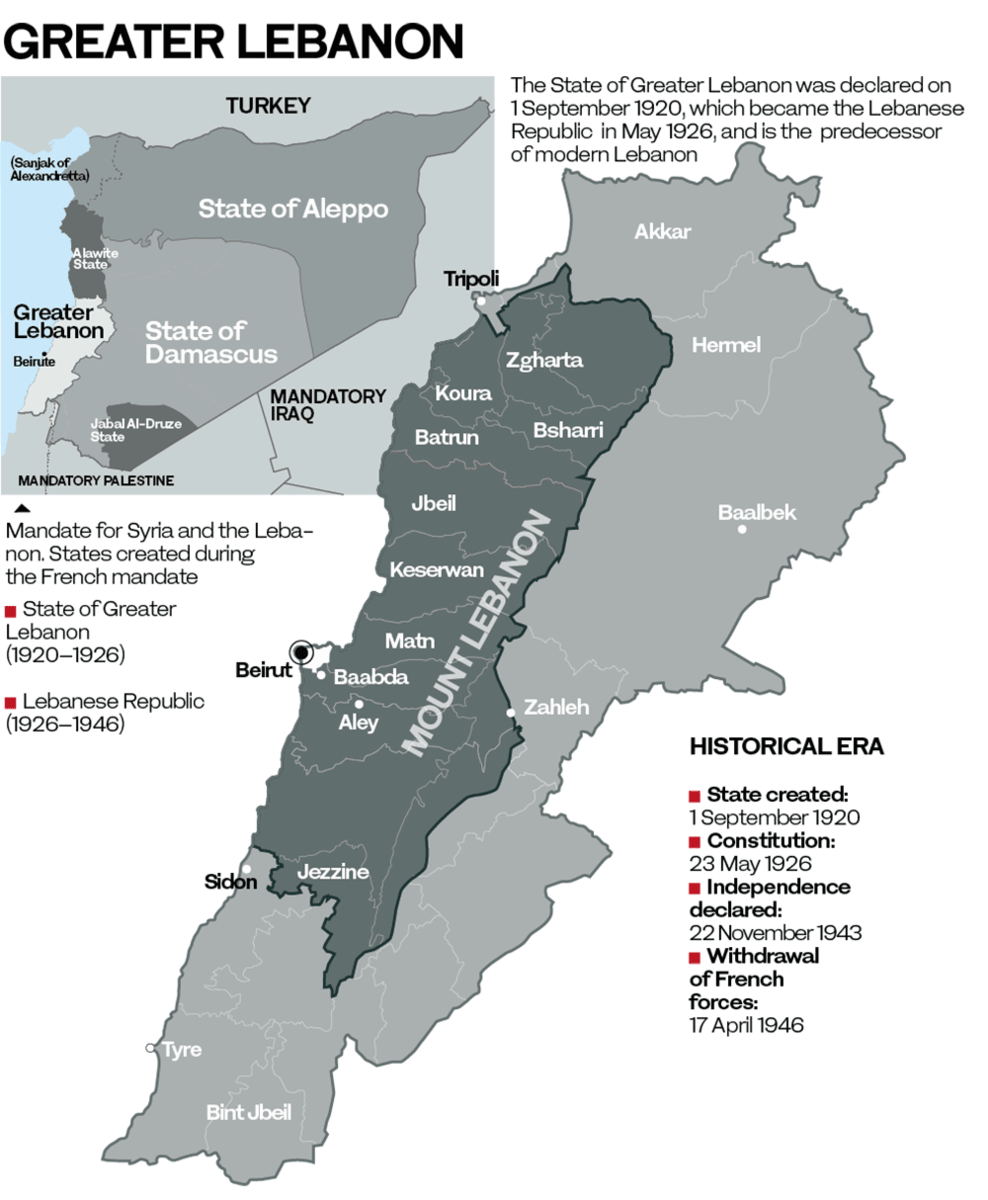
“The first lesson applies just as well to Lebanon as it does to France: Never despair. You should never give up, let yourself be moved or impressed by events, however painful they may be. Stay the course. That is the meaning of the Appeal of June 18 (after the fall of France in 1940), and the meaning of his Christmas message to the children of France, December 25, 1941, when Germany, Japan and Italy seemed to be victorious over all fronts.”
The second lesson, according to Gaymard, is knowing how to rely on your own strengths. “It is true that you are nothing alone, but when you have faith in your body and soul, you can move mountains,” he said.
“Finally, de Gaulle’s third lesson is unity. Because any country divided against itself will perish. Charles de Gaulle had always had a love of unity, even if he himself did not enjoy unanimous backing. He suffered several assassination attempts. He lost his last referendum, which is why he left power.
“Still, he was was an untiring advocate of unity. I believe that these are everlasting lessons for our two countries, Lebanon and France.”


