BEIRUT: Lebanon passed the 15,000 mark for coronavirus cases on Friday, the health ministry said, as the country eased lockdown measures just a week after re-imposing them following pressure from businesses.
The ministry announced 676 new infections and two deaths in the past 24 hours, bringing the total number of novel coronavirus cases registered since February to 15,613, including 148 deaths.
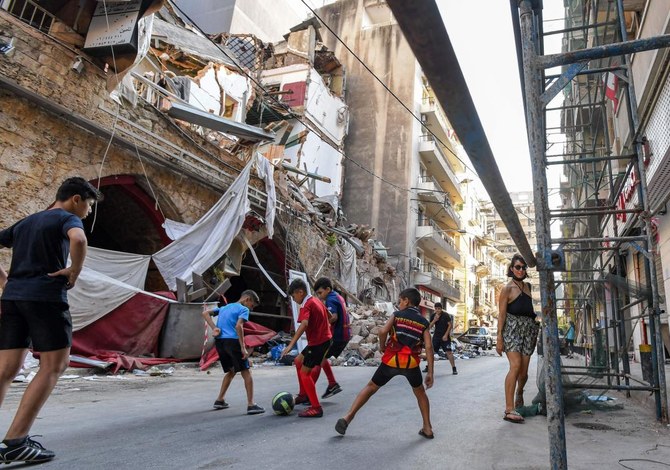
Daily infection rates have spiked since a massive explosion at Beirut’s port on August 4 that killed more than 180 people, wounded thousands and ravaged large parts of the capital.
Some 5,855 cases, or more than a third of the total, have been registered in the past 10 days alone.
Authorities on August 21 imposed a lockdown in all parts of the country except those ravaged by the blast, as well as a night-time curfew from 6 p.m. (1500 GMT) to 6 am (0300 GMT).
But they eased the restrictions on Friday after protest from the private sector, including the owners of service and tourism businesses already reeling from the country’s worst economic downturn in decades.
The start of the curfew was pushed back to 10 p.m. (1900 GMT), while malls, restaurants, coffee shops and gyms were allowed to re-open.
Caretaker health minister Hamad Hassan warned on August 17 that hospitals were reaching maximum capacity to treat coronavirus patients after the blast overwhelmed health centers already stretched by the virus.
The head of a major public hospital battling coronavirus, Firass Abiad, was unimpressed by Friday’s easing of preventive measures.
With a record 24-hour tally of 689 positive tests recorded a day earlier, “it is clear the objectives of the lockdown had not been reached,” he said on Twitter.


![]()


Lebanon coronavirus cases top 15,000
Short Url
https://arab.news/ykmtr
Lebanon coronavirus cases top 15,000
- Daily infection rates have spiked since a massive explosion at Beirut’s port on August 4
- Some 5,855 cases, or more than a third of the total, have been registered in the past 10 days alone


Hamas official says group in final stage of choosing new chief
CAIRO: A senior Hamas official told AFP on Sunday that the Palestinian movement was in the final phase of selecting a new leader, with two prominent figures competing for the position.
Hamas recently completed the formation of a new Shoura Council, a consultative body largely composed of religious scholars, as well as a new political bureau.
Members of the council are elected every four years by representatives from Hamas’s three branches: the Gaza Strip, the occupied West Bank and the movement’s external leadership.
Hamas prisoners in Israeli jails are also eligible to vote.
The council subsequently elects the political bureau, which in turn selects the head of the movement.
“The movement has completed its internal elections in the three regions and has reached the final stage of selecting the head of the political bureau,” the official said, speaking on condition of anonymity as he was not authorized to speak publicly.
He added that the race for the group’s leadership is now between Khaled Meshaal and Khalil Al-Hayya.
A second Hamas source confirmed the development within the organization, which fought a devastating war with Israel following its October 7, 2023 attack.
Hayya, 65, a Gaza native and Hamas’s chief negotiator in ceasefire talks, has held senior roles since at least 2006, according to the US-based NGO the Counter Extremism Project (CEP).
Meshaal, who led the political bureau from 2004 to 2017, has never lived in Gaza. He was born in the West Bank in 1956.
He joined Hamas in Kuwait and later lived in Jordan, Syria and Qatar. The CEP says he oversaw Hamas’s evolution into a political-military hybrid.
He currently heads the movement’s diaspora office.
Last month, a Hamas source told AFP that Hayya enjoys backing from the group’s armed wing, the Ezzedine Al-Qassem Brigades.
After Israel killed former Hamas leader Ismail Haniyeh in Tehran in July 2024, the group chose its then-Gaza chief Yahya Sinwar as his successor.
Israel accused Sinwar of masterminding the October 7 attack.
He too was killed by Israeli forces in the southern Gaza city of Rafah, three months after Haniyeh’s assassination.
Hamas then opted for an interim five-member leadership committee based in Qatar, postponing the appointment of a single leader until elections, given the risk of the new chief being targeted by Israel.
Hamas recently completed the formation of a new Shoura Council, a consultative body largely composed of religious scholars, as well as a new political bureau.
Members of the council are elected every four years by representatives from Hamas’s three branches: the Gaza Strip, the occupied West Bank and the movement’s external leadership.
Hamas prisoners in Israeli jails are also eligible to vote.
The council subsequently elects the political bureau, which in turn selects the head of the movement.
“The movement has completed its internal elections in the three regions and has reached the final stage of selecting the head of the political bureau,” the official said, speaking on condition of anonymity as he was not authorized to speak publicly.
He added that the race for the group’s leadership is now between Khaled Meshaal and Khalil Al-Hayya.
A second Hamas source confirmed the development within the organization, which fought a devastating war with Israel following its October 7, 2023 attack.
Hayya, 65, a Gaza native and Hamas’s chief negotiator in ceasefire talks, has held senior roles since at least 2006, according to the US-based NGO the Counter Extremism Project (CEP).
Meshaal, who led the political bureau from 2004 to 2017, has never lived in Gaza. He was born in the West Bank in 1956.
He joined Hamas in Kuwait and later lived in Jordan, Syria and Qatar. The CEP says he oversaw Hamas’s evolution into a political-military hybrid.
He currently heads the movement’s diaspora office.
Last month, a Hamas source told AFP that Hayya enjoys backing from the group’s armed wing, the Ezzedine Al-Qassem Brigades.
After Israel killed former Hamas leader Ismail Haniyeh in Tehran in July 2024, the group chose its then-Gaza chief Yahya Sinwar as his successor.
Israel accused Sinwar of masterminding the October 7 attack.
He too was killed by Israeli forces in the southern Gaza city of Rafah, three months after Haniyeh’s assassination.
Hamas then opted for an interim five-member leadership committee based in Qatar, postponing the appointment of a single leader until elections, given the risk of the new chief being targeted by Israel.
Latest updates


© 2026 SAUDI RESEARCH & PUBLISHING COMPANY, All Rights Reserved And subject to Terms of Use Agreement.