


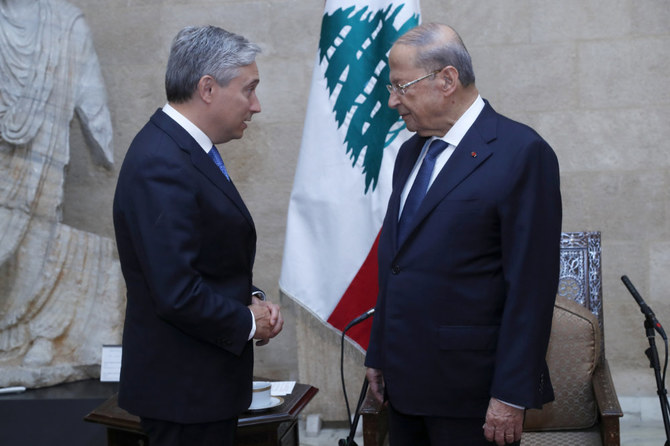
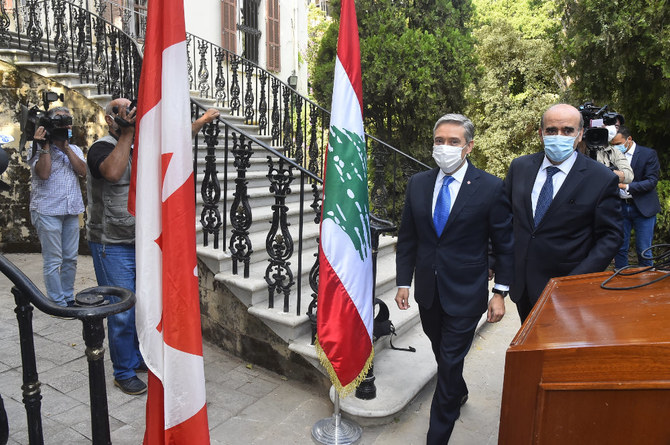

BEIRUT: Canadian Foreign Minister François-Philippe Champagne has called on Lebanese authorities to heed the will of their people. He also reiterated that international aid to help the country recover from its financial crisis is dependent on the implementation of “very serious” economic and political reforms.
Speaking exclusively to Arab News on Thursday after arriving in Beirut to assess the situation following the devastating explosion in the city’s port on Aug. 4, he said: “Impunity must end. Young people, women and victims have spoken, and we must listen to them. In a tragedy of unprecedented magnitude, we must ask the right questions and develop inclusive answers to match, for a prosperous Lebanon.”
He said Canada supports the Lebanese people, and stressed the importance of reforms to the efforts to ensure a lasting recovery.
“Canada wishes to be part of the reconstruction,” he said. “We are happy to help Lebanon but reforms are needed and the corruption must stop. The streets spoke; the young people, the women and the victims spoke. Now we have to listen to them.
HIGHLIGHTS
- Canada providing a historic response to the historic challenge, says visiting minister.
- Canada wishes to be part of the reconstruction, says François-Philippe Champagne.
- 300,000-strong diaspora want to help build a prosperous and inclusive Lebanon.
- UNESCO chief stresses need for reconstruction of damaged heritage sites in order to protect the cultural history of Beirut.
“I am very happy to be here for the next two days and meet civil society representatives, and make sure that Canada is providing a historic response to the historic challenge facing the Lebanese people.”
Champagne noted that food security was severely affected by the explosion, on top of a growing economic crisis that has caused inflation to soar, and that Canada is ready to help alleviate this.
He said that his country is home to “300,000 Canadians of Lebanese origin who want to help build a prosperous and inclusive Lebanon” and that “the diaspora will want to lend a hand to their Lebanese brothers and sisters, if the mode of governance is there.”
Meanwhile, Ziad Bekdash, vice-president of the Association of Lebanese Industrialists, said that 90 percent of Lebanese exports are once again passing through Port of Beirut, less than a month after the explosion that destroyed much of it and surrounding residential neighborhoods. He praised the port authorities and the Lebanese Army for resuming operations so quickly.
The Internal Security Forces said that its Scientific Investigation Department has identified the victims of the blast from their remains, but three people are still missing.
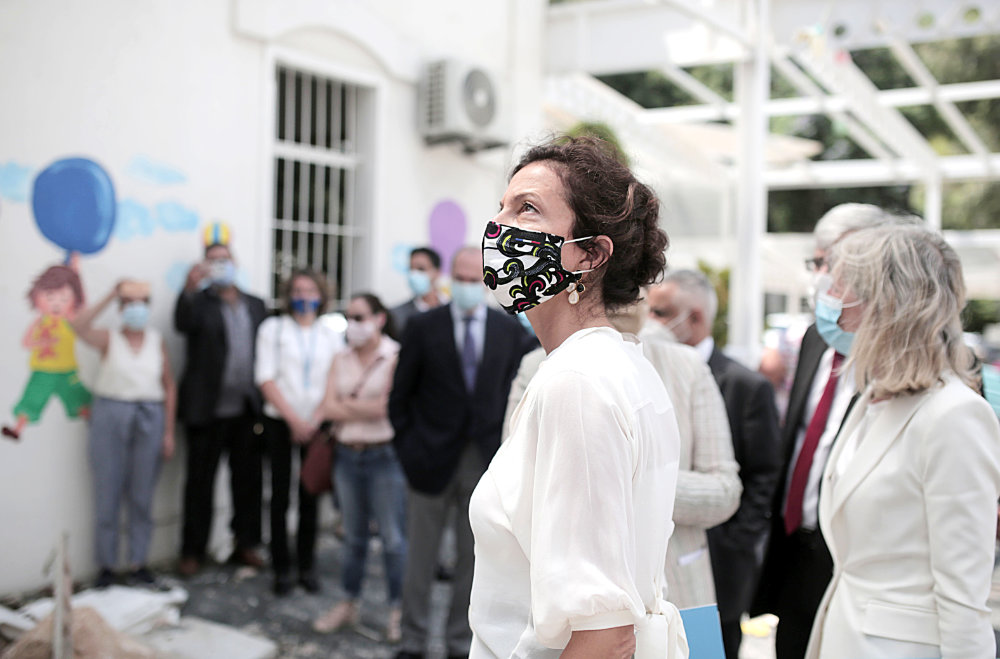
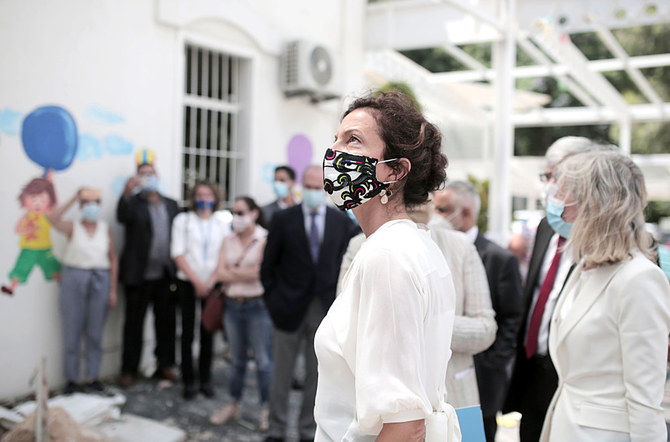
UNESCO Director General Audrey Azoulay on Thursday visits Beirut’s Orthodox Three Doctors School that was badly damaged by the Aug. 4 port explosion. (AFP)
As part of international efforts to rebuild schools damaged by the blast, UNESCO Director General Audrey Azoulay visited a number of them in the Gemmayzeh and Achrafieh districts. She said the education of nearly 85,000 students has been disrupted by the explosion, at a time when the education sector was already experiencing difficulties as a result of the COVID-19 pandemic.
Azoulay also inspected destroyed or badly damaged heritage buildings.
During a meeting with President Michel Aoun, she stressed the importance of rebuilding them to preserve the city’s cultural history, and said UNESCO will help with the process.


