

Australia to phase out waste exports, boost recycling

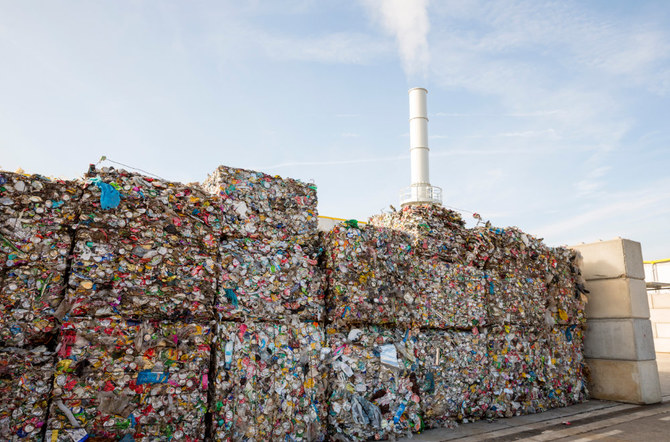
Australia has finally decided to convert its waste products into energy. (Shutterstock photo)
Short Url
Updated 27 August 2020
Follow

Australia to phase out waste exports, boost recycling

  • Australia had been shipping 645,000 metric tons of unprocessed rubbish that overseas each year

CANBERRA: The Australian government introduced legislation on Thursday that would phase out exports of waste plastic, paper, glass and tires beginning January next year.

The legislation introduced to Parliament aims to end the export of 645,000 metric tons (711,000 US tons) of unprocessed rubbish that Australia ships overseas each year, usually to Asian ports. Waste glass exports would be banned from Jan. 1, Prime Minister Scott Morrison said.

“It’s our waste. It’s our responsibility,” Morrison said. “We’ve got to deal with it and recycle it and repurpose it and reuse it here to both drive jobs in the recycling sector and also to improve the quality of our environment.” 

Morrison said waste plastic was a key issue that he had raised with Australia’s South Pacific neighbors and with the East Asian Summit and the Association of Southeast Asian Nations.

“Waste plastic in oceans is destroying communities, it’s destroying their livelihoods, it’s destroying their health,” Morrison said.

FASTFACT

32 %

Australia plans to create 10,000 new jobs in the waste and recycling sector, a 32 percent increase on current staffing levels.

Waste disposal has become an increasingly pressing problem around the world since 2017 when China, previously its main destination, barred imports of almost all foreign waste.

The Australian legislation would establish a national industry framework for recycling and create a 190 million Australian dollar ($138 million) recycling modernization fund.

The government also plans to create 10,000 new jobs in the waste and recycling sector, a 32 percent increase on current staffing levels.

More incentives would be offered to companies to take greater environmental responsibility for the products they make and for what happens with those products and packaging at the end of their lives.

“This is about tackling a national environmental issue that has been buried in landfill or shipped offshore for far too long,” Environment Minister Sussan Ley said in a statement.

The legislation was welcomed by the Australian Council of Recycling and the Australian Food and Grocery Council.


Egypt–Saudi power link set to boost regional energy integration, minister says 

Updated 8 sec ago
Follow

Egypt–Saudi power link set to boost regional energy integration, minister says 

RIYADH: Electricity interconnection projects between Egypt and Saudi Arabia will strengthen regional energy cooperation and economic integration, Egypt’s minister of electricity and renewable energy said during a visit to a key cross-border power facility. 

Mahmoud Esmat made the remarks while inspecting the Egypt–Saudi electricity interconnection station linking the two countries’ power grids, where he reviewed construction progress and equipment testing ahead of trial operations expected in the coming weeks, according to a statement from the Egyptian State Information Service. 

The project is described as the first of its kind in the Middle East in terms of scale, manufacturing technology, operation, and application in grid interconnection lines. 

The initiative supports the state’s broader vision to implement sustainable solutions aimed at ensuring the stability of the national unified grid and enhancing the reliability and quality of electricity supply. 

It also aligns with Egypt’s allocation of 136.3 billion Egyptian pounds ($2.8 billion) to the electricity and renewable energy sector in its 2025–26 development plan, nearly double the 72.6 billion pounds set aside the previous year. 

The plan focuses on diversifying energy sources, expanding renewable capacity, and strengthening the national grid to meet rising demand. 

The statement said: “The minister toured the station’s departments and control and operation center, following up on the completion of testing for all equipment and components in preparation for launching operations and synchronizing the project with the unified power grids of Egypt and Saudi Arabia in the coming weeks.” 

It added: “Esmat reviewed the implementation rate of the project and testing works, as well as the project’s timeline. He highlighted finalization of operational tests at the Badr transformer station and the Sakakin Taba 2 station, as well as the 500 kilovolts overhead transmission line extending approximately 320 km.”  

The minister said the project forms part of broader efforts to build an integrated power network connecting the two countries, facilitating efficient and flexible electricity exchange and laying the groundwork for a unified Arab electricity market. 

He added that the initiative reflects a clear vision and comprehensive strategy to strengthen the efficiency of the energy system while delivering both immediate and long-term solutions to safeguard grid stability and enhance service quality.