KABUL, Afghanistan: Heavy flooding has killed at least 100 people and injured scores of others as heavy seasonal rains drenched northern and eastern Afghanistan, officials said Wednesday.
Annual heavy rains, compounded by mudslides, often threaten remote areas of Afghanistan, where infrastructure is poor. Summer often brings heavy rainfall in northern and eastern parts of the country, leading to floods that leave hundreds dead every year.
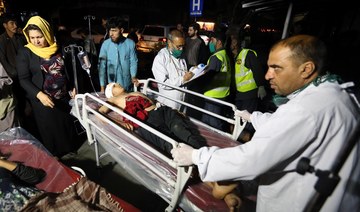
State minister for disaster management Ghulam Bahawudin Jilani said that in northern Parwan province, water inundated the central city of Charikar, where the health ministry said the local hospital was partially destroyed and many of the injured were being transferred to the capital, Kabul.
The provincial spokeswoman, Wahida Shahkar, said the number of casualties may rise as people and rescue teams were still working to locate people buried under destroyed houses. The head of the provincial hospital, Abdul Qasim Sangin, said several children were among the dead and some of the injured are in critical condition.
Shahkar said the flooding started in the central part of the province overnight, following heavy rains and destroying many homes. She called on the government to deliver aid and provide immediate support for workers digging through mud to reach those who were trapped.
Afghan President Ashraf Ghani in a statement ordered aid be delivered to Parwan and other provinces while expressing his condolences to the victims’ families.
Ahmad Tameem Azimi, spokesman of the Disaster Management Ministry, said flooding blocked highways to eastern and northern provinces. “Along with rescuing people we are working to open the highways back to traffic,” he said.
Azimi said at least 300 houses were destroyed in Parwan and over 1,000 people were displaced. He said ground and air support sent to help those trapped by the flooding had reached the provinces. The ministry warned residents of possible flooding in the region with a social media alert late Tuesday, he added.
The flooding waters and rushing mud in the mountainous Parwan province carried thousands of large rocks that caused major injuries and destroyed entire homes, burying people under the rubble. Several excavators had reached the area and were digging for those stuck beneath the rubble.
“Nobody could run,” said Shah Arian, 22 one of the victims. He said it all started around midnight, when people were asleep.
“Fifteen people from our two neighborhoods died,” he said, appealing for government help. “Everything I had is under the mud.”
Azimi, the spokesman, said hundred of acres of agricultural land have been destroyed, with the heavy rain wiping out all the corps in eastern Nuristan province. Houses and roads were destroyed in northern Kapisa, Panjshir and eastern Paktia provinces, Azimi said.
In eastern Maidan Wardak province two people died and five were injured when flooding destroyed several houses, he added.
The office of the Nangarhar governor said in a statement that two members of a family died and four others were injured Wednesday morning when the wall of their house collapsed in flooding.


Floods in north, east Afghanistan leave at least 100 dead

https://arab.news/5mhfu
Floods in north, east Afghanistan leave at least 100 dead

- In northern Parwan province, water inundated the city of Charikar, where the local hospital was partially destroyed and many of the injured were being transferred to Kabul
- The number of casualties may rise as people and rescue teams are still working to locate people buried under destroyed houses


Trump insists he struck Iran on his own terms
- “We are now a nation divided between those who want to fight wars for Israel and those who just want peace and to be able to afford their bills and health insurance,” Marjorie Taylor Greene posted on X.
- Rubio himself doubled down on Tuesday after meeting with US House and Senate members, while insisting that “No, I told you this had to happen anyway”
WASHINGTON, United States: President Donald Trump and his team scrambled Tuesday to reclaim the narrative on why he decided to attack Iran, after his top diplomat suggested the US struck only after learning of an imminent Israeli strike.
Secretary of State Marco Rubio alarmed Democrats — who say only Congress can declare war — as well as many of Trump’s MAGA supporters on Monday when he said: “We knew that there was going to be an Israeli action.”
“We knew that that would precipitate an attack against American forces, and we knew that if we didn’t pre-emptively go after them before they launched those attacks, we would suffer higher casualties,” Rubio told reporters.
Administration officials quickly backpedalled, insisting Trump authorized the strikes because Tehran was not seriously negotiating an accord on limiting its nuclear ambitions, and the United States needed to destroy Iran’s missile capabilities.
“No, Marco Rubio Didn’t Claim That Israel Dragged Trump into War with Iran,” White House Press Secretary Karoline Leavitt posted Tuesday on X.
At an Oval Office meeting later with Germany’s chancellor, Trump went further, saying that “Based on the way the negotiation was going, I think they (Iran) were going to attack first. And I didn’t want that to happen.”
“So, if anything, I might have forced Israel’s hand.”
- Had to happen? -
Rubio himself doubled down on Tuesday after meeting with US House and Senate members, while insisting that “No, I told you this had to happen anyway.”
“The president made a decision. The decision he made was that Iran was not going to be allowed to hide... behind this ability to conduct an attack.”
Critics seized on the muddied messaging to accuse Trump of precipitating the country into a war without a clear rationale, without informing Congress — and without a clear idea of how it might end.
They noted that just two weeks ago, Israel Prime Minister Benjamin Netanyahu pressed Trump again in Washington to take a hard line, in their seventh meeting since Trump’s return to power last year.
Some Republican allies rallied behind the president, with Senator Tom Cotton, chairman of the Senate Intelligence Committee, insisting that “No one pushes or drags Donald Trump anywhere.”
“He acts in the vital national security interest of the United States,” Cotton told the “Fox & Friends” morning show.
But as crucial US midterm elections approach that could see Republicans lose their congressional majority, Trump risks shedding supporters who had welcomed his pledge to end foreign military interventions.
“We are now a nation divided between those who want to fight wars for Israel and those who just want peace and to be able to afford their bills and health insurance,” Marjorie Taylor Greene, a top former Trump ally and a major figure in the populist and isolationist hard right, posted on X.


