Roshan Digital Accounts to integrate overseas Pakistanis into banking system from next month

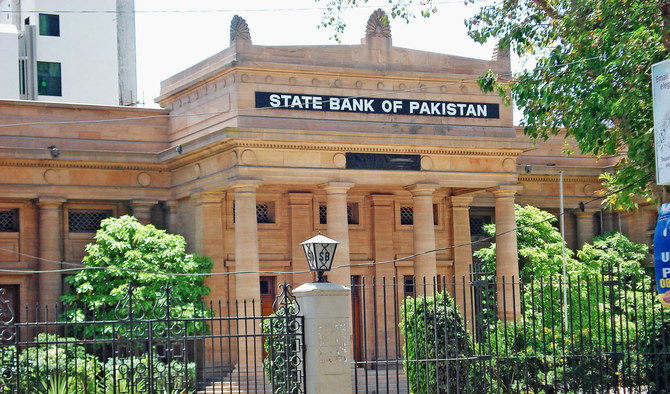
This undated file photo shows premises of the State Bank of Pakistan. (Shutterstock)
Short Url
Updated 24 August 2020
Follow

Roshan Digital Accounts to integrate overseas Pakistanis into banking system from next month

  • Roshan Digital Account initiative by the central bank will enable overseas nationals to open accounts in Pakistan without visiting their home country
  • Overseas Pakistanis say it could help them send money in a quicker and more orderly way, but raise concerns over policy consistency

KARACHI: Overseas Pakistanis will get direct access to the country’s banking system through Roshan Digital Account (RDA), which will be launched in the first week of September, the prime minister's special assistant told Arab News on Sunday.  

The new initiative of the State Bank of Pakistan (SBP), the central bank, aims to integrate overseas Pakistanis into the country's banking system and will be launched in collaboration with eight commercial banks that operate in Pakistan.  

"Roshan Digital Account will be launched from Sept. 4. The prime minister, Imran Khan, has approved the launch of the initiative," Sayed Zulfikar Bukhari, the special assistant on overseas Pakistanis, said.  

He added that the initiative will be "a very crucial opportunity to invest in Pakistan" for overseas Pakistanis.

Overseas Pakistanis will be able to open accounts in Pakistan without visiting their home country. The process will require only basic information and documents. All necessary customer due diligence would be completed within 48 hours, according to official documents seen by Arab News.

RDA will provide access to all conventional account services, including funds transfer, online bill payments, e-commerce and other payments in Pakistan. It will also allow users to invest in fixed deposit products offered by banks, invest in Pakistan’s stock market and will be backed by debit and virtual debit cards for both domestic and overseas use.  

According to the documents, accounts will be available in foreign currencies and rupees, and will also enable investment in specially designed saving instruments in the US dollars and Pakistani rupees, in both conventional and Sharia-compliant forms.  

Overseas Pakistanis say the initiative, if it works as planned, will help them support their families in the home country in a quicker and more orderly way.

"I opened an online account in my home country but it was not working properly. This, if it works properly as I'm being told, will enable me to pay bills, as my family members have to travel from their village to the city to do that, which is troublesome nowadays," Muhammad Munir, a Pakistani worker, told Arab News from Sharjah in the United Arab Emirates.

Others, however, doubt in the process of verification of and consistency of the policies governing the program.    

“The biometric process there (in Pakistan) is outdated, after a few days the system does not recognize the fingerprints," Masood Abdali, an energy expert, told Arab News from Texas, US. "I know hundreds of overseas Pakistanis whose accounts in Pakistan were not renewed because of the mismatch of fingerprints."  

He questioned policy guarantees citing a 1998 decision which made Pakistan freeze foreign currency accounts after it conducted nuclear tests.  

"The memories of accounts freeze in 1998 still haunt overseas Pakistanis ... Second bigger issue is the undue interference of the tax agency, because through such accounts people will be investing heavy amounts in their home country, that frightens people," he said, expressing hope that the issues will be addressed before the launch.


Pakistan’s Zardari to begin five-day Iraq visit tomorrow to discuss trade, investment and energy

Updated 9 sec ago
Follow

Pakistan’s Zardari to begin five-day Iraq visit tomorrow to discuss trade, investment and energy

  • Trade between the two countries remains limited despite potential flagged by officials and business groups
  • Recent high-level contacts between the two sides have centered on pilgrim facilitation, security cooperation

ISLAMABAD: President Asif Ali Zardari is scheduled to begin a five-day official visit to Iraq from Saturday to discuss a wide range of issues, including greater trade, investment and energy cooperation, the foreign office said in a statement on Friday.

Pakistan and Iraq established diplomatic relations in 1947 and have maintained cordial ties, though economic engagement between the two countries has remained limited. Trade volumes are small, with Iraq not ranking among Pakistan’s major export or import partners, despite officials and business groups identifying potential in sectors such as construction services, pharmaceuticals, and rice and other agricultural exports. Security concerns, weak banking channels and limited connectivity have continued to constrain commercial growth.

The two countries have stepped up high-level official exchanges in recent months, reflecting efforts to broaden and deepen bilateral relations and explore new areas of cooperation across economic, political and people-to-people domains.

“At the invitation of H.E. Dr. Abdul Latif Jamal Rashid, President of the Republic of Iraq, the President of Pakistan, Mr. Asif Ali Zardari, will undertake an official visit to the Republic of Iraq from 20 to 24 December 2025,” the foreign office announced in a statement.

“During the visit, the President will hold high-level meetings with the Iraqi leadership to review the full spectrum of bilateral relations and explore ways to further strengthen cooperation across key areas of mutual interest, including trade and investment, energy, reconstruction, manpower, technology, education, and people-to-people exchanges,” it added. “Discussions will also cover regional and international developments, as well as cooperation at multilateral fora.”

The foreign office said the visit was expected to reinforce traditionally warm ties between the two countries, identify new avenues of partnership and enhance people-to-people linkages, including religious tourism and economic collaboration.

People-to-people ties are strongest in the religious sphere, as Iraq holds significant importance for Pakistani Shia community who travel to holy sites in Najaf and Karbala.

Earlier this month, Interior Minister Mohsin Naqvi held talks with his Iraqi counterpart, General Abdul Ameer Al-Shammari, on the sidelines of meetings in Brussels, where both officials agreed to deepen cooperation on security and the facilitation of Pakistani pilgrims traveling to Iraq, including measures to ensure smooth travel and compliance with visa rules.