


Lebanese schools likely to reopen late September: Education minister

1 / 2
A girl heads to school in Lebanon’s town of Bar Elias. (AFP)
2 / 2
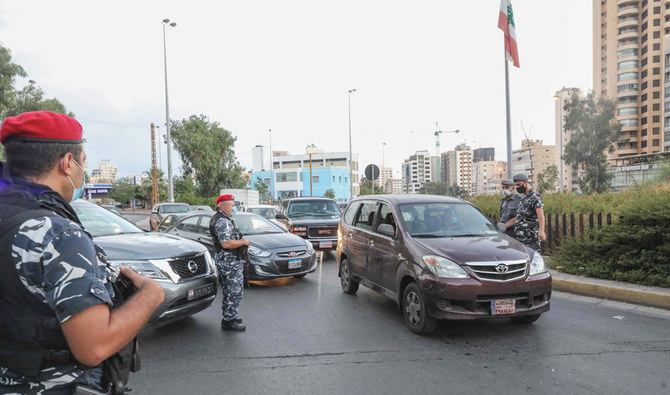
Members of the Lebanese security forces man a checkpoint on an avenue in the capital Beirut on August 21, 2020. (AFP)
Short Url
Updated 24 August 2020
Follow

Lebanese schools likely to reopen late September: Education minister

  • Health protocol being finalized amid rise in COVID-19 cases Blend of distance, classroom learning will be adopted

BEIRUT: Lebanese schools are likely to reopen in the last week of September, said Minister of Education and Higher Education Tarek Majzoub.

Amid a rise in COVID-19 cases, the Education Ministry is finalizing a health protocol that will be presented to the Health Ministry for its opinion this week.

“Blended education will be adopted, and if conditions worsen we will return to distance learning,” said Majzoub.

But anxiety among students and their families is growing due to the absence of logistical equipment required to undergo distance learning.

In addition, the massive explosion at the Port of Beirut earlier this month destroyed many schools in the capital.

The numbers destroyed or damaged reached 92 public schools in and around Beirut, 67 private schools and 20 public vocational institutes, according to statistics from the Education Ministry.

UNICEF said in a report: “Schools should not reopen except when they are safe for students … The authorities must be flexible and prepared to adapt to verify the safety of every child.”

Schools in Lebanon are working on plans to provide catch-up lessons or revision of those from the past year.

“The committee for the follow-up of preventive measures and procedures for coronavirus, which met on Aug. 18, recommended a move toward blended education, starting from the end of September, and the situation is evaluated after three weeks,” Hilda El-Khoury, director of guidance and counseling at the Education Ministry, told Arab News.

“If the spread of the virus worsens, schools turn to distance learning and then return to blended learning,” she said.

Blended learning “allows the division of place-based classroom learning so attendance doesn’t exceed 50 percent of the school’s capacity, so as to respect health measures,” she added.

Father Boutros Azar, secretary-general of the General Secretariat of Catholic Schools in Lebanon and coordinator of the Association of Private Educational Institutions in Lebanon, said 55 Catholic schools in Beirut were destroyed or damaged by the blast. “The initial cost of restoration and reconstruction is estimated at $13 million,” he told Arab News.

“The launch of the school year needs clear directions from the government, specifically the ministries of health and education, as well as from the World Health Organization,” he said.

“Health experts in Lebanon expect the worst during September, and we’re facing three scenarios: Either distance learning may be a solution for some time until the virus subsides; or the school gives paper lessons that are delivered to parents to learn at home, and this is difficult; or blended learning in the sense of going to school in fewer numbers for certain days and on other days learning at home,” he added.

“There are many obstacles that private schools face. Who provides electricity and internet for students and parents in a country facing electricity rationing and high costs for using the internet? How can brothers study in the same household using one computer at the same time? How will parents follow up on their children, especially if they work outside the home? If students go to school, there are great costs for sterilization and safe transportation … And there’s a problem with school fees.”


First responders enter devastated Aleppo neighborhood after days of deadly fighting

Updated 12 January 2026
Follow

First responders enter devastated Aleppo neighborhood after days of deadly fighting

  • The US-backed SDF, which have played a key role in combating the Daesh group in large swaths of eastern Syria, are the largest force yet to be absorbed into Syria’s national army

ALEPPO, Syria: First responders on Sunday entered a contested neighborhood in Syria’ s northern city of Aleppo after days of deadly clashes between government forces and Kurdish-led forces. Syrian state media said the military was deployed in large numbers.
The clashes broke out Tuesday in the predominantly Kurdish neighborhoods of Sheikh Maqsoud, Achrafieh and Bani Zaid after the government and the Syrian Democratic Forces, the main Kurdish-led force in the country, failed to make progress on how to merge the SDF into the national army. Security forces captured Achrafieh and Bani Zaid.
The fighting between the two sides was the most intense since the fall of then-President Bashar Assad to insurgents in December 2024. At least 23 people were killed in five days of clashes and more than 140,000 were displaced amid shelling and drone strikes.
The US-backed SDF, which have played a key role in combating the Daesh group in large swaths of eastern Syria, are the largest force yet to be absorbed into Syria’s national army. Some of the factions that make up the army, however, were previously Turkish-backed insurgent groups that have a long history of clashing with Kurdish forces.
The Kurdish fighters have now evacuated from the Sheikh Maqsoud neighborhood to northeastern Syria, which is under the control of the SDF. However, they said in a statement they will continue to fight now that the wounded and civilians have been evacuated, in what they called a “partial ceasefire.”
The neighborhood appeared calm Sunday. The United Nations said it was trying to dispatch more convoys to the neighborhoods with food, fuel, blankets and other urgent supplies.
Government security forces brought journalists to tour the devastated area, showing them the damaged Khalid Al-Fajer Hospital and a military position belonging to the SDF’s security forces that government forces had targeted.
The SDF statement accused the government of targeting the hospital “dozens of times” before patients were evacuated. Damascus accused the Kurdish-led group of using the hospital and other civilian facilities as military positions.
On one street, Syrian Red Crescent first responders spoke to a resident surrounded by charred cars and badly damaged residential buildings.
Some residents told The Associated Press that SDF forces did not allow their cars through checkpoints to leave.
“We lived a night of horror. I still cannot believe that I am right here standing on my own two feet,” said Ahmad Shaikho. “So far the situation has been calm. There hasn’t been any gunfire.”
Syrian Civil Defense first responders have been disarming improvised mines that they say were left by the Kurdish forces as booby traps.
Residents who fled are not being allowed back into the neighborhood until all the mines are cleared. Some were reminded of the displacement during Syria’s long civil war.
“I want to go back to my home, I beg you,” said Hoda Alnasiri.