

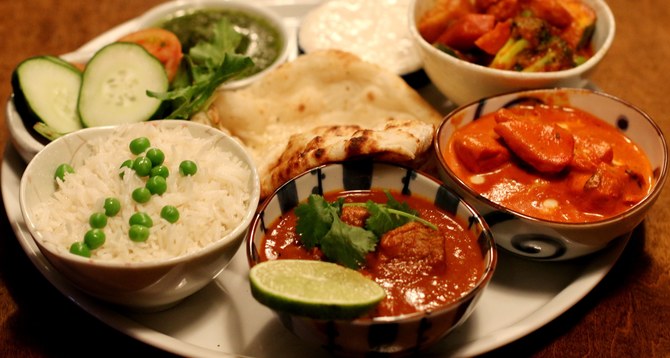

NEW DELHI: Ranjana Kumar’s mutton and chicken korma curries are the talk of the town in the Indian capital of New Delhi. But even she did not know that a secret ingredient she has been using for over a decade — Shan Foods spice mixes — comes from Pakistan.
The Shan Foods company sells spice mixes in 65 countries, including India, a nation with whom Pakistan shares decades of enmity, dominated by their territorial dispute over Kashmir. They have fought three wars since their independence from Britain in 1947.
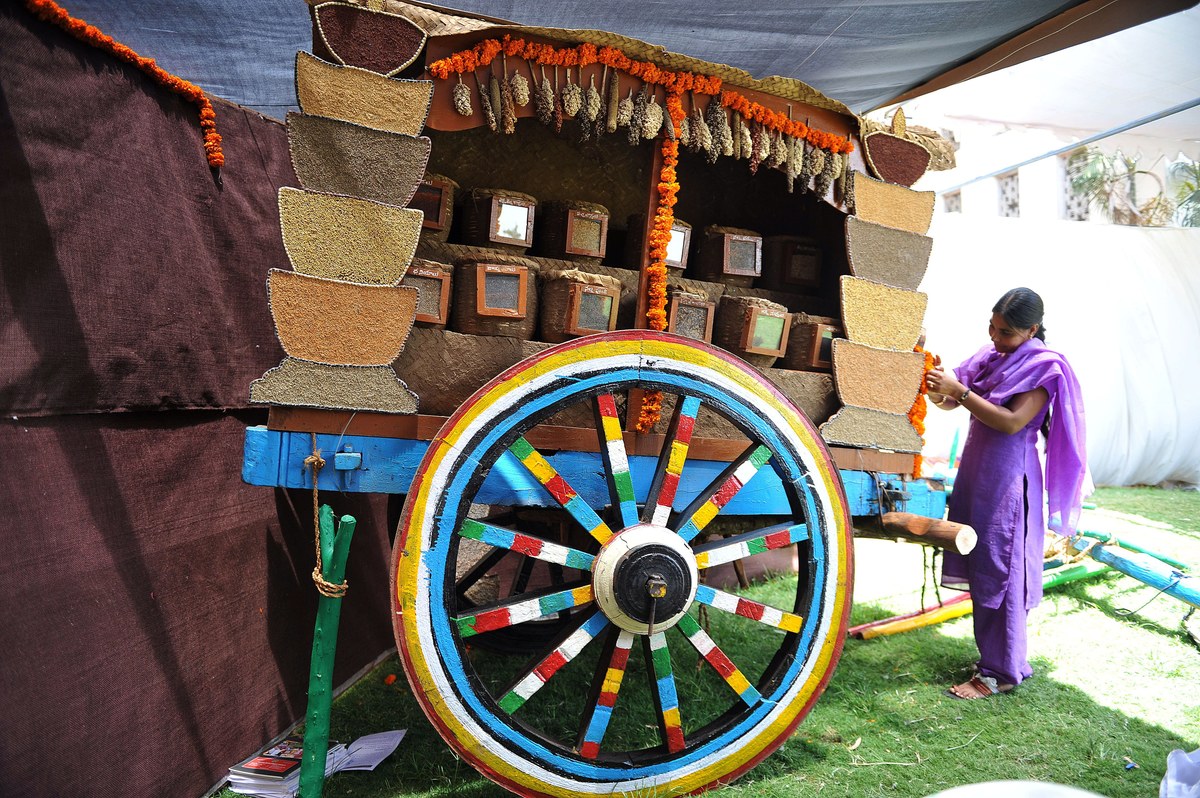
An Indian woman arranges a display of seeds and spices on a bullock cart at an exhibition fair in Hyderabad, India on May 22, 2011.( AFP/File photo)
“I wasn’t aware it’s a Pakistani brand,” Kumar told Arab News, saying her family loved dishes cooked in Shan spices and she always kept extra stock of the mixes at home. “How does it matter whether it is Pakistani or Indian? The taste is good.”
“Both the neighbors share the same taste and culture and I feel both countries should have access to their products,” the mother of two added.
Kumar’s family is a supporter of India’s nationalist Bhartiya Janata Party (BJP) under whose rule already brittle ties with Pakistan have deteriorated further in recent years.
Even so, Kumar said, there was no harm in using Pakistani products.
“Both India and Pakistan share the same history, same past, and the same taste, What’s wrong if we get Pakistani products in our kitchen or house?” she said. “This should be promoted so that both countries could understand each other better.”

A screengrab from Shan Foods' commercial shows the company's Bombay Biryani spice mix. (Photo courtesy of Shan Foods via AN)
One Delhi shop owner said he didn’t like selling Pakistani brands but customers came asking for Shan spices.
“I don’t like to keep the brand, but customers demand it. That’s why I keep it,” Naresh Sankhla said at his grocery store. “I reluctantly sell this brand from the enemy country, but there is demand for it. I must be selling around 150 packets of Shan (spices) every month.”
Others say despite the brand’s popularity, they put India first.
“I have stopped distributing the Shan brand last year, after Pakistan’s involvement in the Pulwama tragedy,” Delhi-based distributor Gaurav Gupta told Arab News, referring to last year’s attack in a town in the Indian part of Kashmir in which 50 Indian paramilitary soldiers were killed. New Delhi has blamed Pakistan-based groups for the assault. The Pakistan government denies any official complicity.
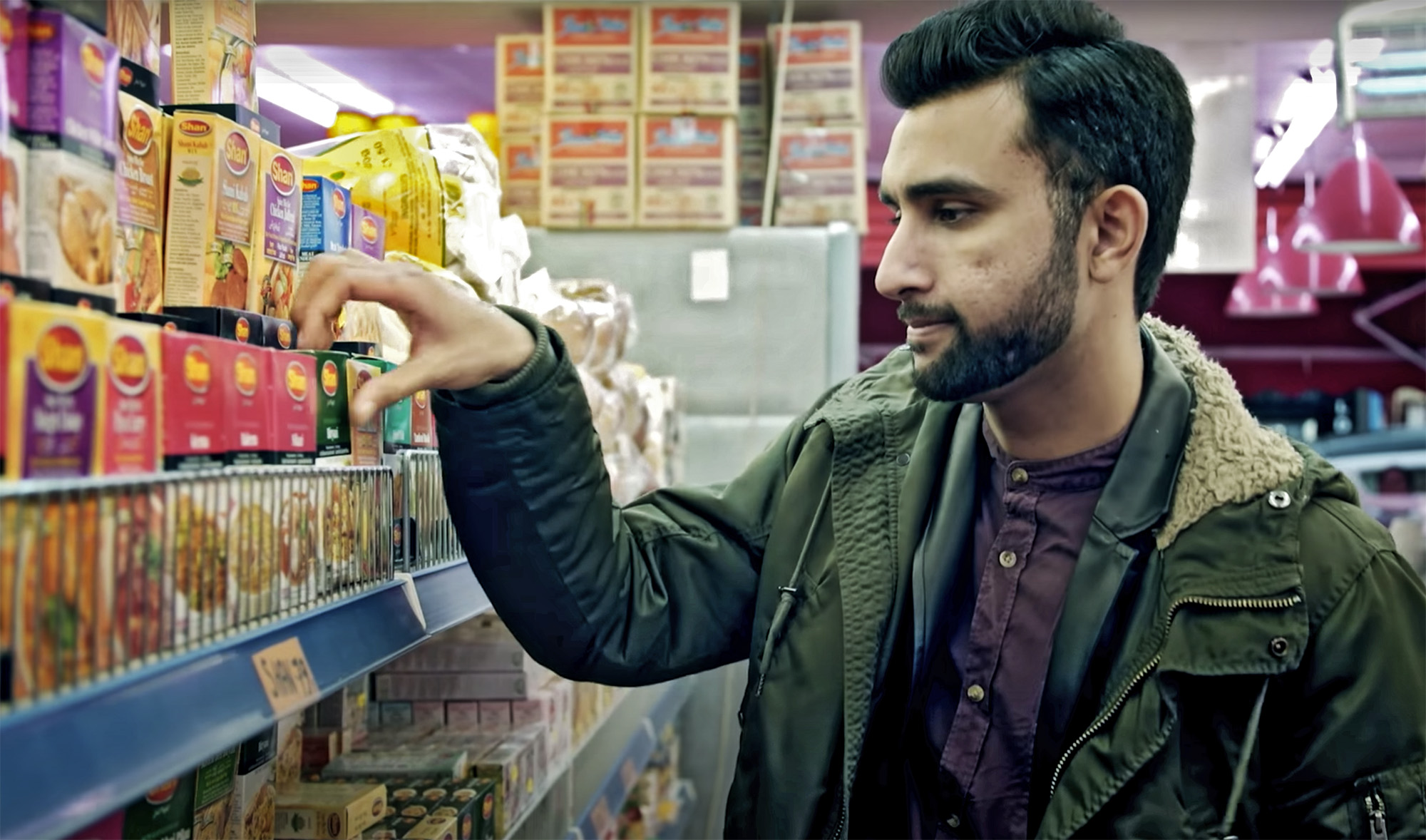
A man is choosing a Shan masala mix at a grocery store in this screengrab from a Shan Foods commercial. (Photo courtesy of Shan Foods via AN)
Despite his official words, however, quick market research shows that Gupta’s company remains one of the main sellers of Shan’s products.
Rafat Shahab who runs a catering company, lamented this attitude, saying culinary exchanges needed to be encouraged despite political differences.
“I used the Shan brand a lot whenever I got orders for parties or special occasions. It brings authentic taste in the food,” she said, “It’s unfortunate that we don’t have that kind of relationship with Pakistan. Politics should not come in the way of people’s contacts and culinary exchanges.”


