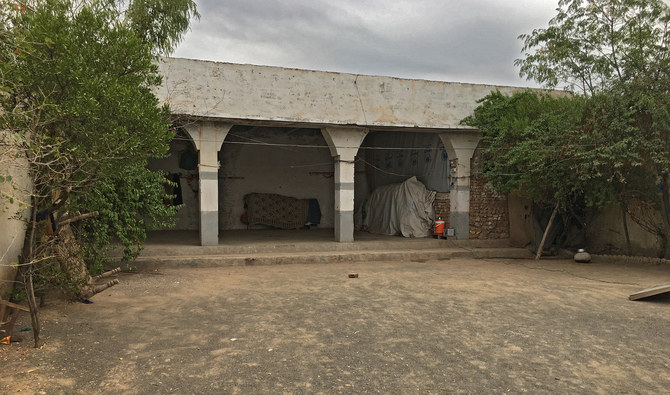

BARA: A Muslim family that has been looking after the upkeep of a Sikh cremation ground in the northwestern Khyber district for the past eight years since the minority community fled violence there says it is ready to hand back the religious property to its rightful owners.
A quarter of a million Pakistanis, among them several hundreds of Sikhs, left their homes in Khyber in 2012 because of increased violence by militant groups and military operations to drive them out.
Khyber Agency is one of eight regions which used to make up Pakistan’s Federally Administered Tribal Areas, a semi-autonomous tribal region located along the porous border with Afghanistan, and for long a known base for militants. It is now a part of the Khyber Pakhtunkhwa province.
Sikhs were not included in the last population census and there is no hard data on their numbers but community elders say around 30,000 Sikhs lived in Peshawar, the capital of Khyber Pakhtunkhwa province, before 2012.
The army began counter offensive operations in Pakistan’s northwest in 2008 and in late 2011 shifted its focus to the remote, mountainous Khyber district.
“For the last eight years our family has been the sole caretaker of this Sikh cremation ground,” said rickshaw driver Muzamil Shah, 26, whose family lives in one corner of the land that houses the Kalanga crematorium in Khyber district’s Bara Tehsil. “This building is with us because of the Sikh community’s trust and we will hand over the key whenever they demand.”
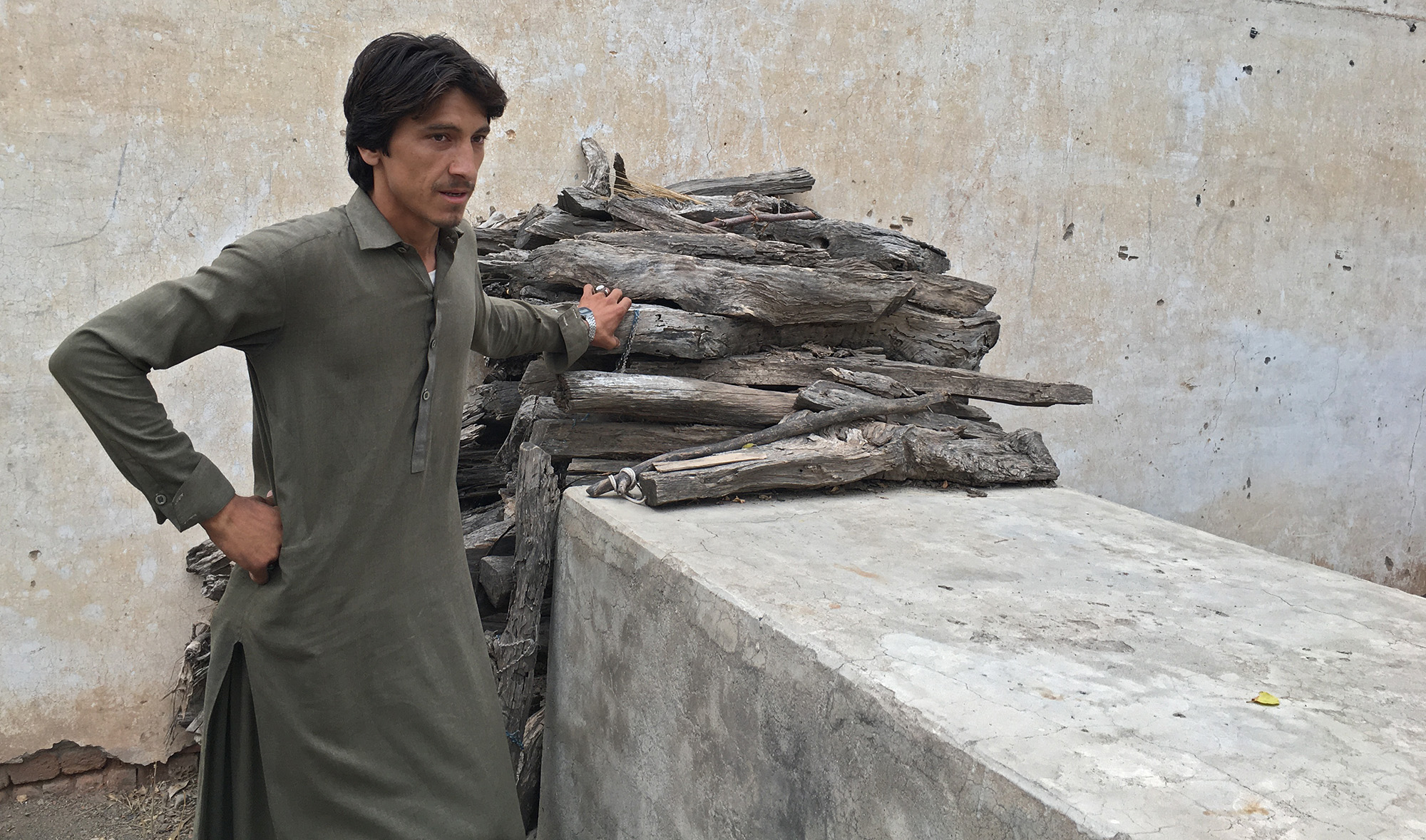
Muzamil Shah, whose family cares for the Kalanga cremation ground, stands next to decades-old wood left by Sikh families who fled Khyber district, Pakistan. August 19, 2020 (AN Photo)
Community elders say around 150 Sikh families used to reside in Bara before 2008, all of whom now live in nearby towns like Peshawar or Nowshera, or have moved to other provinces of Pakistan.
Shah’s own family used to live in Khyber’s Tirah Valley, but moved to Bara after a military operation began there in 2011. They first rented a house in Bara, he said, and later contacted Sikh elders to seek their permission to use the Kalanga plot. They have since looked after the land and the building, as well as attended to the plants and trees.
The crematorium is built on a 20 kanal plot of land, which is covered in plants and bushes. The building, unlike the low-lying mud houses around it, is cemented and tall. Locals say because of its strong structure and central location in Bara, militants had also used it as a base camp over the years.
While violence against religious minorities, particularly Christian and Shia Muslims, has been a painfully familiar story in Pakistan, Sikhs have long been considered one of the country’s most protected minorities. In Pakistan’s northwest in particular, they have lived peacefully among Muslims for over 250 years, working mostly as traditional healers, and running pharmacies and cosmetics and clothing stores.
Pakistan is considered the birthplace of the Sikh religion. Guru Nanak, the founder of Sikhism, was born in the small village of Nankana Sahib near the eastern city of Lahore in 1469. Today, thousands of Sikhs from around the world visit the area for pilgrimage. And in the northwest, Sikhs have a particularly glorious history.
Maharaja Ranjit Singh, the leader of the Sikh Empire, defeated the majority ethnic Pashtun tribesmen of the region in the Battle of Nowshera in 1823. His commander-in-chief, Hari Singh Nalwa, then moved thousands of Sikhs from Punjab to Peshawar and its surrounding areas in what is present-day Khyber Pakhtunkhwa and FATA.
Since then, at least 500 Sikh families have lived in Peshawar and its surrounding northwestern regions, according to community estimates.
But a spate of systematic killings in the last decade has raised worries Sikhs might be the latest target of Pakistan’s religious extremist groups, leaving community members unsure of their future in the region.
Papinder Singh, who is considered the Sikh community’s leader in Bara, now lives in Peshawar. His shoe shop in Bara has been closed for over seven years. A series of attacks on the community, including the murder of a prominent Sikh elder, led Sikh families to start leaving the area in 2008, Singh said.
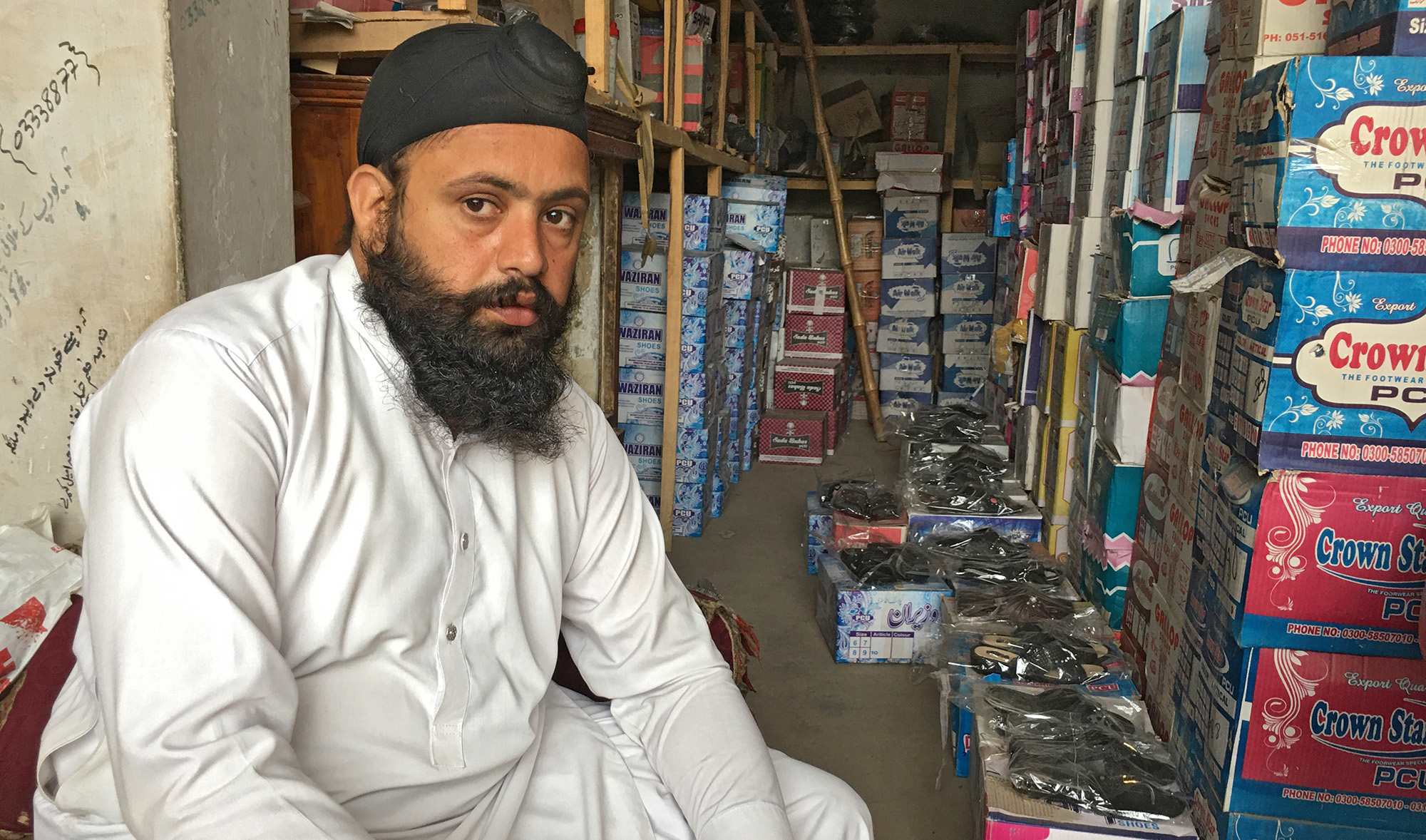
Papinder Singh, whose family fled Khyber district in 2008, at the Bara Bazaar in Khyber district, Pakistan, on August 19, 2020 (AN Photo)
“These incidents terrified us and we considered it a warning and the whole community left,” he added.
Singh said the last time the community had gathered at the Kalanga cremation ground was in 2010.
“Now a Muslim family is taking care of the property and building,” said Singh, whose grandmother was cremated on the property. “The cremation ground is in our possession and whenever we ask the Muslim family they will definitely leave the building.”
In 2009, fighting between the Pakistani military and Taliban militants resulted in 2.3 million people fleeing towns and villages across the country’s northwest region. But armed operations have brought some normalcy to the region and fewer attacks now occur.
When asked if he and his family would consider returning to Khyber permanently now that it was safer, Singh only said: “It’s our land and we are an integral part of the society.”
Wazir Zada, adviser to the chief minister of Khyber Pakhtunkhwa province, said more and more Sikhs wished to return to the area because of the improved “law and order situation.”
“That’s why Sikh community wants to resettle in their own town,” he said. “The [ruling party] PTI government will be constructing a segregated Sikh colony for them.”