
China’s Sinopharm ties up with Karachi University to supply coronavirus vaccines to Pakistan

Workers are seen inside the Beijing Applied Biological Technologies (XABT) research and development laboratory in Beijing on May 14, 2020. (AFP)
Short Url
Updated 14 August 2020
Follow

China’s Sinopharm ties up with Karachi University to supply coronavirus vaccines to Pakistan

  • Pakistan would conduct Phase 1 trials and then move rapidly to the final-stage Phase 3 trial, which requires tens of thousands of volunteers
  • Pakistan would receive enough vaccine to cover around a fifth of its population in the initial months of production

ISLAMABAD: State-owned China National Pharmaceutical Group, also known as Sinopharm, has tied up with Pakistan’s Karachi University’s International Center for Chemical and Biological Sciences to supply coronavirus vaccines to Pakistan, international media has reported, quoting Pakistani government officials.
The developing world— which often lacks both a pharmaceutical industry to develop, test and produce vaccines and the money to purchase them from elsewhere— has been forced to seek supplies from allies or from international groups attempting to obtain vaccines for poor countries.
China hasn’t been a major vaccine producer globally. It needs to test its Covid-19 vaccines outside its borders, because coronavirus cases in China have dwindled and it is harder to find the population diversity required.
“Pakistan would get the vaccine on a priority basis,” an official involved in forging the agreement told the Wall Street Journal.
Pakistan would conduct Phase 1 trials of the vaccine and then move rapidly to the final-stage Phase 3 trial, which requires tens of thousands of volunteers. If the vaccine is safe and effective, Pakistan would receive enough vaccine to cover around a fifth of its population in the initial months of production, according to Pakistani officials who said financial terms hadn’t yet been worked out.
Pakistan, one of China’s closest allies in the developing world, will receive enough doses early in distribution to vaccinate the most vulnerable among its population of 220 million, including the elderly, health-care workers and people with medical conditions associated with serious cases of Covid-19, the disease caused by the virus.
About one-fifth of the country’s population could be covered by the allocation, the officials said.
The agreement, among the first China has reached as part of its efforts to test its coronavirus vaccine in populations beyond its borders, comes amid a global competition for access to vaccines that are now entering trials and expected to come to market in coming months.
Negotiations are under way with a second Chinese company to trial its vaccine in Pakistan, officials said.

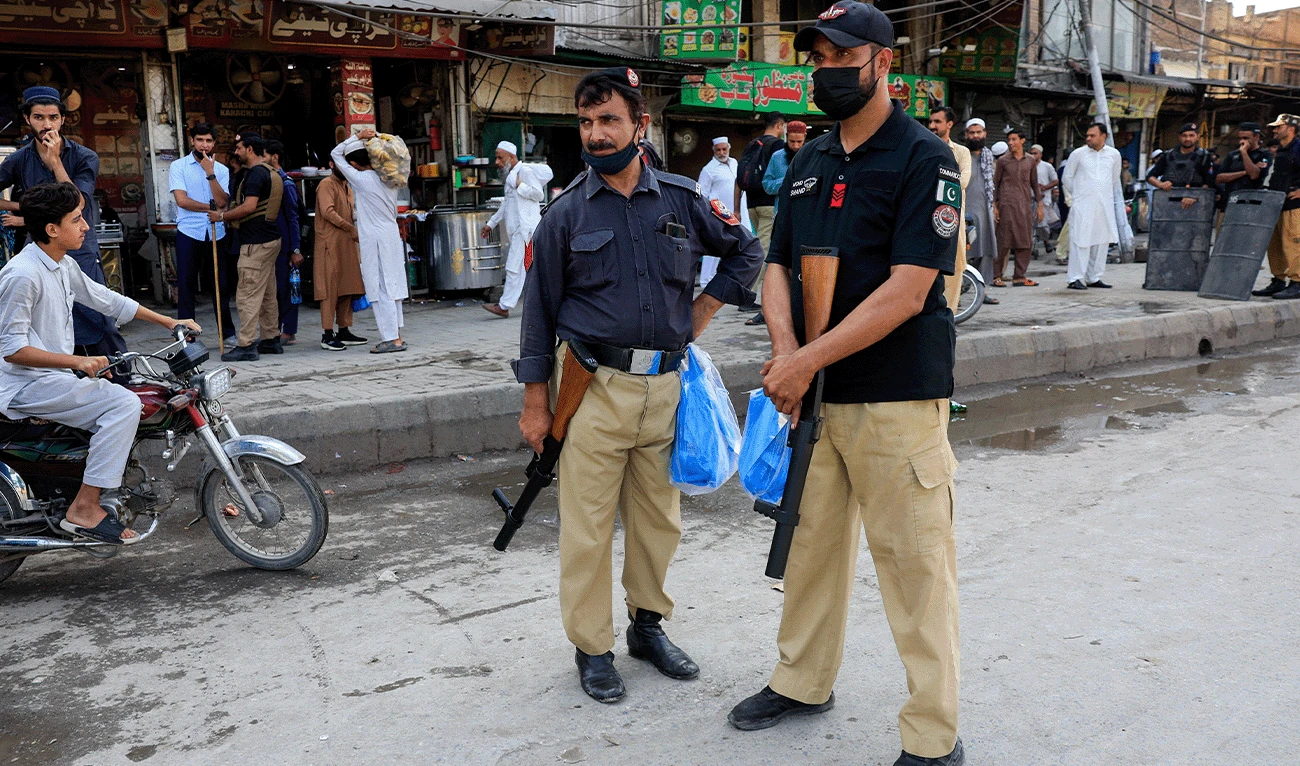
Pakistani court sentences TLP leader for 35 years over incitement against ex-chief justice

Updated 11 sec ago
Follow

Pakistani court sentences TLP leader for 35 years over incitement against ex-chief justice

  • The case stems from a 2024 speech targeting former Chief Justice of Pakistan Qazi Faez Isa over a blasphemy ruling
  • Conviction follows the government’s move to proscribe Tehreek-e-Labbaik Pakistan after clashes with police this year

ISLAMABAD: A Pakistani court this week sentenced a leader of the religio-political party Tehreek-i-Labbaik Pakistan (TLP) to 35 years’ imprisonment on multiple charges for inciting hate against former Chief Justice of Pakistan Qazi Faez Isa.

Peer Zaheer ul Hasan Bukhari made the remarks in a 2024 speech at the Lahore Press Club against the former chief justice for issuing a judgment in a case involving a man named Mubarak Sani under the blasphemy laws, a member of a minority religious community whose death sentence was overturned.

Authorities said Bukhari’s comments amounted to incitement to violence, after which police registered a case against him under various terrorism-related provisions as well as charges of inciting hatred.

The cleric was handed multiple jail terms on a range of charges, with the longest being 10 years of rigorous imprisonment, amounting to a total of 35 years.

“All the sections of imprisonment awarded to the convict shall run concurrently,” Anti-Terrorism Court Judge Arshad Javed said in a letter to the Kot Lakhpat Central Jail superintendent.

A collective fine of Rs600,000 ($,150) was also imposed on the TLP party leader under the provisions of the Anti-Terrorism Act.

The move follows Pakistan’s decision in October to ban the TLP and designate it a proscribed organization under the Anti-Terrorism Act after violent clashes between its supporters and law enforcement in Punjab.

The unrest erupted as demonstrators attempted to travel from Lahore to Islamabad, saying they wanted to stage a pro-Palestine rally outside the US Embassy.

However, officials said TLP supporters were armed with bricks and batons, arguing their intention was to stir violence similar to earlier marches toward the federal capital.

The clashes between TLP supporters and police resulted in the deaths of five people, including two policemen, and injured more than 100 officers and dozens of protesters.

Led by Saad Hussain Rizvi, the TLP is known for its confrontational street politics and mass mobilizations.

Since its emergence in 2017, the party has repeatedly organized sit-ins and marches toward Islamabad, often triggering violent confrontations and prolonged disruptions on major routes to the capital.