

Iran executes protester after ‘seriously flawed’ trial

1 / 2
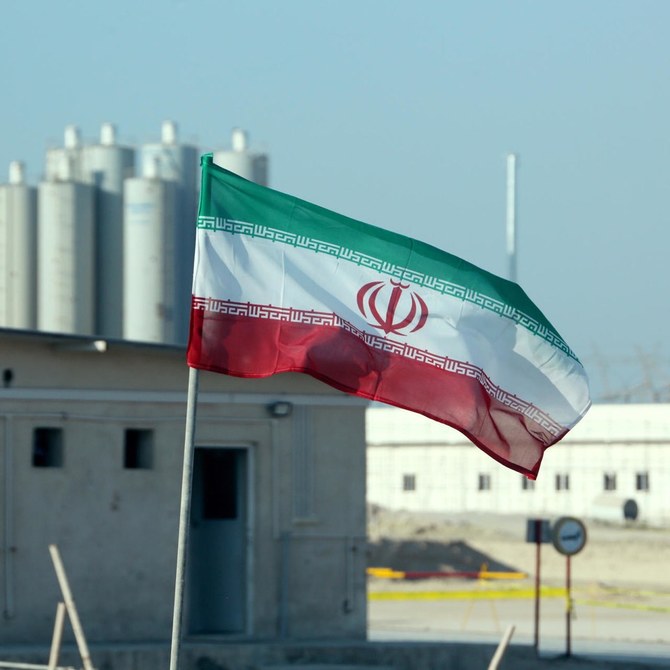
Various rights groups, including Human Rights Watch, have condemned Tehran’s liberal use of the death penalty. (File/AFP)
2 / 2
Iranian courts have sentenced two men to 10 years each in jail for spying for Britain, Germany and Israel in separate cases. (File/AFP)
Short Url
Updated 11 August 2020
Follow

Iran executes protester after ‘seriously flawed’ trial

  • ‘Grave concerns’ over fate of five more men sentenced to death but denied fair trials
  • Two men have also been sentenced to a decade each in jail for spying

LONDON: Iran has executed a protester accused of killing a member of the security forces despite serious flaws in his legal proceedings.

Mostafa Salehi was convicted of shooting a member of the Islamic Revolutionary Guard Corps during anti-government protests in Isfahan province in 2018. He was executed on Aug. 5.

Human Rights Watch (HRW) said there has been “little information about whether Salehi had access to legal counsel and was tried under fair legal standards.”

The group condemned his execution, and Tehran’s liberal use of the death penalty.

“Iranian authorities execute people without due process while failing to investigate serious allegations of authorities’ excessive use of force against protestors,” Tara Sepehri Far, Iran researcher at Human Rights Watch, said.

Five other protestors from Isfahan are currently awaiting execution on death row according to HRW. The group has raised similar concerns over the integrity of their legal proceedings.

A statement from the group said: “The verdicts for five other people on death row in Isfahan showed that their trials were marred by similar violations (to that of Salehi).”

Those protestors face the death penalty for “vaguely defined national security charges,” HRW said, such as “corruption on earth” and “enmity against God.”

Salehi’s execution came just days before Iran announced it had sentenced two men to 10 years each in jail for spying.

A Judiciary spokesman said one of them, Massud Mossaheb — an Austrian-Iranian dual national — had been “spying for (Israeli spy agency) Mossad and Germany in the guise” of the general secretary of the Austrian-Iranian Society.

Mossaheb is being held at Evin prison, a notorious facility used for political prisoners where a number of foreigners or dual nationals have been detained.

Kylie Moore-Gilbert, a British-Australian academic serving a 10-year prison sentence for spying, and Nazanin Zaghari-Ratcliffe, a British-Iranian dual national detained on charges of spreading propaganda against Iran, have both served considerable stretches of time in Evin prison.


UN-sanctioned migrant smuggler killed in western Libya

Updated 4 sec ago
Follow

UN-sanctioned migrant smuggler killed in western Libya

  • Libyan authorities report that a notorious militia leader, Ahmed Oumar Al-Fitouri Al-Dabbashi, was killed in a raid by security forces on Friday
  • In 2018, the UN and US sanctioned him for controlling migrant departure areas and exposing migrants to fatal conditions
CAIRO: A notorious militia leader in Libya, sanctioned by the UN for migrant trafficking across the Mediterranean Sea, was killed on Friday in a raid by security forces in the west of the country, according to Libyan authorities.
Ahmed Oumar Al-Fitouri Al-Dabbashi, nicknamed Ammu, was killed in the western city of Sabratha when security forces raided his hideout. The raid came in response to an attack on a security outpost by Al-Dabbashi’s militia, which left six members of the security forces severely wounded, according to a statement issued by the Security Threat Enforcement Agency, a security entity affiliated with Libya’s western government.
Al-Dabbashi, who was also sanctioned by the US Treasury for trafficking, was the leader of a powerful militia, the “Brigade of the Martyr Anas Al-Dabbashi,” in Sabratha, the biggest launching point in Libya for Europe-bound African migrants.
Al-Dabbashi’s brother Saleh Al-Dabbashi, another alleged trafficker, was arrested in the same raid, added the statement.
In June 2018, the UN Security Council imposed sanctions on Al-Dabbashi, along with another five Libyan traffickers. At the time, the UN report said that there was enough evidence that Al-Dabbashi’s militia controlled departure areas for migrants, camps, safe houses and boats.
Al-Dabbashi himself exposed migrants, including children, to “fatal circumstances” on land and at sea, and of threatening peace and stability in Libya and neighboring countries, according to the same report.
Al-Dabbashi was also sanctioned by the US Treasury for the same reason.
Libya has been a main transit point for migrants fleeing war and poverty in Africa and the Middle East. The country was plunged into chaos following a NATO-backed uprising that toppled and killed longtime autocrat Muammar Qaddafi in 2011.
The country has been fragmented for years between rival administrations based in the east and the west of Libya, each backed by various armed militias and foreign governments.