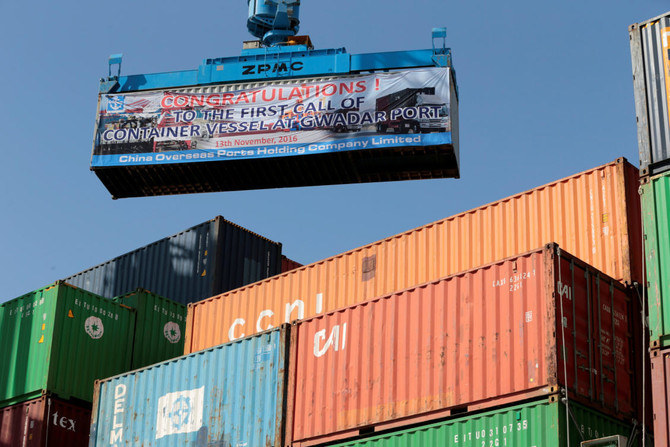
ISLAMABAD: Pakistan can ramp its exports by up to $12 billion by 2024, according to the International Trade Centre’s latest export potential assessment for Pakistan, prepared in collaboration with the World Bank.
Hit hard by the coronavirus and with about $10 billion in debt service costs in the coming financial year, Pakistan needs funds to stave off a balance of payments crisis.
In June, the World Bank projected a 0.2% economic contraction in 2020-21. The multilateral lender sees growth of -2.6% this fiscal year, ending June 30, while the government expects a 0.4% contraction.
“Better integration with the global value chain and increased exports are important for Pakistan’s economic development through job creation – especially for youth and women,” said the ITC report, entitled Pakistan: Invisible Barriers to Trade. “In fact, the country can potentially increase its exports by up to $12 billion by 2024 even taking into account disruptions caused due to COVID19.”
As much as $7 billion of Pakistan’s untapped export potential is at risk, the ITC said, due to market frictions such as lack of transparency and related non-tariff measures, especially for small businesses looking to trade more across borders.
“Thus, identifying which non-tariff measures hinder Pakistani exports is critical for the Government to better formulate its trade policies,” the Centre recommended. “Supporting small businesses to achieve export success also requires a clear understanding of the challenges they face.”
“More than half of the exporters in Pakistan face difficulties with restrictive regulations or related trade obstacles,” the report added. “Among these are difficulties complying with technical requirements, lack of trade-related information and inadequate domestic infrastructure.”
Upgrading quality infrastructure and enforcing quality compliance are key to Pakistan’s export development, the ITC said, adding that adopting digitally oriented solutions such as an integrated trade portal is essential to give necessary guidance to exporters.


Pakistan can increase exports by up to $12 billion by 2024 — International Trade Centre
https://arab.news/9qh5y
Pakistan can increase exports by up to $12 billion by 2024 — International Trade Centre

- More than half of Pakistani exporters face regulatory or procedural trade-related obstacles, new trade report says
- Up to $7 billion untapped export potential at risk due to market frictions like lack of transparency and related non-tariff measures

Death toll in Pakistan shopping plaza fire rises to 67, officials say
- Rescue teams still searching for damaged Gul Plaza in Karachi where blaze erupted on Saturday, says police surgeon
- Karachi has a long history of deadly fires, often linked to poor safety standards, weak regulatory enforcement
KARACHI: The death toll from a devastating fire at a shopping plaza in Pakistan’s southern port city of Karachi jumped to 67 on Thursday after police and a hospital official confirmed that the remains of dozens more people had been found.
Police surgeon Dr. Summaiya Syed said rescue teams were still searching the severely damaged Gul Plaza in the Karachi, where the blaze erupted on Saturday.
Most remains were discovered in fragments, making identification extremely difficult, but the deaths of 67 people have been confirmed, she said. Asad Raza, a senior police official in Karachi, also confirmed the death toll. Authorities previously had confirmed 34 deaths.
Family members of the missing have stayed near the destroyed plaza and hospital, even after providing their DNA for testing. Some have tried to enter the building forcibly, criticizing the rescue efforts as too slow.
“They are not conducting the search properly,” said Khair-un-Nisa, pointing toward the rescuers. She stood outside the building in tears, explaining that a relative who had left to go shopping has been missing since the blaze.
Another woman, Saadia Saeed, said her brother has been trapped inside the building since Saturday night, and she does not know what has happened to him.
“I am ready to go inside the plaza to look for him, but police are not allowing me,” she said.
There was no immediate comment from authorities about accusations they have been too slow.
Many relatives of the missing claim more lives could have been saved if the government had acted more swiftly. Authorities have deployed police around the plaza to prevent relatives from entering the unstable structure, while rescuers continue their careful search.
Investigators say the blaze erupted at a time when most shop owners were either closing for the day or had already left. Since then, the Sindh provincial government has said around 70 people were missing after the flames spread rapidly, fueled by goods such as cosmetics, clothing, and plastic items.
The cause of the fire remains under investigation, though police have indicated that a short circuit may have triggered the blaze.
Karachi has a long history of deadly fires, often linked to poor safety standards, weak regulatory enforcement, and illegal construction.
In November 2023, a shopping mall fire killed 10 people and injured 22. One of Pakistan’s deadliest industrial disasters occurred in 2012, when a garment factory fire killed at least 260 people.


