


KARACHI: Pakistan’s Federal Investigation Agency (FIA) said on Tuesday it had launched an inquiry into hundreds of complaints against online platforms selling sacrificial animals for the Eid Al-Adha festival last week.
The complaints range from meat not being delivered to being delivered late, or being of a lower quality or smaller quantity than promised.
“We have decided to probe the matter after receiving hundreds of complaints,” Abdul Ghaffar, deputy director of the FIA’s cybercrime unit, told Arab News.
Commissioner Karachi Iftikhar Shalwani said “stern action” would be taken against companies that were found to have defrauded the public over Eid.
“We will definitely investigate the issue and take action against guilty companies,” he told Arab News.
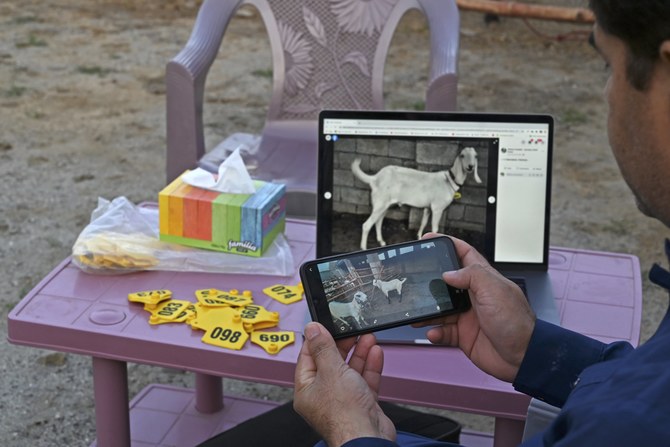
As Pakistani Muslims prepared to celebrate the Eid Al-Adha festival this year, digital service providers reported a boom in online sales that limit the need for people to visit farms and cattle markets during the coronavirus pandemic to buy the goats, sheep and cows traditionally sacrificed during the holiday.
Officials and health experts have been concerned about the risks of the coronavirus being spread during the religious festival in the world’s second largest Muslim-majority country when people typically gather in mosques and homes, or travel to their home towns.
In Pakistan, platforms providing online sacrificial services have existed for years but their popularity has increased this year due to the coronavirus outbreak which saw authorities banning the setting up of small makeshift cattle markets within cities, and the slaughter of animals in open spaces, fearing a spike in dwindling virus cases.
Scores of meat brands, cattle farm owners and regular businesses thus launched websites offering animal sacrificing services online.
Now some of these platforms are under fire for providing subpar services including Meat Master, Lal Meat and ARY Sahulat Bazaar.
“My father was unwell, so I decided not to visit the cattle market and try an online service instead,” said Syed Azfar Hussain, who placed an order through Lal Meat’s Facebook page a few days before Eid and paid Rs 87,500 for five shares in a collective sacrifice.
He only received 80 kilograms of meat, he said, and it was “so rotten that it had turned green. The smell made me sick.”
Hussain said despite repeated requests, Lal Meat did not provide any compensation. Tabish Haider, owner of Lal Meat, did not respond to requests for comment for this article.
Abdullah Riaz, a representative of ARY Sahulat Bazaar, said all Eid bookings were delivered on time and in a professional manner. Meat Master said a delay was caused by an “unexpected mechanical fault in our automated deboning line on the first day of Eid.”
“Due to the unprecedented nature of the fault, we were unable to give a clear timeline to our customers regarding the delivery since there were also logistics limitations to make dispatches after 8 p.m. to multiple locations,” Meat Master said in a statement, adding that the organization shifted 30 percent of its orders to the second day of Eid and ensured 100 percent refunds for orders that were canceled.
Adil Mirza, an audit adviser in Karachi who booked with Lal Meat, said he knew more than 50 people who had lodged complaints with the FIA and the Pakistan Citizens Portal against online platforms.
“If we do not get full refunds, we will stage a protest demonstration,” he said.
Sadia Mehmood, who teaches at the University of Karachi, said she had used online services for sacrificial animals in the past but had her “worst experience” with Meat Master over Eid.
“It was mental torment for us,” she said, saying the company did not respond to any messages or calls from her family until midnight on the first day of Eid.
“You’re not selling air conditioners,” she said. “You are fulfilling a religious obligation ... and must be extra cautious.”


