



RAWALPINDI: Shahzad Malik, the author of Pakistan’s first self-help book in English, has said he was inspired to write his book, Dare To Be You, to bring focus to mental health in Pakistan and help create a climate where more people were comfortable talking about and tackling mental health concerns in their lives.
Malik’s book, his first, is for everyone, he says, but particularly for young people like university students and professionals who find themselves racked with doubt over how to actualize their dreams while also achieving happiness.
According to the International Journal of Emergency Mental Health and Human Resilience, up to 16 percent of Pakistan’s 220 million population suffers from mild to moderate psychiatric illness. The country has one psychiatrist for every 10,000 people and only five dedicated psychiatric hospitals nationwide.
“Pakistan has a lot of stigma around getting help [for mental health concerns] or trying to improve yourself, but that culture is changing,” Malik told Arab News in an interview. “Self-development is now picking up and people are starting to embrace therapy and focus on mental wellness overall.”
Nuclear-armed Pakistan is plagued by insurgencies, deadly criminal gangs, extrajudicial executions and sectarian killings, as well as unemployment and poverty, giving rise to mental health disorders.
Given its myriad problems, talking about mental health is important for a country like Pakistan, Malik said, and particularly now in the context of the coronavirus and the heightened post-lockdown anxiety which have become a matter of government concern around the world. The author said he hoped his book would ignite more conversations around mental health in Pakistan also, a topic that like suicide has often been taboo in Pakistani society.
“With everything that’s happened with the pandemic, things are finally getting turned inwards and people are reflecting,” Malik said.
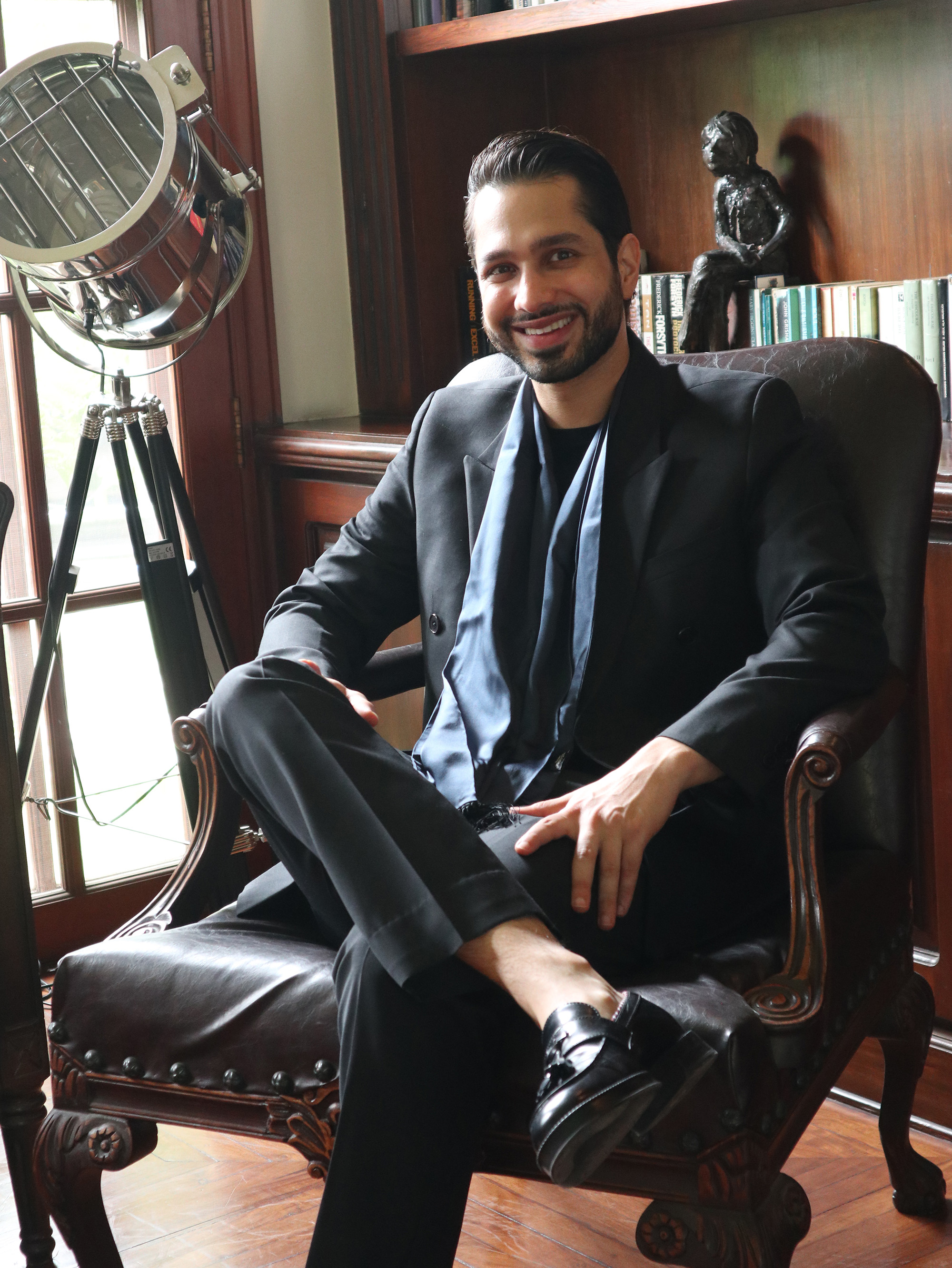
Shahzad Malik, the author of Dare to Be You, Pakistan's first English language self-help book, poses at his home in Lahore, Pakistan, on July 30, 2020. (Photo courtesy: Shahzad Malik)
Malik, 33, was born and raised in Lahore and was always expected, he said, to join the family business, which includes Master MoltyFoam, one of Pakistan’s most trusted names in the bedding, furniture and health care industry.
“I never got a choice growing up about what I wanted to do or where I wanted to be; it was always like, when you grow up you’re going to work with the family,” said Malik, who has a master’s degree in business administration from Bentley University in the United States. “That always got me a little bit lost in life.”
Malik currently serves as a director for his family’s group of industries, and is managing director of an energy company in its portfolio.
“I had a lot of questions like ‘if I wasn’t doing this, what would I be doing?’” he said.
At 13, Malik found himself pouring over biographies of influential figures like Warren Buffet and Steve Jobs and moved on to reading self-development and self-help books.
“I was a lost teenager,” Malik said, laughing, “and all that reading sparked the interest in me and that’s where it all began really.”
After joining the family business since finishing his MBA, Malik says he started to think even more about finding self-fulfilment as a young leader. But there wasn’t a single book or platform he could recommend to his team to help them achieve their goals better and attain happiness.
“There wasn’t one book that touched on all the different ingredients that I believe are a starter kit for self-help,” Malik said. “That’s when I set out to do it myself and I have been working on it for the last five years and have put it together now.”
The book, Malik said, is a starting point for “everyone and anyone who wants to improve themselves.”
“Dare To Be You touches upon everything from fear, gratitude, passion, happiness, self-forgiveness,” he added, “but its overall essence is how you can be the best version of yourself and where you can begin your self-development process.”
“I wish I had had that when I was growing up,” the author said. “It would have made it a lot easier for me to guide and direct myself.”


