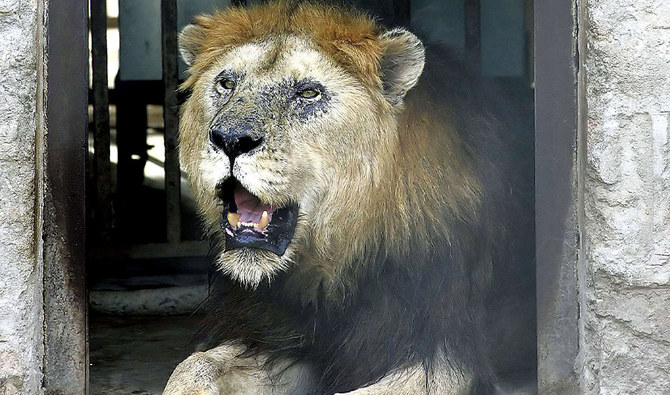
ISLAMABAD: Pakistani officials on Thursday began a new probe into Islamabad’s notorious zoo, already under scrutiny over its treatment of a famous elephant, following the recent deaths of several animals including lions and ostriches.
The ministry of climate change in the Pakistani capital said it had convened a commission to investigate the deaths, which it blamed on the careless relocation of animals, shoddy management and poor feeding.
In a statement, the ministry said it was “seriously concerned” about the “intolerable and inhumane” treatment of zoo animals.
The investigation comes as a video circulating online appeared to show a fire inside a lion’s cage at the zoo.
AFP could not immediately confirm the veracity of the video. Anis Ur Rehman, chairman of the Islamabad wildlife management board, said two lions had died while they were being moved from Islamabad to an enclosure in Lahore.
“The lioness died in Islamabad while the lion died after reaching Lahore,” Rehman said.
He confirmed a blaze had taken place but said “it’s not true” the lions died because of fire.
“We are waiting for the postmortem,” Rehman said.
He said the big cats had been stuck in small cages for years so efforts to move them had been highly stressful for the lions.
“Our staff has never moved animals, they have zero experience in handling the animals,” he said.
A court has ordered the eventual relocation of all the zoo’s animals while the facility is converted into a safari park, Muhammad Saleem, a spokesman at the ministry of climate change, told AFP.
The zoo garnered international headlines in May when Pakistan’s high court ordered the relocation of a lonely and mistreated Asian elephant called Kavaan whose cause had been championed by the American singer Cher.
Kavaan is slated to be moved to a sanctuary in Cambodia. He had been kept in chains and exhibited symptoms of mental illness, prompting global outrage over his treatment.


![]()

Pakistan probes deaths of lions, ostriches in Islamabad zoo
Short Url
https://arab.news/n56mg
Pakistan probes deaths of lions, ostriches in Islamabad zoo
- Ministry of climate change blames careless relocation of animals, shoddy management and poor feeding
- Investigation comes as a video circulating online appears to show a fire inside a lion’s cage at the zoo
Latest updates




© 2026 SAUDI RESEARCH & PUBLISHING COMPANY, All Rights Reserved And subject to Terms of Use Agreement.