

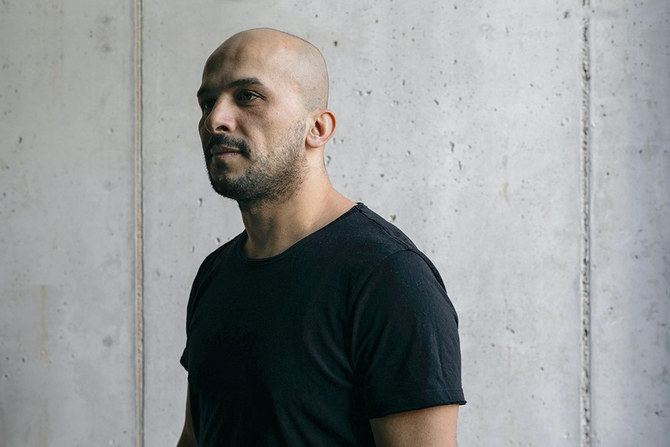

DUBAI: In a bid to support exiled Syrian artists, many of whom have fled their homeland since the outbreak of the civil war in 2011, Berlin-based artist and activist Khaled Barakeh — who was born in Syria in 1976 — recently launched an initiative called “Through Solidarity, We Survive.”
Managed by Barakeh’s non-profit organization “coculture,” which he founded to promote displaced cultural producers, “Through Solidarity, We Survive” was mainly triggered by the economic effects of the ongoing COVID-19 pandemic that has had a huge impact on revenue for creatives in all areas of the arts. It is just one of several projects Barakeh and his team have initiated to boost the profiles (and, hopefully, bank balances) of Syrian artists around the world.
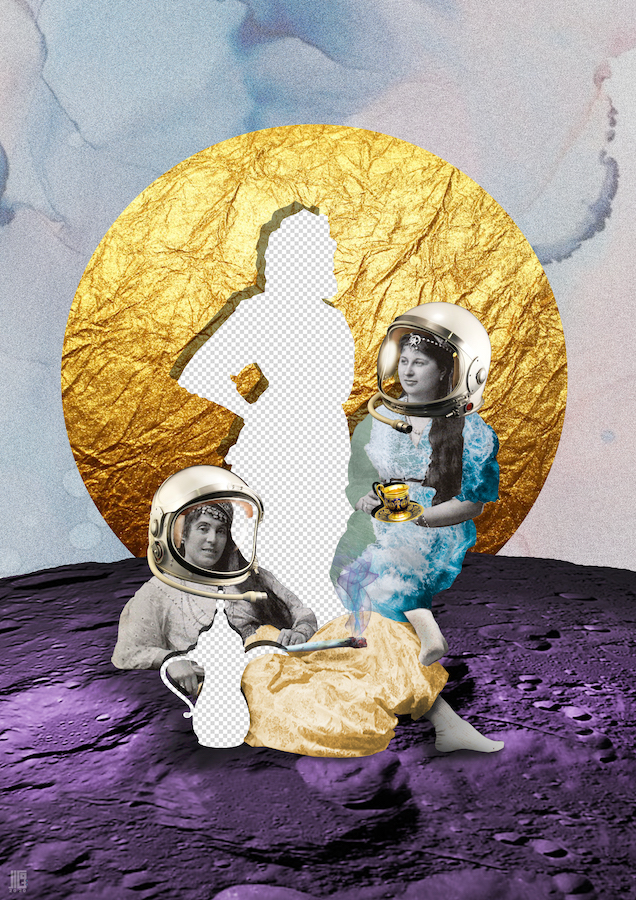
‘[Sob-hiy-eh] while keeping a social distance’ by Michael Daoud. (Supplied)
Coculture has also been developing an online platform called “Syria Cultural Index (SCI)” that is set to go live later this year. Its objective is to map and connect Syrian artists around the world. Each artist in the index will have their own profile page, displaying their resumé and a selection of their artwork. “I thought, ‘How can we reconnect these dispersed communities and this cultural fabric, which is not even visible?’” Barakeh explained.
Barakeh is also busy arranging the inaugural Syria Biennale (another of coculture’s key projects), which is scheduled for summer next year. The plan is that it will become a mobile exhibition, with each edition taking place in a different city on the ‘refugee route’ — including Berlin, Beirut and Istanbul — and showcasing works by contemporary artists from Syria and abroad. “I hope that with these small initiatives we can show a different image of ourselves, because we (are) portrayed so poorly in the media,” Barakeh said.
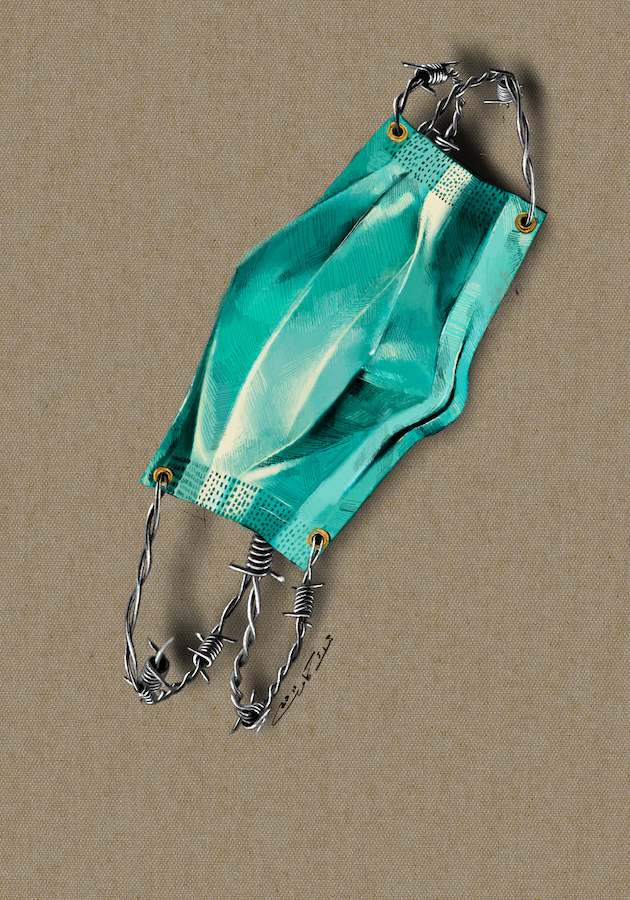
‘We appreciate your sacrifice’ by Ala Hammameh. (Supplied)
For “Through Solidarity, We Survive,” Barakeh invited Syrian artists to contribute a digital artwork in the form of a poster, which will be displayed in public spaces in Berlin and Oslo, and were exhibited at the Berlin University of the Arts earlier this month.
Coculture specified that the artists “should reach out to a person from their surroundings (a neighbour, relative, friend, or other) to develop and produce a visual artwork with a thematic focus on shared experiences, thoughts, concerns or feelings — translating their dialogue into an artwork that serves as a visual document.”
Twenty-five artists submitted designs from across the Syrian diaspora — including France, Germany, Belarus, Sweden, Ireland, and Lebanon. In addition, coculture launched a crowdfunding campaign to support the participating artists.
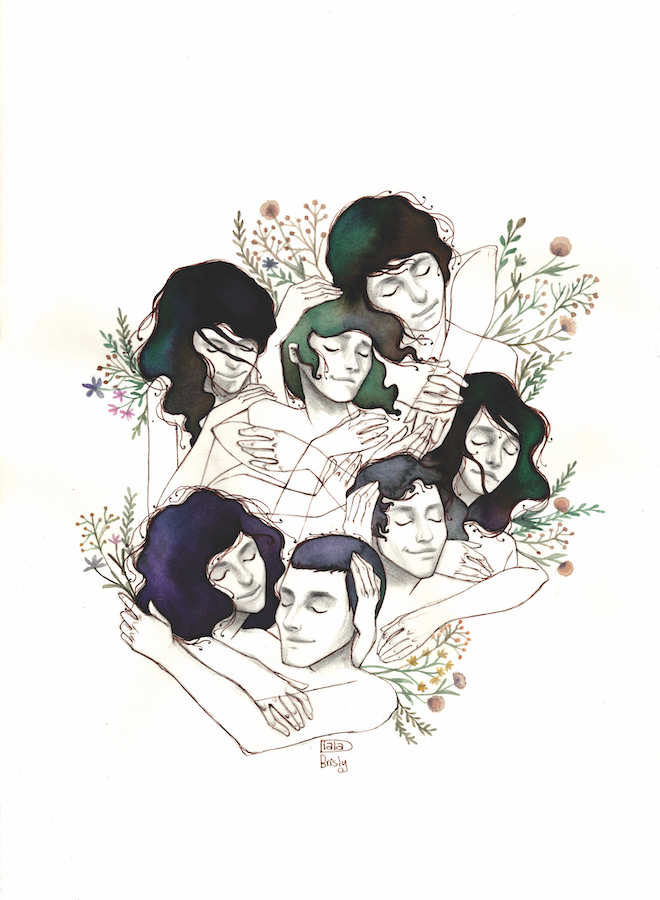
‘Intimacy’ by Diala Brisly. (Supplied)
“I think it will be a nice gesture for Berlin to have posters created by Syrian artists, showing that they’re part of this community,” Barakeh told Arab News.
He knows from personal experience just how difficult it can be settling into a new country. “Imagine you arrive in a new country that has a complex, bureaucratic system. And you don’t speak its language and you lost your instrument and network. Maybe you were the most famous Syrian artist in your country, but you arrive here and you are no one. You have to start from scratch,” he said.
Obstacles include legal procedures — including registration, the language barrier, and, on a deeper level, identity concerns.
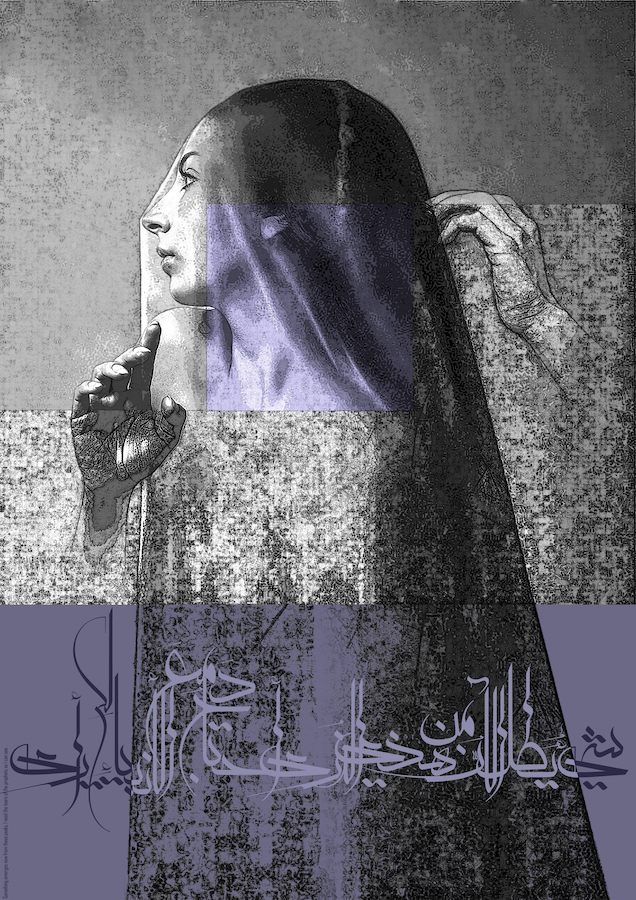
‘Zarqaa al Yamama’ by Zena El Abdalla. (Supplied)
“I personally don’t like people introducing me as a ‘Syrian artist’, because my identity is an artist, not Syrian,” Barakeh said. “It sounds very simple, but it’s really more complex, because the moment you say that a work is by a ‘Syrian artist’, it’s being looked at with a different lens.”
Barakeh — who was formerly a calligrapher — remembers his first trip to Europe in 2005, which eventually led him to pursue his education there, studying in Odense and Frankfurt. He recalled visiting the renowned contemporary art museum Palais de Tokyo on that first visit: “I didn’t understanding anything because everything was connected to contemporary art. And back in Syria, we were still using the local art language.”
He eventually settled in Berlin in 2008. His work then has centered, thematically, on issues of self-identity, movement, and the concept of ‘home’ — often through conceptual art featuring, for example, visa stamps and embroidered life jackets.
“Everything is socially and politically rooted,” Barakeh said. “I’m trying to tell my personal story through the collective story, and vice-versa.”


