BEIRUT: Lebanon's health minister says the financially troubled Mediterranean country, which has so far managed to contain the coronavirus, is sliding toward a critical stage with a new surge in infections after lockdown restrictions were lifted and the airport reopened.
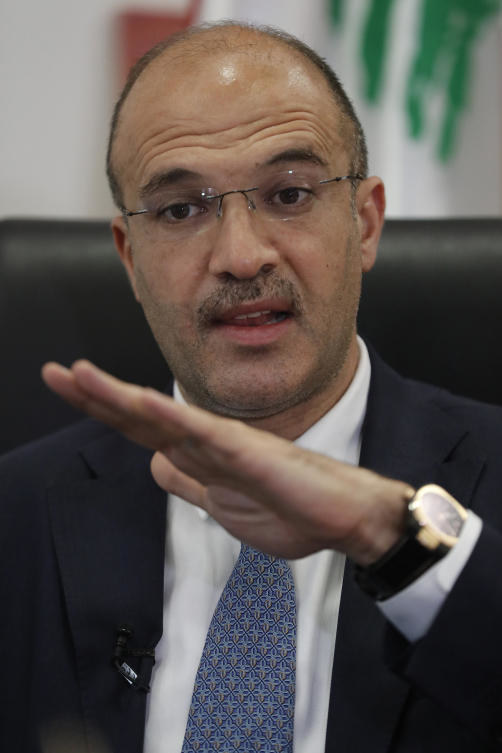
The recently recorded double and triple digits of new infections were coupled with an increase in untraceable cases, raising concerns that a dangerous spread in the community could follow, Minister of Health Hamad Hassan told The Associated Press.
Lebanon’s early lockdown and strict measures to contain the virus were praised for slowing down the initial spread of the pandemic. Authorities have also aggressively tested, carried out random tests, and swiftly isolated infected areas.
But Lebanon’s crippling economic and financial crisis has proven more difficult to manage. In late April, the authorities began gradually easing weeks-long restrictions that threw tens of thousands out of work; Lebanon's only airport reopened on July 1.
Today, the government doesn't appear ready to again tighten restrictions or impose another full lockdown.
So far, Lebanon has recorded more than 2,900 infections and 41 deaths, including one front-line doctor who died Monday at a hospital in the south, two weeks after contracting COVID-19. Hassan said the late diagnosis is to blame for the death of the 32-year-old physician. Some 150 medical staff have been infected, only a few of them becoming sick.
The reopening of the Beirut airport and the subsequent failure of Lebanese returning from abroad and their relatives to adhere to strict isolation measures caused a spike in infections, Hassan said. Many returning expats visited relatives and attended social gatherings, which helped spread the virus. New cases peaked last week with as high as 170 in one day, from an average of less than 20 a day in previous months.
“The danger of community spread is still possible because the country has opened up,” Hassan said in the interview with the AP late Monday.
Despite a low death rate and low level of hospital bed occupancy, the minister warned that more than 20% of the new infections are untraceable.
“When they are untraceable and I can’t trace the clusters that I need to reach, then I start to worry that we are sliding into stage four,” he said. “We are still in the critical period between stage three to stage four.”
Stage four would necessitate return to more lockdown measures, though it's “still too early” to consider that option, he added.
In the beginning, people stayed home for months, helping contain the spread of virus, Hassan said. Now their needs to live must be considered — a dilemma facing all countries grappling with the slowdown of economic activities amid the virus.
Lebanon’s crisis predates the virus, which has only accelerated poverty and unemployment rates, now at 45% and over 30%, respectively.
Before the coronavirus, Lebanon was already going through its worst economic and financial crisis. A highly indebted government bailed on paying its sovereign debt in March; banks imposed informal capital controls to prevent further drying up of liquidity and foreign currency. Nationwide protests demanded major reforms from a government that has failed to gain wide domestic or international support while talks for assistance from the International Monetary Fund stalled.
The crisis put a strain on resources and threatened fuel supplies, which raised alarm among the country’s hospitals that rely on generators and fuel bought at black market rates. Private and public hospitals warned they may not be able to keep up with the surge in infections; private hospitals threatened to shut down, saying accumulated government debt, banking restrictions and a currency crash are making their operations unsustainable.
Hassan said he is counting on the government to continue to provide for hospitals, adding that a “safety belt” of financing until the end of the year is available to ensure that both private and public hospitals continue to operate.
But he also appealed on the health facilities to put up with the economic crunch Lebanon is facing. He said parliament has approved repaying a chunk of outstanding debts, but the currency crash is deepening the pressure.
“Today all these fears are legitimate. We are living from one day to another,” he said. “We should not scare the citizen, who is already under a lot of psychological and moral stress worrying about his food, social and economic security. Let’s not also add to it by undermining his health safety.”
Members of Lebanon's cash-strapped government have accused political rivals of trying to make it fail by seeking to block international aid. The militant Hezbollah group, which backs the current government, has accused the United States of allegedly stopping foreign currency from reaching Lebanon as a way to pressure the Iran-backed group, along with sanctions.
Hassan said his strategy is to strengthen the public health sector, which had been devastated during the country’s civil war that ended in 1990. Lebanon heavily relies on private hospitals, but public facilities have been at the forefront of efforts to combat the coronavirus.
Hassan said he will use a World Bank loan to equip and prepare public hospitals.
“We must cooperate ... to be able to cross this difficult phase that our nation is going through,” he said.


![]()
![]()

Minister: Lebanon is nearing critical stage in virus cases

Short Url
https://arab.news/6zdrn
Minister: Lebanon is nearing critical stage in virus cases
- Lebanon’s early lockdown and strict measures to contain the virus were praised for slowing down the initial spread of the pandemic
Latest updates


Recommended


© 2026 SAUDI RESEARCH & PUBLISHING COMPANY, All Rights Reserved And subject to Terms of Use Agreement.