

Pakistan telecoms regulator bans Bigo app, gives Tiktok last warning 

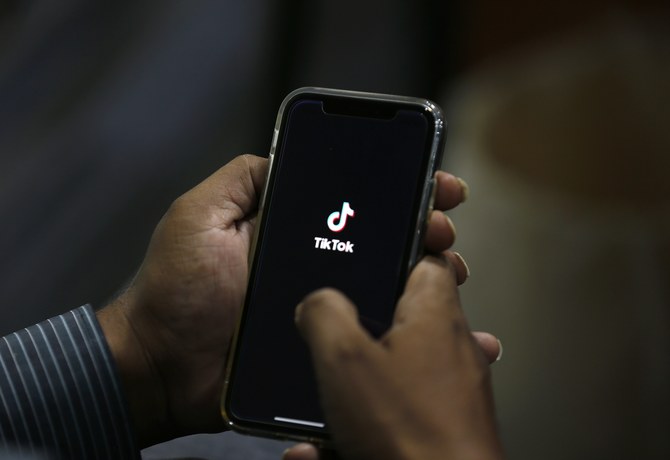
A man opens social media app 'Tik Tok' on his cell phone, in Islamabad, Pakistan, Tuesday, July 21, 2020. (AP)
Short Url
Updated 21 July 2020
Follow

Pakistan telecoms regulator bans Bigo app, gives Tiktok last warning 

  • Bigo blocked over “immoral, obscene and vulgar content”, Tiktok warned on “similar grounds” 
  • PTA this month also banned the hugely popular online game PUBG

ISLAMABAD: Pakistan Telecommunication Authority said on Tuesday it had banned the Singaporean live-streaming app Bigo over “immoral, obscene and vulgar content” and issued a “final warning” to Chinese video sharing platform Tiktok for "similar" reasons. 
Earlier this month, PTA banned the hugely popular online game, PlayerUnknown’s Battlegrounds, or PUBG, saying it was addictive, a waste of players’ time and was having an adverse effect on the mental and physical health of the country’s youth. 
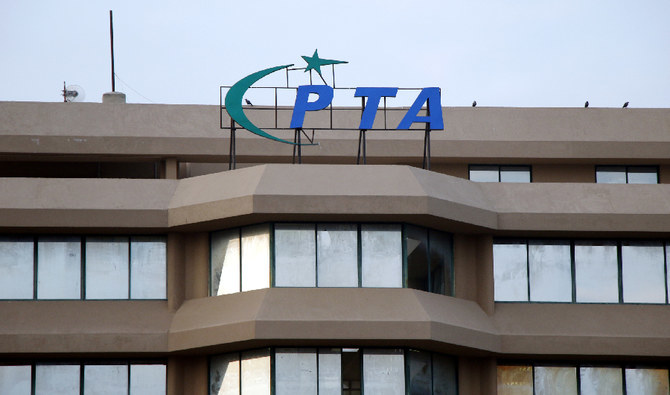


A view of Pakistan Telecommunication Authority (PTA) building in Islamabad, Pakistan, January 22, 2020. (AN photo)

PUBG, made by South Korean firm Bluehole Inc, is a survival-themed battle game that drops dozens of online players on an island to try and eliminate each other. It was launched in 2017 and has a huge global following.
“Number of complaints had been received from different segments of the society against immoral, obscene and vulgar content on social media applications particularly TikTok and Bigo, and their extremely negative effects on the society in general and youth in particular,” PTA said in a statement.
The regulator said it had issued warnings to the social media companies to moderate their content and bring it in line with Pakistani laws, but was not satisfied with the “response.” 
Therefore, the regulator said, it had “decided to immediately block Bigo and issue final warning to TikTok to put in place a comprehensive mechanism to control obscenity, vulgarity and immorality through its social media application.” 
Science and technology minister Fawad Chaudhry has said he is against such bans and they were “killing the tech industry” in Pakistan. 
On July 14, a petition was filed in the Lahore High Court, the highest court in Pakistan’s most populous province of Punjab, seeking a ban on Tiktok “for the sake of securing wellbeing of the people of Pakistan.” The court has yet to accept the plea and begin hearing the case. 


Pakistan stock market sees 41% rise in investors in 18 months

Updated 7 sec ago
Follow

Pakistan stock market sees 41% rise in investors in 18 months

  • Pakistan’s stock market has gained momentum at start of year on broad-based institutional buying
  • The rise in the stock market reflects global investors’ confidence in the country, state media says

ISLAMABAD: The Pakistan Stock Exchange has witnessed a 41% increase in the number of investors over the past 18 months, Pakistani state broadcaster reported on Friday.

Pakistani stock market has gained momentum in recent months as broad-based institutional buying across key sectors has reinforced investor confidence even as the country continues to navigate economic reforms under international lending programs.

Around 135,000 new investors have joined the PSX over the last 18 months, the Radio Pakistan broadcaster reported.

“Pakistan’s stock market has emerged as the second-best performing market globally,” the report said. “The rise in the stock market reflects global investors’ confidence in Pakistan’s improved investment environment.”

The development came as the PSX shed a little more than 1,000 points as it closed the weekend session at 184,519 points.

The report said coordinated efforts by Pakistan’s Special Investment Facilitation Council (SIFC) have helped stabilize the country’s economy and investment market, elevating it to prominence at the global level.

“Pakistan’s macroeconomic environment has become an attractive and reliable destination for investment,” it quoted Finance Adviser Khurram Schehzad as saying.

On Wednesday, Pakistani stocks climbed to a fresh all-time high with the benchmark KSE-100 Index crossing the 186,000-point mark for the first time as potential foreign inflows upheld the positive sentiment.