

Google’s new tool lets you translate Ancient Egyptian hieroglyphics

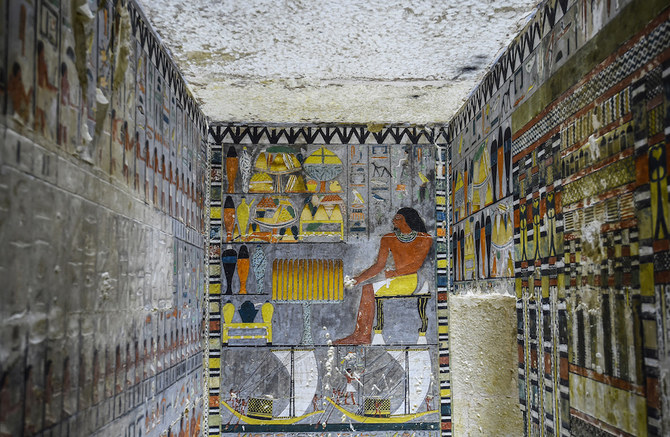
Google has launched a new tool that allows users to decode hieroglyphics. File/AFP
Short Url
Updated 16 July 2020
Follow

Google’s new tool lets you translate Ancient Egyptian hieroglyphics

DUBAI: If you’ve ever wondered what messages the Ancient Egyptians were trying to convey with their hieroglyphics, Google’s new tool might just be able to help. In celebration of the anniversary of the discovery of the Rosetta Stone, Google Arts and Culture has released a new AI-powered tool, Fabricius, that allows you to decode and translate the ancient symbols and characters into both Arabic and English. 

The aim is to raise awareness and preserve the history and traditions of Ancient Egyptian civilization. 

“We are very excited to be launching this new tool that can make it easier to access and learn about the rich culture of Ancient Egypt,” said Chance Coughenour, head of preservation at Google Arts and Culture, in an official release.
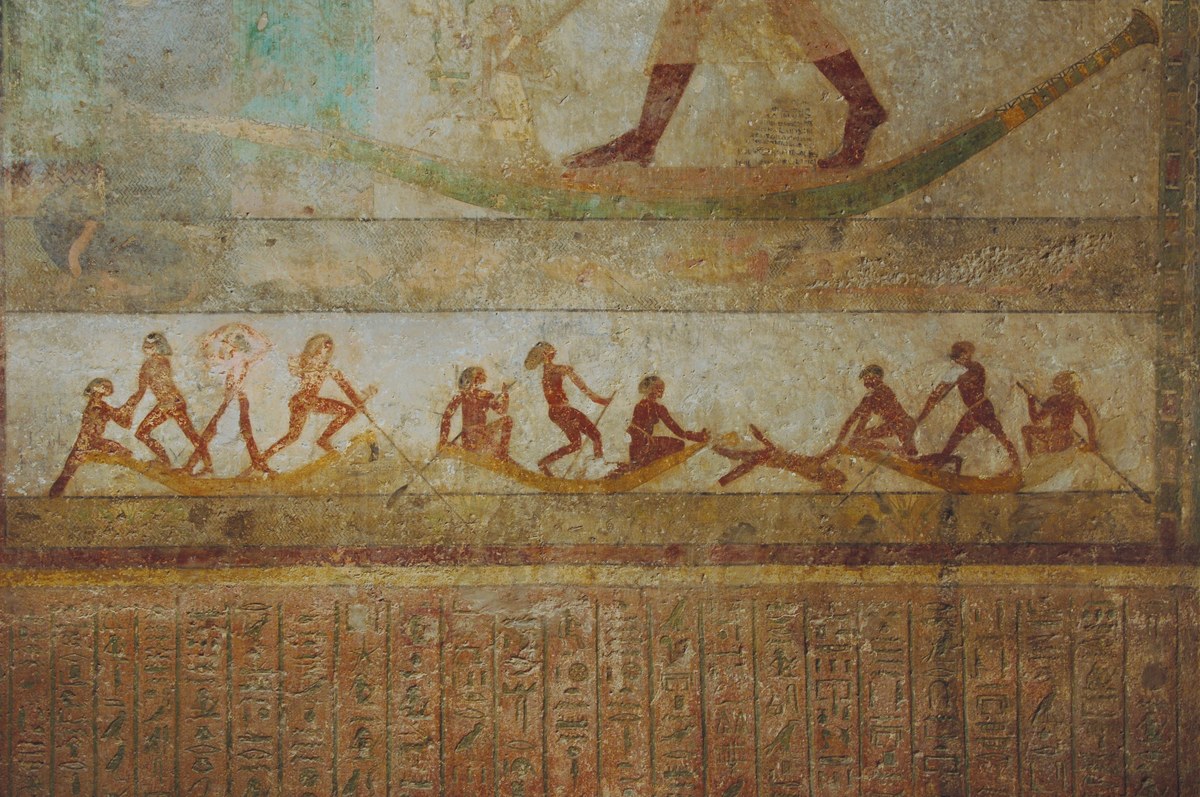


Tomb of Beni Hassan. (Supplied)

“For over a decade, Google has been capturing imagery of cultural and historical landmarks across the region, from Egypt, the UAE, Lebanon, Palestine, Tunisia and more, while making it available on Maps, Street View and Google Arts and Culture. Together with our partners, we remain committed to promoting the rich history and heritage of the region, and to make it accessible to everyone.” he added.

The software, which can be accessed for free via the Google Arts and Culture app has three distinct features: “Learn,” “Play” and “Work.”

“Learn” offers language-learning tools such as flash cards and drawing, “Play” lets users  translate any message in English or Arabic to hieroglyphics and “Work” allows users to upload photos of real life hieroglyphs from temple walls or artefacts. 


Review: ‘Sorry, Baby’ by Eva Victor

Eva Victor appears in Sorry, Baby by Eva Victor, an official selection of the 2025 Sundance Film Festival. (Supplied)
Updated 27 December 2025
Follow

Review: ‘Sorry, Baby’ by Eva Victor

  • Victor makes a deliberate narrative choice; we never witness the violence of what happens to her character

There is a bravery in “Sorry, Baby” that comes not from what the film shows, but from what it withholds. 

Written, directed by, and starring Eva Victor, it is one of the most talked-about indie films of the year, winning the Waldo Salt Screenwriting Award at Sundance and gathering momentum with nominations, including nods at the Golden Globes and Gotham Awards. 

The film is both incisive and tender in its exploration of trauma, friendship, and the long, winding road toward healing. It follows Agnes, a young professor of literature trying to pick up the pieces after a disturbing incident in grad school. 

Victor makes a deliberate narrative choice; we never witness the violence of what happens to her character. The story centers on Agnes’ perspective in her own words, even as she struggles to name it at various points in the film. 

There is a generosity to Victor’s storytelling and a refusal to reduce the narrative to trauma alone. Instead we witness the breadth of human experience, from heartbreak and loneliness to joy and the sustaining power of friendship. These themes are supported by dialogue and camerawork that incorporates silences and stillness as much as the power of words and movement. 

The film captures the messy, beautiful ways people care for one another. Supporting performances — particularly by “Mickey 17” actor Naomi Ackie who plays the best friend Lydia — and encounters with strangers and a kitten, reinforce the story’s celebration of solidarity and community. 

“Sorry, Baby” reminds us that human resilience is rarely entirely solitary; it is nurtured through acts of care, intimacy and tenderness.

A pivotal scene between Agnes and her friend’s newborn inspires the film’s title. A single, reassuring line gently speaks a pure and simple truth: “I know you’re scared … but you’re OK.” 

It is a reminder that in the end, no matter how dark life gets, it goes on, and so does the human capacity to love.