

French macarons, from a Saudi chef

The CEO of the Saudi Culinary Arts Commission got her start in Paris. (Instagram)
Short Url
Updated 14 July 2020
Follow

French macarons, from a Saudi chef

RIYADH: From pastry chef to CEO of the Saudi Culinary Arts Commission, cook Mayada Badr is on a mission to highlight the Kingdom’s food and put it on the global map.

“My ambition is to bring light to our strategy and elevate the culinary arts industry in the Kingdom of Saudi Arabia and also introduce it to the world,” she told Arab News.

“We have so much to offer. It’s amazing because it’s not like you’re trying to create something – it is all there,” she said, referring to the Kingdom’s different regions all with their own unique dishes.

Tourists and visitors could get a taste of tradition and authenticity from eating experiences. “Tourists want to understand us through our food,” she added.

The commission has been studying Saudi food and how it is viewed on the international stage.
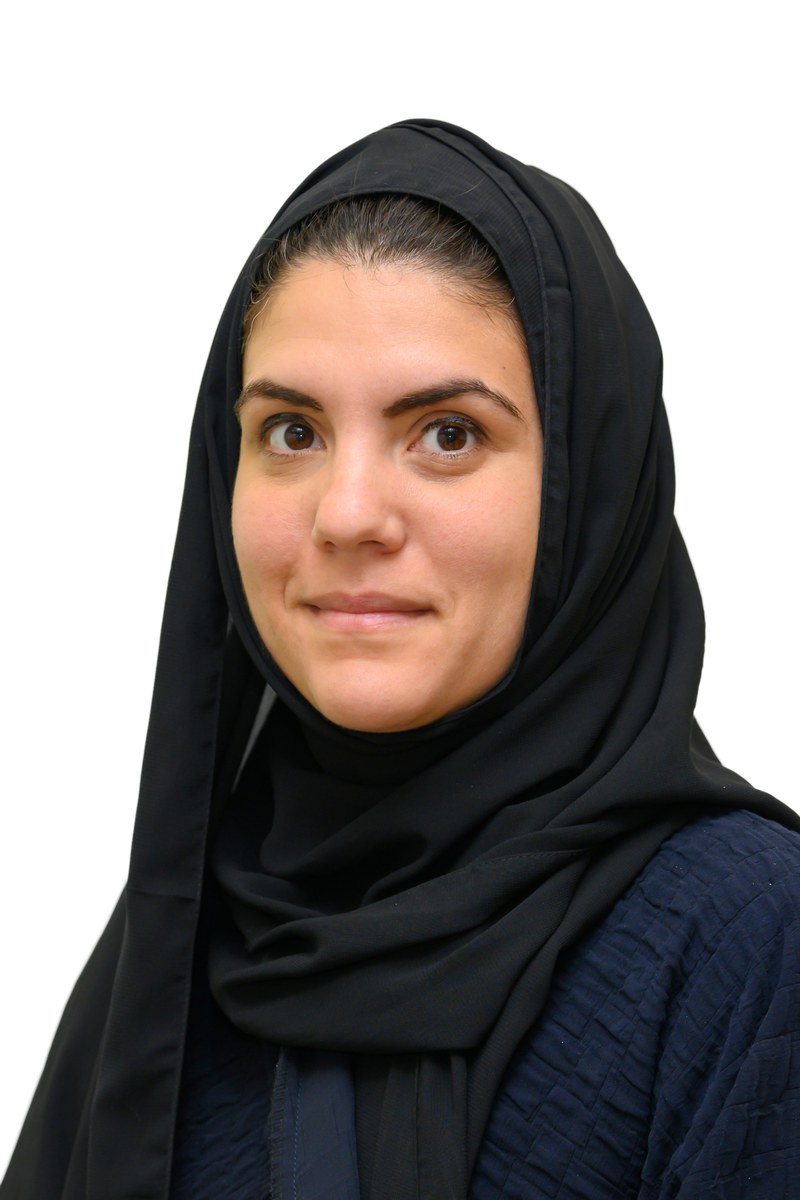


CEO of the Saudi Culinary Arts Commission, chef Mayada Badr. (Supplied)

“We’ve actually done that research, and we asked chefs around the world. Their answer was: ‘We honestly don’t know, it’s a shame. We do not have an idea of what you eat.’ And that’s probably why they can’t really relate sometimes to us, as we are so diverse,” said Badr.

The commission has hired researchers to allocate the origins of Saudi dishes. “We have a lot to offer, and we simply need to shed light on our diverse and unique offerings from ingredients to cuisine.”

The Saudi culinary landscape is set for a dramatic change under soon-to-be-announced commission plans for culinary schools, cooking classes, street food, and more.

“We’re going to announce our strategy which is very exciting. But it goes through the whole food chain in that sense: Basically, the farmers to the production of different products, to the cooking technique, through education, through the infrastructure, to the offering, and then to gastro diplomacy and food tourism routes,” she added.

Badr’s own journey started with a passion for food. Owner of a pastry shop, Pink Camel, and farmer-style restaurant, Black Cardamom, both in Jeddah, Badr became CEO of the Culinary Arts Commission, one of the 11 newly created commissions under the Ministry of Culture, in February.

While studying at the Parsons school of art and design in Paris, she saved up to eat in Michelin-starred restaurants around France. Another treat for her was getting cookbooks autographed by top chefs. 

Apart from dining in French restaurants, she also decided to expand her culinary education and attended renowned Le Cordon Bleu Paris. After completing her grand diploma, she interned for three months at Laduree, the French luxury bakery and cafe famous for its macarons, where she met incredible chefs who taught her different skills in pastry making.

She then moved to the south of France and interned at La Bastide Saint Antoine, a two-star Michelin restaurant in the small city of Grasse.

Returning to Saudi, she craved macarons but could not find any of decent quality, so took it upon herself to make her own to satisfy her craving.


We will be closed on Sunday and we will open again on Thursday we wish you all a happy eid,

A post shared by Pink Camel (@pinkcamelksa) on

Realizing that the French pastry business was limited in the Kingdom, with only a few restaurants that offered top-quality products, Badr opened Pink Camel, her own French pastry shop, on July 21, 2012.

Not only does it represent Saudi culture, but Badr also infuses culture into her macarons by mixing Western and local flavors.

She first started gaining recognition through baking impeccable fresh macarons, focusing on quality over quantity and prompted by her “love for food and the simple joy it brings to everyone.”

On the secret to her macarons, she said: “I honestly think the key is that we make them fresh every day.”


Robert Duvall: understated actor’s actor, dead at 95

Updated 16 February 2026
Follow

Robert Duvall: understated actor’s actor, dead at 95

  • One of his most memeorable characters was the maniacal, surfing-mad Lt. Gen. William Kilgore in Francis Ford Coppola’s 1979 Vietnam War epic ‘Apocalypse Now’
  • One regret was turning down the lead part in ‘Jaws’ (which went to Roy Scheider) because he instead wanted to play the salty fisherman, a role that went to Robert Shaw

LOS ANGELES: Robert Duvall, a prolific, Oscar-winning actor who shunned glitz and won praise as one of his generation’s greatest and most versatile artists, has died at age 95.
Duvall’s death on Sunday was confirmed by his wife Luciana Duvall in a statement posted Monday on Facebook.
Duvall shone in both lead and supporting roles, and eventually became a director over a career spanning six decades. He kept acting in his 90s.
His most memorable characters included the soft-spoken, loyal mob lawyer Tom Hagen in the first two installments of “The Godfather” and the maniacal, surfing-mad Lt. Gen. William Kilgore in Francis Ford Coppola’s 1979 Vietnam War epic “Apocalypse Now.”
The latter earned Duvall an Oscar nomination and made him a bona fide star after years playing lesser roles. In it he utters what is now one of cinema’s most famous lines.
“I love the smell of napalm in the morning,” his war-loving character — bare chested, cocky and sporting a big black cowboy hat — muses as low-flying US warplanes strafe a beachfront tree line with the incendiary gel.
That character was originally created to be even more over the top — his name was at first supposed to be Col. Carnage — but Duvall had it toned down in a show of his nose-to-the-grindstone approach to acting.
“I did my homework,” Duvall told veteran talk show host Larry King in 2015. “I did my research.”
Duvall was a late bloomer in the profession — he was 31 when he delivered his breakout performance as the mysterious recluse Boo Radley in the 1962 film adaptation of Harper Lee’s novel “To Kill a Mockingbird.”
He would go on to play myriad roles — a bullying corporate executive in “Network” (1976), a Marine officer who treats his family like soldiers in “The Great Santini” (1979), and a washed-up country singer in “Tender Mercies” (1983), for which he won the Oscar for best actor. Duvall was nominated for an Oscar six other times as well.
Duvall often said his favorite role, however, was one he played in a 1989 TV mini-series — the grizzled, wise-cracking Texas Ranger-turned-cowboy Augustus McCrae in “Lonesome Dove,” based on the novel by Larry McMurtry.
Film critic Elaine Mancini once described Duvall as “the most technically proficient, the most versatile, and the most convincing actor on the screen in the United States.”
In her statement Luciana Duvall said, “to the world, he was an Academy Award-winning actor, a director, a storyteller. To me, he was simply everything. His passion for his craft was matched only by his deep love for characters, a great meal, and holding court.”

‘A lot of crap’ 

Born in 1931, the son of a Navy officer father and an amateur actress mother, Duvall studied drama before spending two years in the US Army.
He then settled in New York, where he shared an apartment with Dustin Hoffman. The pair were friends with Gene Hackman as all three worked their way up in showbiz. These were lean times for the future stars.
“Hoffman, me, my brother, three or four other actors and singers had a place on 107th and Broadway in Manhattan, uptown,” Duvall told GQ in 2014.
Duvall said he had few regrets in his career.
But one was turning down the lead part in “Jaws” (which went to Roy Scheider) because he instead wanted to play the salty fisherman, a role that went to Robert Shaw.
Director Steven Spielberg told Duvall he was too young for that part.
Duvall also admitted he took some jobs just for the money.
“I did a lot of crap,” he told The Wall Street Journal in 2017. “Television stuff. But I had to make a living.”
Duvall made his home far from the glitz and chatter of Hollywood — in rural Virginia, where his family had roots.
He and his fourth wife, Argentine-born Luciana Pedraza, 40 years his junior, lived in a nearly 300-year-old farmhouse. Duvall never had children.
He said he went to New York and Los Angeles only when necessary.
“I like a good Hollywood party,” he told the Journal. “I have a lot of friends there. But I like living here.”
And of all his storied roles, Duvall says his favorite was indeed that of the soft-hearted cowboy McCrae in “Lonesome Dove.”
“That’s my ‘Hamlet,’” he told The New York Times in 2014.
“The English have Shakespeare; the French, Moliere. In Argentina, they have Borges, but the Western is ours. I like that.”
