


PARIS: After months of working on the frontline in the battle against COVID-19, Spanish nurse Yone Alberich was ready for a holiday, but the question was how.
Going on holiday generally meant flying abroad — but with the virus still very much in the air, she didn’t want to take a plane.
Nor did Alberich want to stay in a hotel or be around crowds of people. So she and her husband rented a motorhome.
“The idea was to keep away from people to avoid getting infected,” said the 32-year-old, who has a toddler and lives in the Valencian coastal town of Castellon.
“And with COVID, what could be better than traveling around with your house on your back?“
With social distancing the new norm in Europe to avoid any fresh outbreaks, there has been a shift in thinking about holidays, with a recent survey showing 90 percent of Spaniards would remain in Spain rather than traveling abroad. And 83 percent planned to use their own car over public transport.
Fabrizio Muzzati, who runs specialist Spanish travel agency Aquiestoy Caravaning, said that many people who never thought about a motorhome holiday are now considering it.
“At a time when the whole world is very much looking for a sense of security, there are a lot of people who are going to give it a go because of the circumstances.”
And as travel restrictions were eased, motorhome rentals resumed “intensively,” the Spanish mobile home and campervan association ASEICAR said last month, suggesting it may be “key to reviving tourism this summer.”
And it is not just in Spain. “Since the rollback, there’s been a real craze for motorhomes, everywhere,” says Francois Feuillet, president of the European Motorhome Federation. “The motorhome means freedom, savings and being green. Now we can add health and safety and for us, that’s a real boon.”
Across Europe, there has been growing interest in the sector and today there are five million users and two million vehicles in circulation, industry figures show. In Germany, Europe’s main market, more than 10,000 new motorhomes were registered in May, an increase of 32 percent year-on-year, while France added 3,529 new registrations — up nearly 2 percent.
And in Spain, a much smaller market but where interest is growing rapidly, there were 1,208 new vehicles registered in June — up 20 percent on last year, ASEICAR figures show.
There has also been a jump in demand in the rental market.
Yescapa, a peer-to-peer rental platform, registered more than 32,500 bookings across Europe in June, with requests for July and August 60 percent higher than in the same period last year.
Of that number, just under a third — or 9,435 — were in Spain.Despite the reopening of Europe’s borders on June 15, most people are reluctant to go abroad, Yescapa co-founder Benoit Panel said.
“Since COVID, there have been almost no cross-booking rentals,” he said, referring to travelers booking outside their country of origin, who usually constitute 20 percent of reservations.
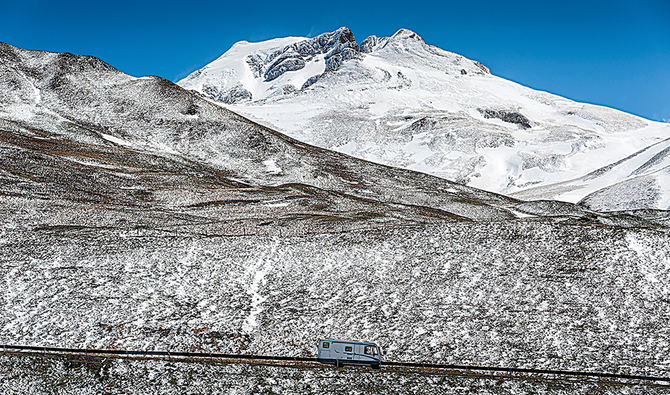
First-time renter Jose Pascal Guiral, who runs a ceramics export business and always holidays abroad, took a motorhome as soon as lockdown ended, spending a week touring scenic mountain passes in the Spanish Pyrenees.
“It’s so much nicer than going in a plane or a hotel, it gives you a real sense of freedom. You go for a week and you feel like you’ve been on holiday for a month,” he said.
Julio Barrenengoa Gomez, director of Caravanas Holidays, said that the crisis has increased interest in national tourism.
“People tend to want a motorhome to travel around Europe but this year, they’re looking to stay here in Spain. With all our desire to visit Europe, it seems like we’ve forgotten just how beautiful Spain is. This year is going to boost national tourism.”
Others believe the health crisis will accelerate a shift away from the mass tourism of resorts, cruises and package holidays.
“This pandemic will change people’s habits because they’ll be less likely to stay in crowded places,” said Fernando Ortiz, director of established Spanish motorhome brand Benimar.
“Not necessarily because of the risk — they will find a vaccine — but because people like being able to change their plans from moment to moment while traveling,” he said. “And that is likely to last.”


