Pakistani businessman in Dubai runs top performing portal for automation products

In this picture taken in March 2020, the UAE team of DubaiMachines.com are pictured together outside the company outlet in Dubai Silicon Oasis. (Picture courtesy: Muhammad Zeeshan Hussain)
Short Url
Updated 11 July 2020
Follow

Pakistani businessman in Dubai runs top performing portal for automation products

  • DubaiMachines.com was launched with an initial investment of AED500
  • The company is now serving the entire Middle East and plans to expand its footprint in other regions

DUBAI: It was in times of adversity that a Pakistani businessman in Dubai found his true calling.

The world was grappling with the 2009 recession when 37-year-old Muhammed Zeeshan Hussain decided to set up his own e-commerce platform specializing in office automation products.

With an initial investment was AED500, he started developing his company’s website from the confines of his bedroom. Today, Zeeshan’s company, DubaiMachines.com, which he co-founded with a friend, Arghuman-e-Muhammad, boasts of a net income of AED4.5 million accumulated in the last few years.

“Big companies were going out of business in 2009, and sales of electronic items were plummeting. It was in this context that I saw an untapped market in online sales and decided to capitalize on the opportunity,” Zeeshan told Arab News on Friday.
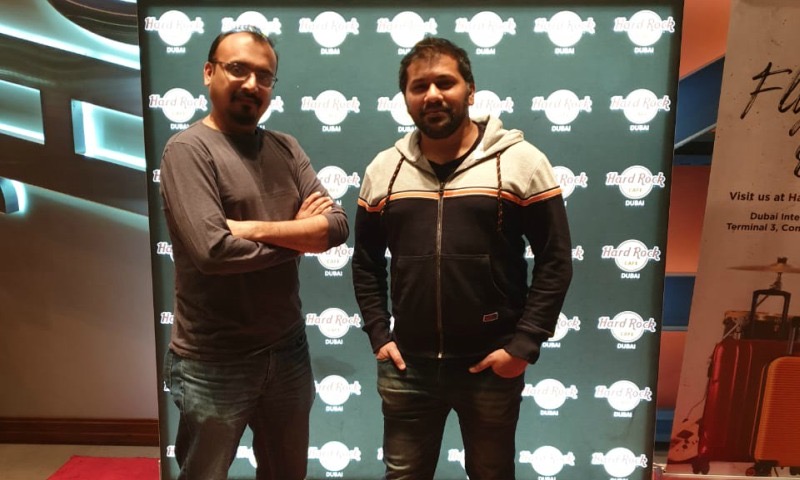


In this photo taken in February 2020, Muhammad Zeeshan Hussain, a Pakistani entrepreneur in the United Arab Emirates, can be with his friend Arghuman-e-Muhammad (left) in Dubai. The two young businessmen set up DubaiMachines.com with an initial investment of AED500. (Picture courtesy: Muhammad Zeeshan Hussain)

The young entrepreneur also noticed that most companies selling automation products were only trying to engage big businesses, not appreciating the immense market potential that small and medium businesses offered.

Despite finding these strategic gaps, it took Zeeshan a couple of years to get his business up and running.

“I registered the domain for $10 and spent about $20 or $30 to market products on Google,” he recalled. “The struggle was real. I would sit outside the offices of huge companies and wait for their managers to give me their price lists. It was a very tough time, but it also taught me a lot.”

On February 12, 2013, the company got its first big order of AED8,000 for a small projector.

“This was the turning point which raised my confidence and motivated me,” he said, adding that there was no looking back after that.

Zeeshan got his company’s website developed by freelancers from Pakistan and, by the end of 2013, his company’s annual revenue stood at AED1.5million – with all business done from home.

“We now have a small showroom in Dubai Silicon Oasis and an office in Karachi with 25 back office staff as well as a digital marketing section,” he said.
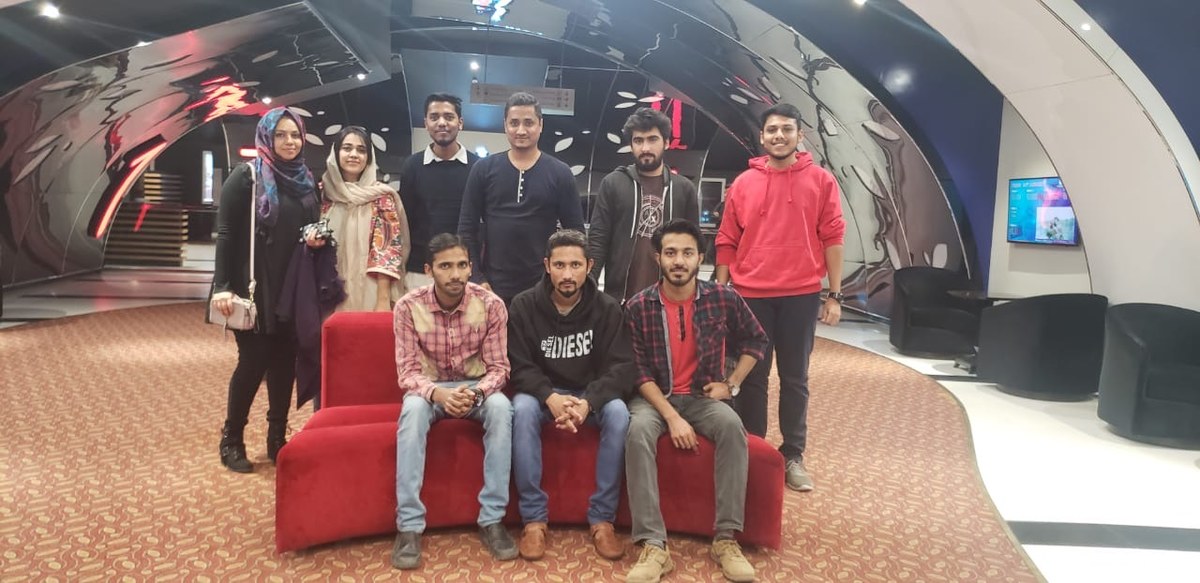


This picture taken in March 2020 shows the Karachi team of DubaiMachines.com. (Picture courtesy: Muhammad Zeeshan Hussain)

DubaiMachines.com has now partnered with manufacturers like Epson, BenQ, Panasonic, LG and NEC. The e-commerce platform has about 51,000 different products.

“Our company has become an incubation zone for many other firms that use it as their launch pad,” he informed, adding that his business was now receiving an average order size of AED20,000 to AED25,000.

“In 2019, we had an annual sales revenue of AED15 million with an yearly growth of 11.3 percent,” he continued.

Despite the financial impact on world businesses due to COVID-19, DubaiMachines.com has done well.

“Except for the month of April, we have exceeded our targets due to the shift in demand for products such as thermal scanners and sanitization tunnels,” Zeeshan said.

He also pointed out that he believed in providing opportunities to Pakistani youth.

“Young people in our country need to be equipped with modern techno-behavioral skills and adopt a more career-oriented approach to face the competition coming from international workforce,” he opined.

His company is now using Emirates Post as its logistical partner and is catering to the entire Middle East and several African markets. Its next goal is to expand its footprint in Central Asia and the Far East.


Pakistan reassures investors after Barrick announces review of Reko Diq project after attacks

Updated 4 sec ago
Follow

Pakistan reassures investors after Barrick announces review of Reko Diq project after attacks

  • Mining giant announced it would reassess all aspects of project after coordinated Jan. 30-31 assaults killed 58 in Balochistan
  • Copper-gold project’s development long overshadowed by decades-long separatist insurgency in remote province

ISLAMABAD: Pakistan has assured foreign investors it has the “capacity and capability” to secure the multibillion-dollar Reko Diq copper-gold mine, Balochistan Chief Minister Sarfraz Bugti said on Monday after Canada’s Barrick Mining Corporation ordered a review of the project following deadly separatist attacks in the province last month.

The mining giant announced it would reassess all aspects of the project after coordinated Jan. 30-31 assaults by the Baloch Liberation Army (BLA) killed 36 civilians and 22 security personnel across multiple districts of the remote southwestern province. Pakistani authorities say 216 militants were killed in follow-up operations.

The Reko Diq mine, one of the world’s largest undeveloped copper and gold deposits, is a cornerstone of Pakistan’s efforts to attract foreign investment and expand mineral exports after a prolonged economic crisis. Islamabad hopes the mines will generate $70 billion in free cash flow and $90 billion in operating cash flow. The project, expected to begin production in 2028, is jointly owned by Barrick Gold and the governments of Pakistan and Balochistan.

The project’s development, however, has repeatedly been overshadowed by security concerns in Balochistan, a sparsely populated province bordering Iran and Afghanistan that has faced a decades-long insurgency in which separatist groups target security forces, infrastructure and projects linked to foreign investment. Militants accuse the state of exploiting local resources without benefiting residents, an allegation the government denies.

“Of course, the government of Balochistan is concerned [about security], it’s not that they aren’t,” Bugti told Arab News in an interview in Islamabad.

“Barrick Gold has a very large investment and we have other international partners in that [Reko Diq mining project]. We want to assure them through your platform as well and also when our meetings will take place that we have the capacity and capability to protect our foreign investors.

“The state is intact, the government is intact. There is a functional government, there is a functional state in Balochistan.”

Bugti said authorities were redesigning security arrangements for the project, including raising a dedicated protection force in mineral-bearing areas and strengthening border controls. However, he acknowledged that attacks affected investor confidence.

“Yes, [attacks] do make a dent, when your country or province takes off [economically],” he said. “It does impact the perception.”

However, Bugti refused to describe the coordinated January attacks as a “security failure.”

“A security failure is when the [army’s] corps headquarters is captured ... when someone seizes control of the biggest cantonment in Quetta, or for that matter, captures our IG [Inspector-General of Police] headquarters, or the IG FC [Frontier Corps] headquarters, you call it a security failure,” the chief minister said. 

“I say it was a success of security forces that within hours, as I told you, other than Nushki, everything was clear.” 

The minister accused Pakistan’s neighbor and archival India of supporting insurgent groups in Balochistan, an allegation New Delhi has repeatedly denied.

“What evidence do you need? Kulbhushan Jadhav was not here to sell chickpeas. It is on record that he was an intelligence officer who came to support Baloch insurgents, and the way he was arrested highlighted this,” he said.

Jadhav is an Indian national arrested by Pakistan in 2016 and convicted by a military court on espionage charges. India disputes the allegations and challenged the case at the International Court of Justice, which ordered Pakistan to review the conviction but did not rule on guilt or innocence.

Ultimately, Bugti said long-term stability in Balochistan depended on pursuing economic development alongside security operations.

“See there is a development paradigm and the security paradigm. Both should be carried forward together,” he said. 

“My vision is that meritocracy and an anti-corruption drive are key to success in Balochistan.”