ISLAMABAD: More than 300 Pakistani doctors, employed by Saudi hospitals, flew back to the Kingdom last week after getting stuck in their country for months due to the suspension of international flight operations in the wake of the coronavirus outbreak, Pakistan’s Ambassador to Saudi Arabia Raja Ali Ejaz told Arab News on Friday.
The medical professionals had taken leave before the emergence of the COVID-19 pandemic and were visiting relatives in Pakistan.
“Over 300 Pakistani medics and their families returned to Saudi Arabia last week,” the envoy informed. “The remaining 200 are scheduled to return during the second week of July.”
Ejaz said the embassy had raised the issue of Pakistani doctors with the Saudi Ministry of Foreign Affairs in April 2020, soliciting permission for their return so they could help the Kingdom in its battle against the contagion.
“Pakistani doctors are working tirelessly since the beginning of the pandemic and constitute the backbone of the Kingdom’s COVID-19 response,” Dr. Asad Ullah Roomi, president of the Pakistan Doctors’ Group in Riyadh, told Arab News.
He added that the return of the Pakistani medical professionals would help Saudi Arabia deal with the new coronavirus.
“We appreciate the efforts of the Pakistan Embassy that made it possible for these doctors to return to the Kingdom and resume their duties,” he added.
Dr. Imran Chaudhry, resident physician at the Convalescence Hospital & PT Center, Al-Baha, was stuck in Lahore and recently returned to the Kingdom to rejoin his work.
He thanked the Saudi government for facilitating the return of the doctors, saying their presence in the country was vital to help COVID-19 patients.
“We wanted to rejoin our duty to serve the people in need, and the Saudi government turned it into a smooth process. The Kingdom even provided free tickets to those who could not make travel arrangements for their families,” he told Arab News.
“We had to wait for a long time, but we are back in Saudi Arabia now. At the moment, we have quarantined ourselves, but we will resume our work in the next few days,” Chaudhary said.

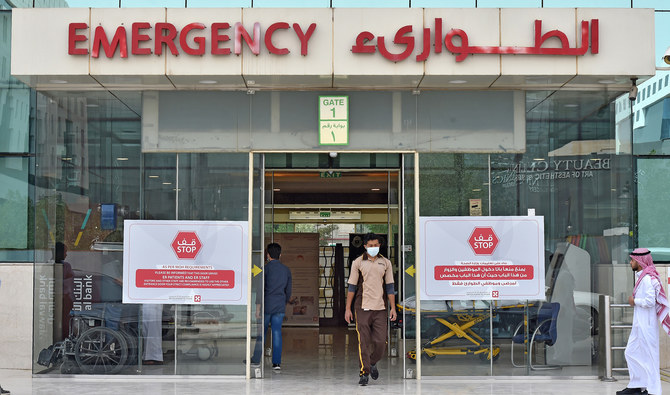
300 Pakistani doctors return to Saudi after getting stuck in their country
https://arab.news/r6856
300 Pakistani doctors return to Saudi after getting stuck in their country
- The medical professionals had taken leave from work before the COVID-19 outbreak and were visiting relatives in Pakistan
- The remaining 200 doctors are scheduled to fly back to the Kingdom next week, says Pakistan’s envoy in Riyadh
Pakistan’s Punjab to hold Basant kite festival from Feb. 6-8 after 25-year ban
- Province to start safety antenna installation campaign on all motorbikes from tomorrow
- Basant ban began in the mid-2000s after fatal incidents involving metal-coated kite strings
ISLAMABAD: Pakistan’s most populous Punjab province will hold the iconic spring kite-flying Basant festival from Feb. 6-8 next year after the provincial government lifted its long-running 25-year ban earlier this month, a senior minister said on Wednesday.
The ban due to fatal kite-string accidents was lifted after the provincial administration passed the Punjab Kite Flying Ordinance 2025, marking a cautious comeback for a festival that once symbolized the arrival of spring in the region.
Basant, one of Punjab’s most celebrated cultural festivals, used to draw thousands to rooftops across Lahore and other cities. However, from 2005 onward, it was repeatedly banned after dozens of people were killed or injured by dangerous metal and chemically coated kite strings that could slash motorcyclists and pedestrians, many of them children.
Courts and provincial administrations upheld these prohibitions for years, making the revival of Basant one of Punjab’s most politically sensitive cultural decisions.
“[Chief Minister] Punjab Maryam Nawaz Sharif has approved the revival of our beloved Heritage Basant Festival on February 6th, 7th and 8th celebrated across Lahore after 25 years, a tradition rooted in history and admired worldwide,” Punjab Senior Minister Marriyum Aurangzeb said in a post on X.
“The Basant Ordinance 2025 will be fully enforced and implemented. Every kite string and seller registered, QR coded and monitored. Basant belongs to the people, its success is our collective responsibility.”
Aurangzeb added that a citywide campaign to install safety antennas on all motorbikes will begin tomorrow.
“Every motorbike in Lahore will have Antenna for safety before and during Basant Inshallah,” Aurangzeb added. “Safety is CM Punjab’s priority. Let every kite soar and every ride be safe together, we’ll make Lahore happy historic and secure!“
Under new regulations, the government has made it mandatory for anyone making or selling kites to register. Each kite must carry a QR code linking to the seller’s identity.
The rules also prohibit children under the age of 18 from flying kites, making their guardians responsible for any violations. Fines for minors are set at Rs 50,000 ($179) for a first offense and Rs 100,000 ($358) for a second offense. Kite flying will only be allowed with formal authorization.
In Punjab, kite flying will require permission from the deputy commissioners, and kites may only be purchased from registered vendors.
The ordinance introduces strict penalties for adults as well, including three to five years in prison and a fine of Rs 2 million ($7,160) for violations.
The government has said the new regulatory framework was intended to revive the Basant festival in a controlled and safe manner, balancing public enthusiasm for the celebration with longstanding concerns over fatal injuries caused by unsafe kite strings.
Officials say that the ordinance also aims to formalize the small but extensive economy surrounding Basant, which includes kite manufacturing, string production, dyes, paper supply, bamboo cutting, wholesalers and thousands of seasonal vendors.
For decades, this value chain has operated informally, with no licensing, safety regulations, or tax registration, generating minimal direct revenue for the provincial government.
By bringing manufacturers and sellers into a documented system through mandatory registration and QR-coded products, officials argue that the government can expand its tax base, ensure safer production standards and create more predictable business opportunities for cottage-industry workshops that rely on the Basant season for income.


