Rajco becomes first Pakistani company to supply sportswear to Hugo Boss

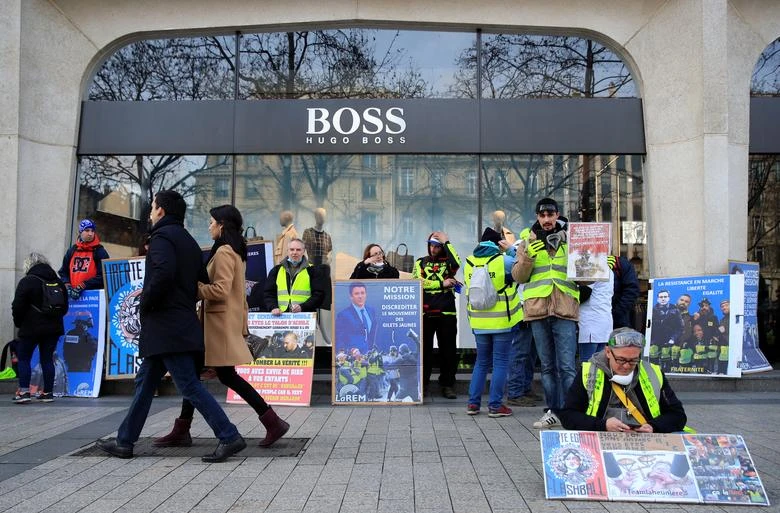
People walk by a Hugo Boss store in Paris, France February 9, 2019. (REUTERS)
Short Url
Updated 10 July 2020
Follow

Rajco becomes first Pakistani company to supply sportswear to Hugo Boss

  • Chief Executive of leading Pakistani sports manufacturer says he is confident the company will deliver the order in August
  • Companies like Hugo Boss are looking to reduce reliance on China over coronavirus and higher production costs, manufacturers’ association says

KARACHI: Pakistan’s Rajco Industries has received an order from Hugo Boss to make t-shirts for the German national soccer team in what is the luxury fashion brand’s first order with a Pakistani sportswear manufacturer, Rajco’s chief executive officer said on Wednesday. 
Earlier this week, Pakistan’s adviser on commerce Abdul Razak Dawood announced the Hugo Boss deal in a Twitter post, but did not reveal the name of the Pakistani company that had booked the order. 
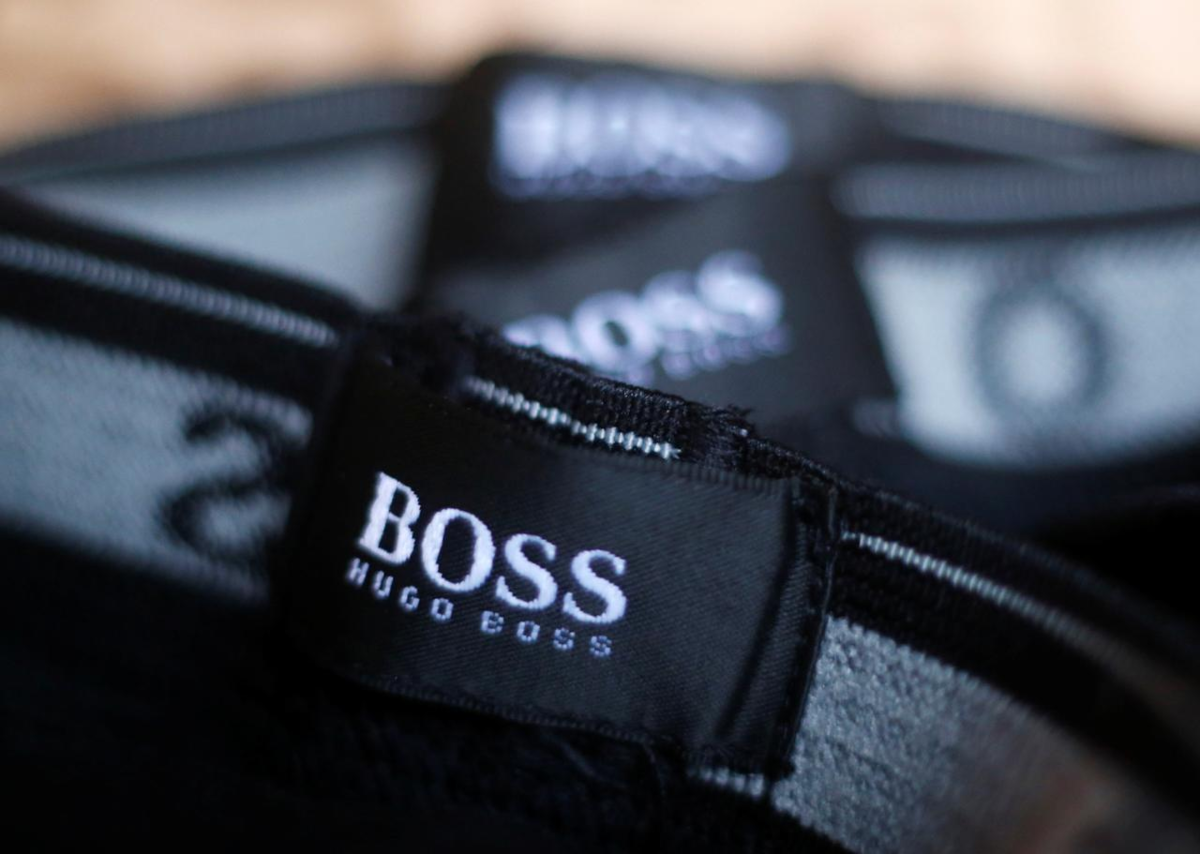


The logo of German fashion house Hugo Boss is seen on a clothing label at their outlet store in Mezingen near Stuttgart, Germany, on October 29, 2013. (REUTERS)

“We have received the order for supply of sport shirts for their [German] football team,” Ijaz Ahmed Bhatti, the chief executive of Sialkot-based Rajco Industries, told Arab News, saying he was confident Rajco could deliver the shipment by August. He did not share details of the production value or volume of the order. 
Bhatti, whose company already produces sports garments for Fila, Kariban, Kappa, UHL Sports and other international brands, said he was hopeful this was the beginning of a lasting relationship with Hugo Boss, one of the official sponsors of the German football team.

The deal with Hugo Boss is the result of efforts by the Pakistan Readymade Garments Manufacturers and Exporters Association (PRGMEA), commerce minister Dawood has said. The association hosted the International Apparel Federation’s (IAF) 35th World Fashion Convention in Lahore last year, in collaboration with Dutch industry association Modint. Hugo Boss officials attended the event as chief guests. 
“During physical interaction with the Pakistani [sportswear manufacturing] players, they [Hugo Boss] came to know that the knowledge base of our industry is sound,” PRGMEA chief coordinator Ijaz Khokhar, who is also the regional president of IAF, told Arab News. 
Speaking about Pakistan’s attraction for the German fashion house, Khokhar said Hugo Boss, like other European groups, wanted to reduce its reliance on China, particularly because of the coronavirus pandemic, which had started in China’s Wuhan city. 
“They are moving out of China apparently for two reason. The first is COVID-19 and they want to ensure alternate sources of supplies,” Khokhar said. “The second is that China is becoming expensive and our [Pakistani] labor is relatively cheaper.”
Pakistan’s total exports declined by 6.83% in fiscal year 2019-20, according to commerce ministry figures. 

Pakistan to sell excess gas in international markets from Jan.1— petroleum minister

Updated 4 sec ago
Follow

Pakistan to sell excess gas in international markets from Jan.1— petroleum minister

  • Pakistan was reportedly exploring ways to reduce $378 million in annual losses from supply glut caused by excess fuel imports 
  • Move to sell excess LNG in international markets will limit $3.56 billion losses caused since 2018-19, says petroleum minister

ISLAMABAD: Pakistan will sell its excess liquefied natural gas (LNG) in international markets from Jan. 1, Petroleum Minister Ali Pervaiz Malik said, revealing the move would limit losses caused from a years-long supply gut. 

Local and international media outlets had reported in July that Pakistan was exploring ways to sell excess LNG cargoes amid a gas supply glut that government officials said was costing domestic producers $378 million in annual losses. News reports had said Pakistan had at least three LNG cargoes in excess that it imported from Qatar and has no immediate use for.

Speaking to reporters during a press conference on Sunday, Malik said there was an excess of imported gas in Pakistan as the use of this fuel for power generation had reduced in the country during the past few months. He said Islamabad had been forced to sell the gas to local consumers, due to which the circular debt in the gas sector from 2018 till now had ballooned to around Rs1,000 billion [$3.56 billion]. 

“From Jan. 1 we will sell this excess fuel in international markets to reduce our burden and limit our losses of this Rs1,000 billion [$3.56 billion],” Malik said. 

He said this move would also allow Pakistan’s state-owned enterprises in the sector to operate on their full capacity and generate profits and employment. 

Malik also spoke of foreign oil companies that were ready to invest millions in the country in the near future. 

The minister cited the recent visit of Turkish energy minister to Pakistan which had resulted in the state-owned Turkish Petroleum signing deals to carry out onshore and offshore drilling activities in Pakistan. 

“Turkish Petroleum will also open its office in Islamabad, where 10 to 15 Turkish nationals will be working,” Malik said. 

He also said that a delegation of the State Oil Company of Azerbaijan Republic (SOCAR) visit Pakistan this week, adding that it was also expected to collaborate with local companies for oil and gas exploration.

The minister said SOCAR was also opening its office in Pakistan. 

“It will also invest millions of dollars in the construction of an oil pipeline from Machike to Thalian in collaboration with the PSO (Pakistan State Oil) and FWO (Frontier Works Organization),” Malik said.