ANKARA: Foreign capital is flooding out of Turkey in a massive vote of no confidence in President Recep Tayyip Erdogan’s economic competence.
Overseas investors have withdrawn nearly $8 billion from Turkish stocks since January, according to Central Bank statistics, reducing foreign investment in the Istanbul stock exchange from $32.3 billion to $24.4 billion.
As recently as 2013, the figure was $82 billion, and foreign investors now own less than 50 percent of stocks for the first time in 16 years.
“Foreign investment has left Turkey for several reasons, both internal and external,” Win Thin, global head of currency strategy at Brown Brothers Harriman, told Arab News.
“Externally, investors fled riskier assets like emerging markets during the height of the coronavirus pandemic. Some of those flows are returning, but investors are being much more discerning and Turkey does not seem so attractive.”
In terms of internal factors, Thin said that Turkish policymakers had made it hard for foreign investors to transact in Turkey. “This includes real money clients, not just speculative.
“By implementing ad hoc measures to try and limit speculative activity, Turkey has made it hard for real money as well. Besides these problems, Turkey’s fundamentals remain poor compared to much of the emerging markets.”
Erdogan allies claim international players are manipulating the Istanbul stock exchange through automated trading, and have demanded action to make it difficult for them to trade in Turkish assets.
Goldman Sachs, JPMorgan, Merrill Lynch, Barclays and Credit Suisse were banned this month from short-selling stocks for up to three months, and this year local lenders were briefly banned by the banking regulator from trading in Turkish lira with Citigroup, BNP Paribas and UBS
JPMorgan was investigated by Turkish authorities last year after the bank published a report that advised its clients to short sell the Turkish lira.
MSCI, the provider of research-based indexes and analytics, warned last month that it may relegate Turkey from emerging market status to frontier-market status because of bans on short selling and stock lending.
With the market becoming less transparent, overseas fund managers, especially with short-term portfolios, are unenthusiastic about the Turkish market and are becoming more concerned about any forthcoming introduction of other liquidity restrictions.
The exodus of foreign capital is likely to undermine Turkey’s drive for economic growth, especially during the coronavirus pandemic when employment and investment levels have gone down, with the Turkish lira facing serious volatility.

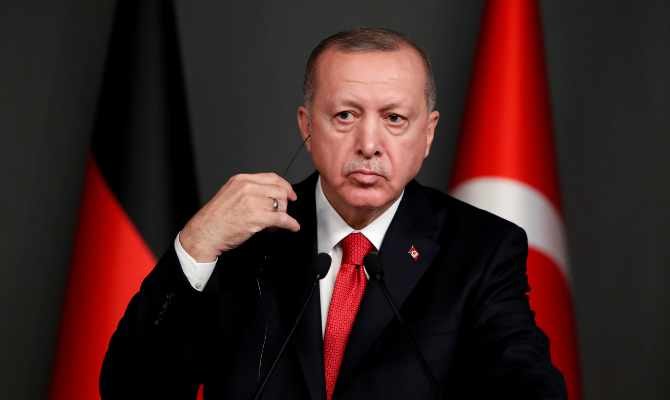
$8bn blow to Erdogan as investors flee Turkey
https://arab.news/5e74k
$8bn blow to Erdogan as investors flee Turkey
- Overseas holdings in Istanbul stock exchange are at lowest in 16 years
Saudi National Development Fund sees 45 agreements worth $1.6bn at Momentum 2025
RIYADH: Saudi Arabia’s National Development Fund and its affiliates signed 45 agreements with a total value of SR6 billion ($1.59 billion), with several local and international partners at the conclusion of the Momentum 2025 development finance conference.
The event, held from Dec. 9 to 11 at the King Abdulaziz International Conference Center in Riyadh, was organized by the NDF under the patronage of Prince Mohammed bin Salman bin Abdulaziz Al Saud, crown prince, prime minister, and chairman of the NDF board of directors.
The new agreements seek to accelerate the pace of investment, empower the private sector, and unlock new opportunities in priority sectors including small and medium sized enterprises, tourism, and sustainable development.
On the institutional level, the fund signed two strategic agreements with two leading global partners in technology and professional services, aiming to enable artificial intelligence, data, and digital solutions within the development finance ecosystem.
The two memorandum of understandings aim to enhance the institutional capabilities of the fund, encourage innovation in products and services, and improve the efficiency and overall impact of development financing in the Kingdom.
The NDF signed a memorandum of understanding through the National Infrastructure Fund aimed at unifying the efforts of the development system to support small enterprises by cooperating on designing a developmental financing model for SMEs.
The Saudi SME Bank signed 19 cooperation agreements and MoUs with a value exceeding SR3 billion, to support the developmental finance system and enhance integration between public and private sector entities.
The Tourism Development Fund concluded 6 agreements with entities from both the government and private sectors, strengthening its partnerships with an impact exceeding SR4 billion. These aim to enhance financing solutions through the “Tourism Enablement Programs” offered by the fund to micro, small, and medium enterprises.
The Cultural Development Fund signed five credit facility agreements within the framework of the “Cultural Financing” program, with a total value exceeding SR63 million, to finance numerous cultural projects.
As part of its efforts to support human capital development, the Human Resources Development Fund concluded 3 agreements aimed at supporting and enabling 2,191 male and female job seekers in multiple sectors, with a value exceeding SR324 million.
The Saudi Industrial Development Fund signed a cooperation agreement with the Saudi Railways Co. to identify cooperation opportunities in enabling the industrial sector, including the railway sector, and supporting investors in localizing goods and services to increase local content.
The Saudi Fund for Development signed five developmental memoranda of understanding with Imam Mohammad Ibn Saud Islamic University, the Islamic Military Counter Terrorism Coalition, and the Middle East Green Initiative, as well as the Saudi Agricultural and Livestock Investment Co., and the Arab Urban Development Institute.
The Investment Events Fund signed a partnership agreement with entertainment firm Legends Global to enhance the events sector by leveraging international expertise in organizing major global events.
The agreements and MoUs signed during the Momentum 2025 conference represent a significant step in the Kingdom’s efforts to build a diverse, inclusive, and sustainable economy.
These partnerships contribute to bridging financing gaps, mitigating risks for strategic projects, and achieving long-term value for Saudi citizens, companies, and communities. Furthermore, they advance global sustainable development goals by aligning public and private capital with national priorities in infrastructure, SMEs, and green growth.
Dialogue sessions embody development transformation message
The conference agenda included over 35 sessions addressing sustainable investment, climate adaptation, and the role of development finance institutions in expanding economic opportunities. It also featured an exhibition with participation from more than 20 public and private sector entities.
Over 100 speakers from more than 100 countries participated to discuss ways to develop financing for development efforts, tackle emerging global challenges, and accelerate national and international priorities.
The conference concluded with a session titled “The Role of Development Finance Institutions: Enabling Development by Enhancing Financial Capabilities,” which brought together the Governor of the NDF, Stephen Groff, and the CEOs of various development funds and banks.
The session discussions focused on enhancing joint coordination, improving investment readiness, and expanding developmental impact across multiple sectors including tourism, infrastructure, and SMEs.
During the roundtable discussion, participants reviewed the pivotal role led by the Fund and its development ecosystem across various sectors and their role in supporting the economic transformation of the Kingdom.
Groff explained that the strength of this ecosystem lies in the diversity of the funds and the integration of their mandates, adding that achieving the targets of Saudi Vision 2030 requires flexibility in resource allocation and the ability to adapt to national development priorities.
In support of expanding the presence of international companies in the Kingdom and enhancing the competitiveness of the financial sector, the Minister of Investment, Khalid Al-Falih, presented the regional headquarters license to HSBC Bank on the sidelines of the conference, a step that reflects growing confidence in and the attractiveness of the Saudi market to global financial institutions.
To enrich the development sector, the Digital Cooperation Organization launched, on the sidelines of the conference, the Digital Economy Trends 2026 report. The report predicted that the global digital economy will grow by 9.5 percent next year, three times faster than global economic growth.