

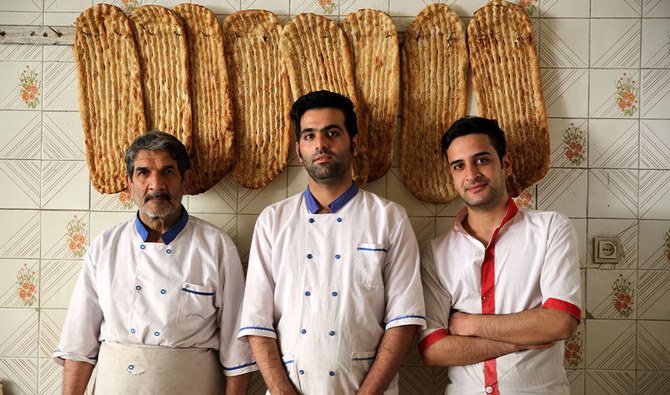

TEHRAN: They bake what Iranians call “the barakat (blessing) of the table,” and it is eaten for breakfast, lunch and dinner — traditional breads are a staple of the Iranian diet.
Bakeries are easy to locate in urban centers of Iran where all one has to do is spot a queue spilling onto sidewalks or simply detect the irresistible scent of freshly baked flatbreads.
Exclusively the job of men in the Islamic republic, bakers get up well before the crack of dawn while everyone else is still asleep.
Dressed in all-white clothing that can include caps, they hail from across the country and are usually made up of ethnic Azeris, Kurds and Lurs.
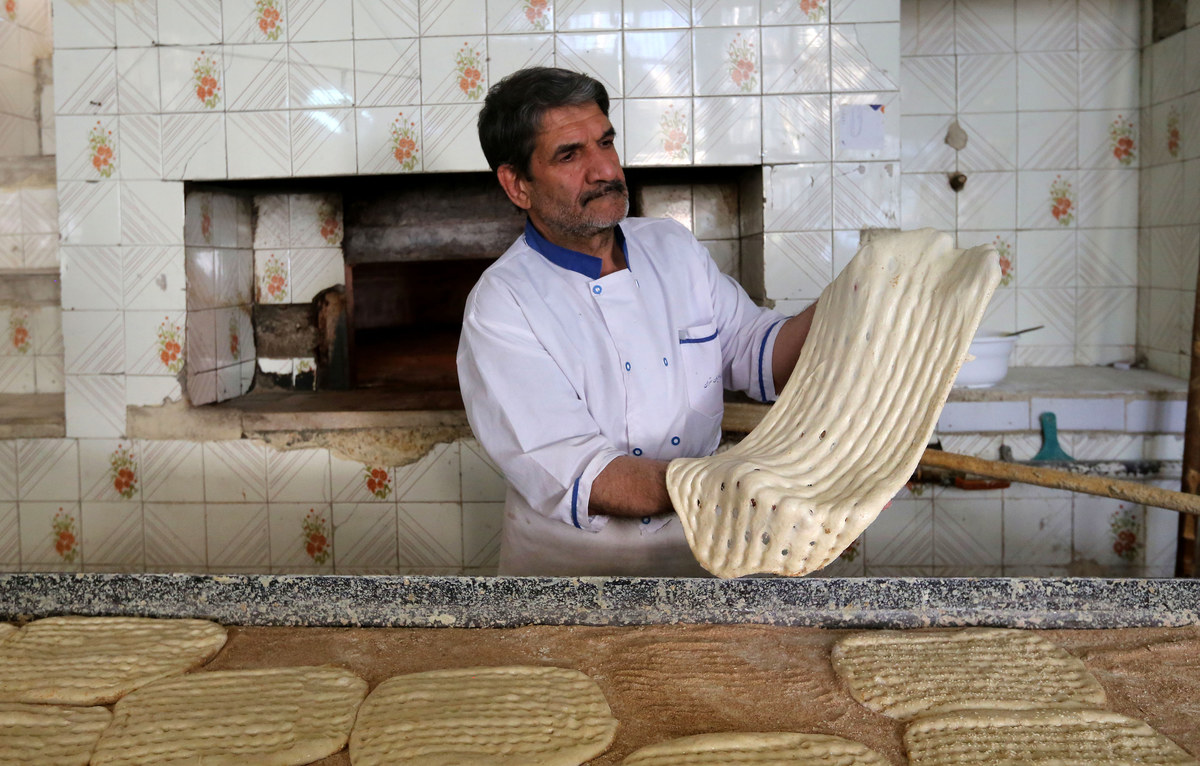
Iranian baker Esmail Asghari, 66, makes Barbari bread in Tehran on June 7, 2020. (AFP)
The baker moves and gesticulates constantly as he works in what resembles a dance in front of gas-fired ovens.
He takes a ball of dough and spreads it on a board before placing it on the inside walls of the glowing furnace using a long set of tongs.
Once they are done, the baker again uses the tongs to retrieve the bread, and hangs it on the wall or piles it up.
The walls around them are a patchwork of flatbreads in four different shapes and sizes — barbari, lavash, sangak and taftoon.
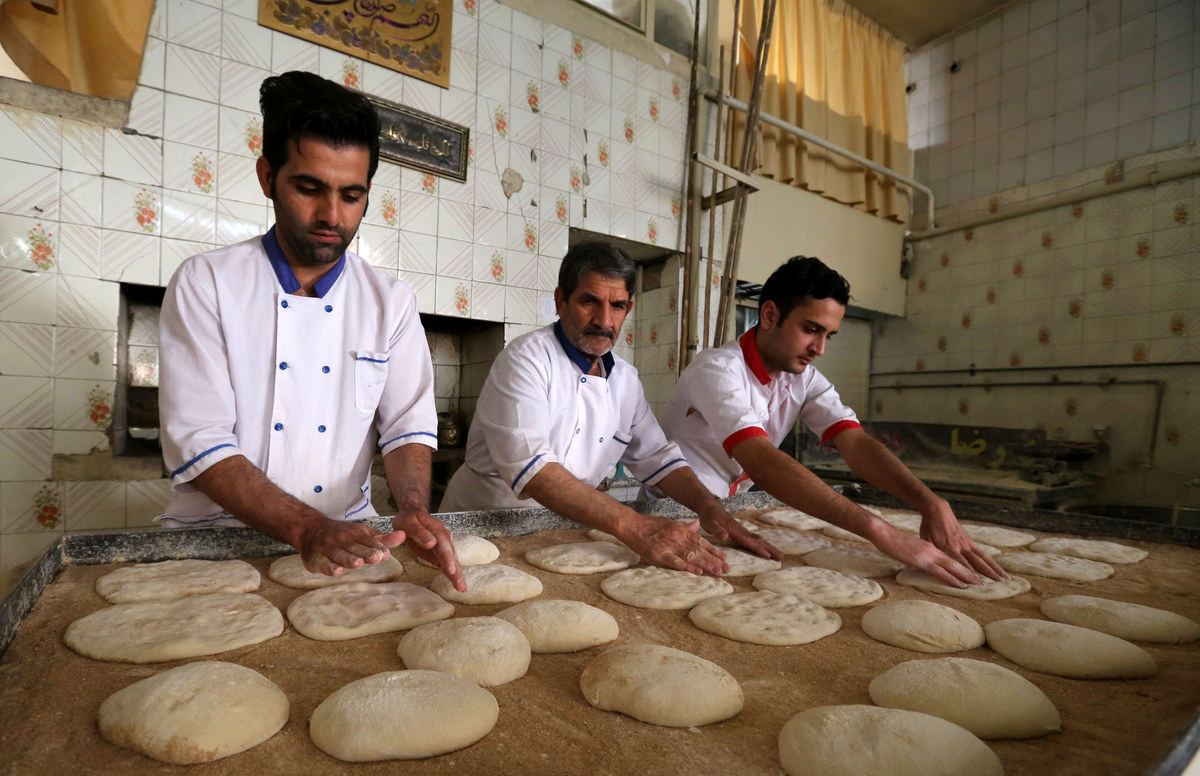
Iranian bakers Amir Jafari (L), 58, and Mohammad Mirzakhani, 41, make Taftoon bread in Tehran on June 13, 2020. (AFP)
But they do not stay there for long, as customers jostling near the entrance are eager to snap them up while they are still hot.
A freshly baked Iranian flatbread usually accompanies a piece of feta cheese and sweet tea for breakfast or a plate of kebab for lunch.
Of the four main traditional types, sangak is the most popular and is seen as Iran’s national bread.
It is made from wholewheat flour and topped with a sprinkling of sesame seeds and sometimes poppy seeds at the customer’s request.
The coronavirus has also affected the bakers’ profession like so many others, and their income has decreased as a result.
“At the beginning of the pandemic, some of our customers who had been quarantined bought ingredients from us to bake bread at home,” said baker Esmail Asghari.
SPEEDREAD
Dressed in all-white clothing that can include caps, the bakers hail from across the country and are usually made up of ethnic Azeris, Kurds and Lurs.
But making traditional bread at home is difficult, meaning customers were quick to return to their local bakery.
“During isolation, I made bread twice at home, but it didn’t go well and I realized it wasn’t a good idea!” said Negar Rezai, a customer clutching some sangak outside a bakery in north Tehran.
“We have bread for breakfast and dinner and often eat rice for lunch,” adds the 50-year-old housewife.
In order to ensure hygiene, one baker has enforced the strict sanitary instructions imposed by the Health Ministry, including social distancing and use of bank cards instead of cash.
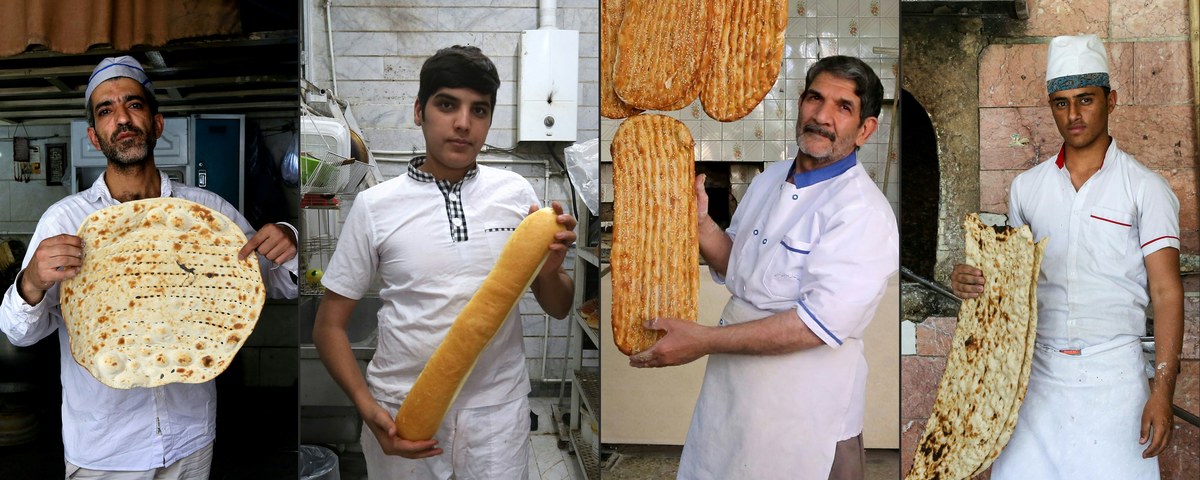
(COMBO) This combination of pictures created on June 24, 2020 shows Iranian bakers in the capital Tehran (L to R) Mohammad Mirzakhani, posing with Taftoon bread; Hasan, posing with Fantezi bread; Esmail Asghari, posing with Barbari bread; and Ali posing with Sangak bread.
(AFP)
“We had a lot of difficulty during the fasting month of Ramadan,” said Mohammad Mirzakhani, a 41-year-old taftoon maker.
“The line became long and many people did not respect (health) protocols.”
The Health Ministry reported in January that on average Iranians consume 310 grams (nearly 11 ounces) of bread per day.
“Bread is the staple and the main food of our people,” it said.
If eating bread is a choice for some, it remains an obligation for others who can’t afford rice, another staple food in Iran.
“Rice has recently become so expensive that we can no longer eat it regularly,” said Mirzakhani. “We now eat most of our food with bread.”


