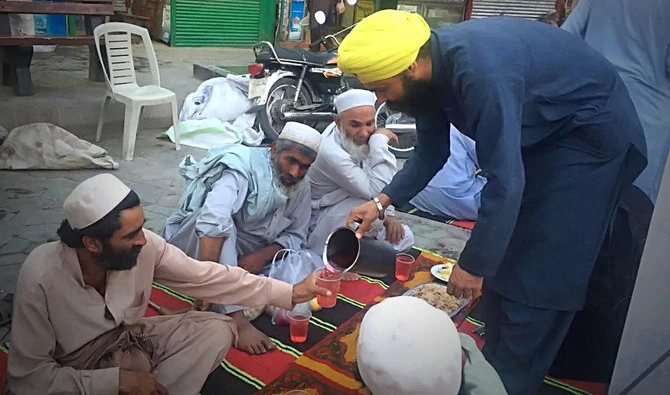
- Even prior to pandemic, Peshawar’s Sikh community helped arrange collective Iftar dinners for Muslims during Ramadan
- Say food packs handed out without discriminating on basis of caste or religion
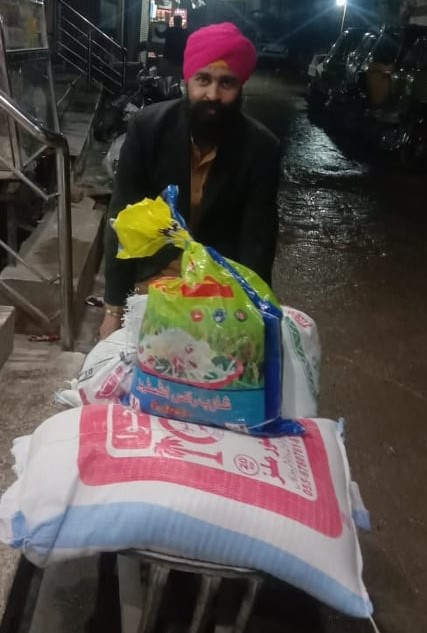
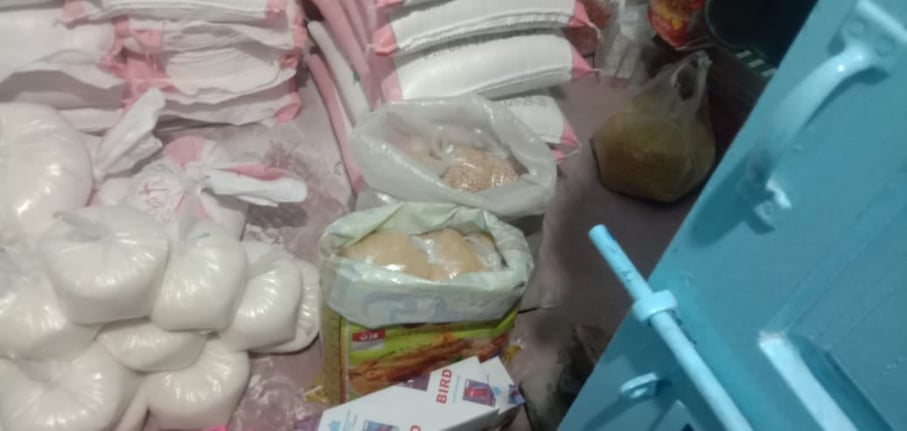
PESHAWAR: Away from the media’s glare, members of the Sikh community in Pakistan’s northwestern Khyber Pakhtunkhwa (KP) province have for months been distributing ration bags among hundreds of poverty stricken families affected by the country’s coronavirus outbreak.
For centuries, KP has been home to thousands of Sikh families and about 7,500 people belonging to the faith live in Mohalla Jogan Shah, a congested neighborhood in the heart of Peshawar city.
“We try not to publicize this since we only seek our reward from God and want to protect the identity and dignity of all beneficiaries,” Dr. Jatinder Singh, a Sikh pharmacist from Peshawar, told Arab News on Thursday.
Singh said many affluent business owners from the Sikh community were generously donating to the cause of ration distribution among 400 families, making it possible for the community to give out food packs in and around the city.
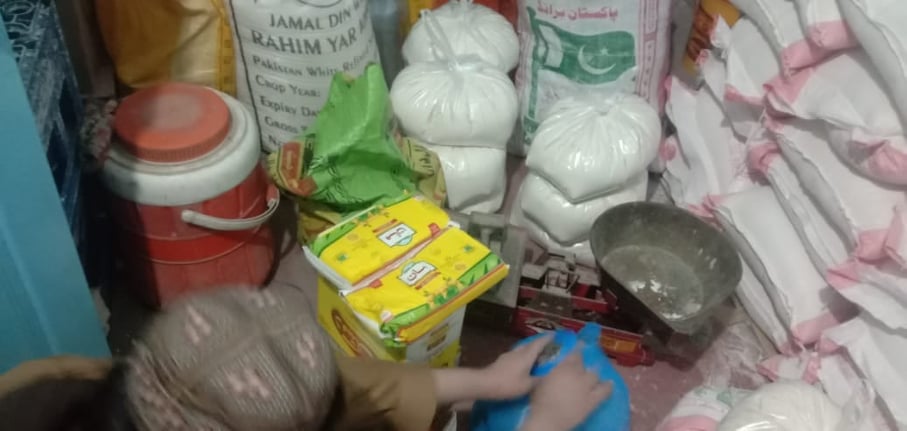
“This is a community-driven welfare service which is a great source of satisfaction for us,” he continued.
Pakistan’s Prime Minister Imran Khan recently announced the country’s largest emergency cash program, Ehsaas, worth Rs144 billion and said his government would distribute Rs12,000 among families most vulnerable to the pandemic’s economic impact.
Taimur Kamal, who works as a coordinator with the Pakhtunkhwa Civil Society Network, said the contagion had aggravated Pakistan’s already existing financial challenges.
In this context, he added, the initiative taken by the Sikh community was highly impressive since it not only supported financially vulnerable families but also served the cause of interfaith harmony in the country.
“This is despite the fact that it is the responsibility of the state to provide food, shelter, clothing, education and health facilities to its citizens,” he said.
Even prior to the emergence of COVID-19, Singh and his community helped to arrange collective Iftar dinners for Muslims during Ramadan. This year, amid the pandemic, they had to reimagine the annual charitable activity to serve people a little differently.
Now, Muslim philanthropists have also started participating in the Sikh community’s ration initiative.
“We distribute ration packs among deserving families regardless of their caste and creed,” Singh said. “Our hope is that this endeavor will somewhat mitigate the negative economic impact on people’s lives caused by the pandemic.”
“We have been living here for years and can easily identify deserving families,” said Balbir Singh, general secretary of Gurdwara Bhai Joga Singh in Peshawar.
“Each ration pack is worth Rs15,000 and contains sugar, tea, ghee, flour, soap and rice etc.”
“The beneficiaries of our program include Muslims, Christians, Sikhs and Hindus who are financially suffering due to the COVID-19 pandemic,” he continued.
Singh said his community members either dropped a ration pack to the doorsteps of families or made phone calls to needy individuals and asked them to receive food items from a collection point.
Marjan Ali, an activist with experience in aid distribution, applauded the initiative and said the provincial government should rise up to the challenge.
“It is true that some families have received cash assistance from the government-funded Ehsaas Program, yet many people around us have lost their jobs and businesses,” he said.
“We should be thankful to our philanthropists, humanitarian organizations and such informal social action forums for helping people during these troubling times.”