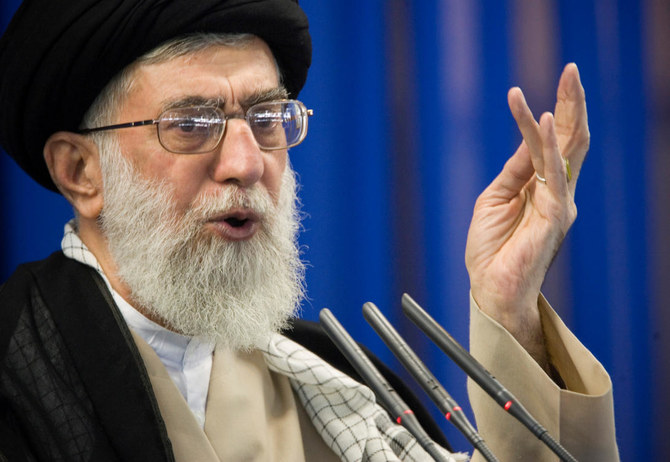
TEHRAN: Iran’s supreme leader warned on Saturday that the country’s economic problems would worsen if the coronavirus spreads unchecked, saying the initial momentum to contain it had since “waned.”
The Islamic republic has struggled to curb the COVID-19 outbreak since it reported its first cases in the Shiite holy city of Qom in February.
It shut down non-essential businesses, closed schools and canceled public events in March, but the government gradually lifted restrictions from April to try to reopen the country’s sanctions-hit economy.
“It is correct to say that something must be done to prevent economic problems caused by the coronavirus,” said Iran’s supreme leader Ayatollah Ali Khamenei.
“But in the case of negligence and significant spread of the disease, economic problems will increase, too,” he said in a meeting with judiciary officials, according to his official website.
The Iranian rial has plunged to new lows against the US dollar in recent days due to the temporary economy shutdown, border closures and halt in non-oil exports, according to analysts.
Iran’s economic problems have worsened since 2018, when President Donald Trump withdrew the US from a landmark nuclear agreement and reimposed sanctions on the Islamic republic, targeting vital oil sales and banking ties.
Iran’s health ministry spokeswoman said there had been 2,456 new cases of COVID-19 infection in the past 24 hours, raising the country’s caseload to 220,180.
Sima Sadat Lari added in televised remarks that 125 of those infected had died during the same period, with overall fatalities reaching 10,364.
“The sacrifice of health workers, efforts by volunteer groups and overall cooperation by the people made Iran one of the world’s successful countries” in controlling the outbreak, Khamenei said.
“But that was early in the (outbreak), and now unfortunately that momentum and effort has waned among some of the people and authorities,” he added.
Official figures have shown a rising trajectory in new confirmed cases since early May, when Iran hit a near two-month low in daily recorded infections.
Iran has refrained from imposing a mandatory lockdown on people to stop the virus’ spread, but has called for mask-wearing to be made compulsory.


![]()

Iran’s supreme leader warns economy will worsen if coronavirus spreads
Short Url
https://arab.news/jgqvs
Iran’s supreme leader warns economy will worsen if coronavirus spreads
- Iran has struggled to curb the COVID-19 outbreak since it reported its first in February
- Country’s total coronavirus caseload is now at 220,180


Latest updates


© 2026 SAUDI RESEARCH & PUBLISHING COMPANY, All Rights Reserved And subject to Terms of Use Agreement.