LONDON: Six years ago, Dr. Mohamad Kajouj was working in a war zone, treating the horrific injuries of Syrian civilians. Today he finds himself on another front line — helping UK hospitals in the struggle to save COVID-19 victims.
Kajouj’s journey, in which he fled his war-ravaged home country, and reached Greece on a rubber raft is nothing short of incredible. But it didn’t end when he arrived in Europe.
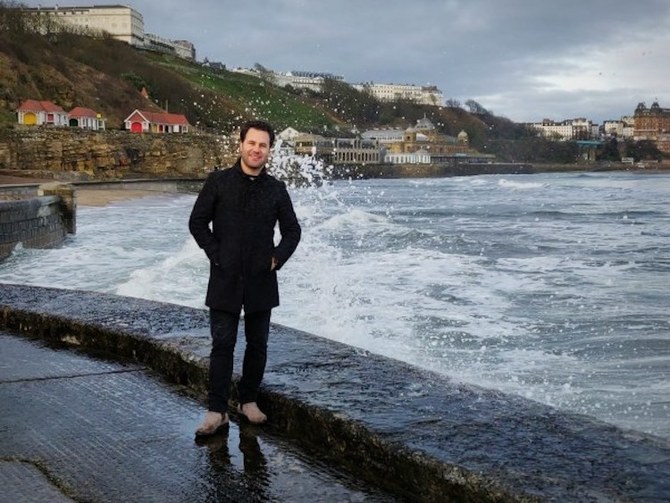
Granted asylum in Britain despite not speaking English, the young doctor set about rebuilding his medical career.
He is one of a number of refugees working in British hospitals during the coronavirus pandemic. After the traumas that he witnessed, he can go about his work with a cool head and steady hand.
Originally from the city of Hama, he was in his fifth year as a medical student in Aleppo when the war in Syria started in 2011.
As the fighting intensified in 2012, Aleppo, once Syria’s main commercial hub, became divided between rebel and regime control. Kajouj, who was working as a junior resident in private hospitals in the government-held areas, was shocked at the suffering of civilians on the rebel side at the hands of President Bashar Assad’s forces, and took a decision that would change his life.
“All doctors in the rebel-held areas ran away and a lot of people were getting injured, so I decided I’m going to stand with those people and help them as much as I can,” he said.
“The Syrian government wasn’t happy for doctors to work for the other side and they were questioning, investigating and arresting them.”
By 2014, the situation in the city deteriorated rapidly. Rebel-held Aleppo was under heavy shelling with whole neighborhoods being destroyed, and the hospital where Kajouj worked was flooded with casualties.
Kajouj fled Syria in 2014 for Turkey, where he worked for Médecins Sans Frontières (Doctors Without Borders) along the Syrian/Turkish border, before taking the dangerous journey to Greece in a five meter-long rubber dinghy packed with more than 40 people.
“Some people had panic attacks, shouting and screaming, so reassurance was helpful, but it was a very stressful situation, very dangerous. Every time there were any high waves in the sea, everyone would get very panicked and stressed,” he said.
Kajouj was able to help some of the refugees on board, but he was also concerned that if the boat were to sink, he would lose his only valued possessions — his documents.
Kajouj studied medicine in Arabic, and also in German, although when he was granted asylum in the UK in 2015 he did not speak English. With the help of Refugee and Asylum Seekers Center for Healthcare Professionals Education (REACHE) North West, Kajouj was able to enter a program to prepare for his exams and, subsequently, job interviews.
He passed the International English Language Testing System (IELTS) exam and qualified with distinction for his medical degree in English in less than a year — something that would normally take more than two years to accomplish.
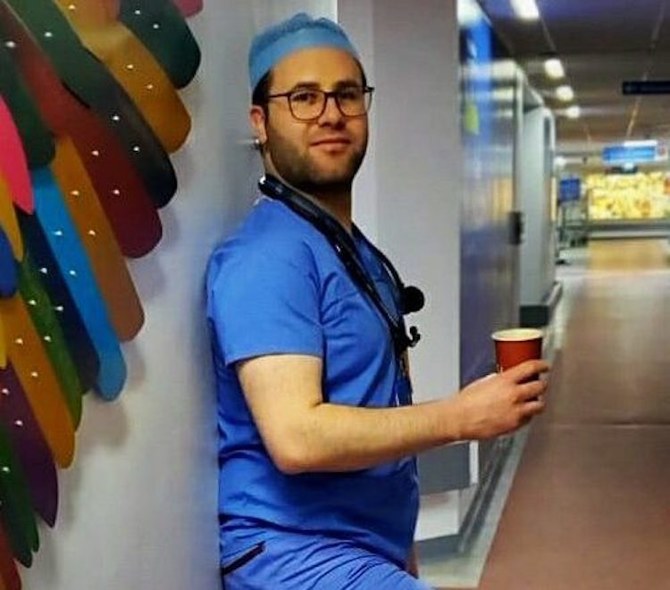
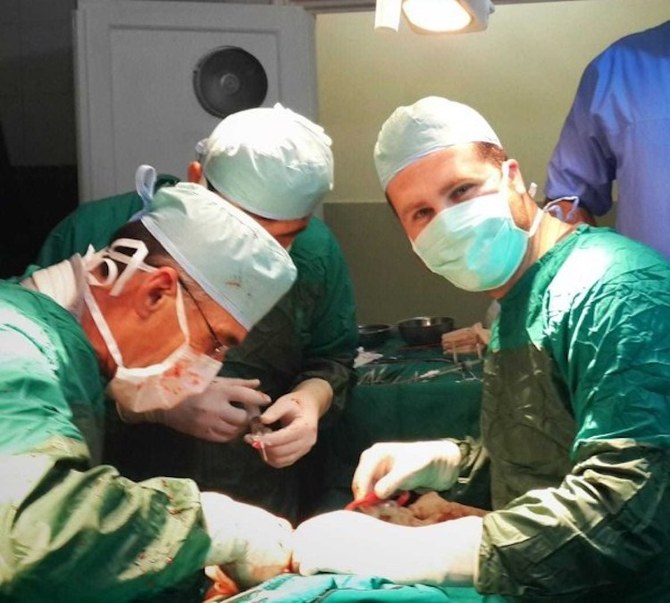
Kajouj has been working at York Teaching Hospital NHS Foundation Trust, in the north of England, as an Ear Nose and Throat (ENT) specialist and resident surgeon since March 2019.
When the COVID-19 outbreak escalated and his regular appointments were put on hold, Kajouj volunteered to work in the accident and emergency department.
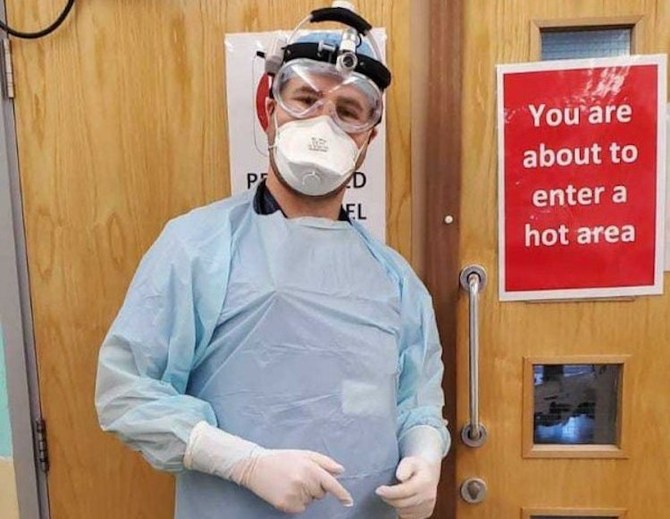
His specialism now places him at the forefront of the coronavirus pandemic, something for which he is well prepared after working in a war zone.
“When I compare Syria to the UK, I can tell the huge difference between the two health care systems,” the 30-year-old ENT specialist told Arab News. “I worked in Syria during the war and there was no means of personal protective equipment (PPE); there was a huge lack of medications.”
However, the UK’s National Health Service has been stretched by the crisis, with nurses and doctors losing their lives to the disease and hospitals suffering a lack of PPE.
The UK is a “great country … considered one of the best countries around the world, in terms of quality of life, and the quality of care,” Kajouj said. “It was surprising to me by not being able to provide PPE in the right time for all the medical staff.”
“ENT is a risky specialty because you get the maximum exposure of droplets, saliva and patient secretions, so we stopped examining patients throats and we moved to treating, depending on symptoms, rather than examinations, because of the lack of PPE,” Kajouj said.
Kajouj described the UK’s response to the pandemic as “delayed” and said that action should have been taken a week or two earlier.
Kajouj is now in a better situation than he could possibly have imagined when he was witnessing the horrors of the Syria conflict.
His family back in Aleppo are happy he is safe, and he is grateful for the support he received from the medical community. While he misses his home country, he plans to continue working in the UK.
“I feel like I have a lot of duties to this country, because of the way I was treated here, it’s much better than the way I was treated in my country as a doctor.”
“Anyone would like to go back to their home, regardless of the situation,” he said. “It is not safe at the moment, but that doesn’t mean I don’t want to go back to Syria anymore. I would love to see Syria as a safe country one day, sooner rather than later, and by the time it becomes a safe country, it’s a big decision that I need to take.”


![]()
![]()
![]()
![]()

From the horror of Aleppo to the UK’s COVID-19 front line — a Syrian doctor’s journey
Short Url
https://arab.news/n24y8
From the horror of Aleppo to the UK’s COVID-19 front line — a Syrian doctor’s journey
- A refugee who experienced the horrors of Aleppo is now fighting on the UK’s COVID-19 frontline
- Granted asylum in Britain despite not speaking English, the young doctor set about rebuilding his medical career

Latest updates


© 2026 SAUDI RESEARCH & PUBLISHING COMPANY, All Rights Reserved And subject to Terms of Use Agreement.