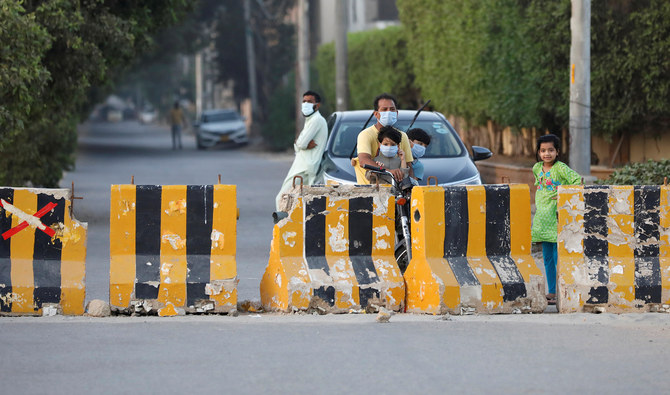
KARACHI: Authorities in Pakistan’s commercial capital, Karachi, enforced strict lockdowns in different neighborhoods that were designated by them as COVID-19 hotspots to reduce the spread of virus and decrease the alarming rate of infection in the city, a senior official confirmed while talking to Arab News on Thursday
“We enforced smart lockdowns in all the notified areas from 7 pm today,” Commissioner Karachi Iftikhar Shalwani informed. “The restrictions have been placed for two weeks and will hopefully slow down the virus spread.”
Explaining the administrative approach further, he said: “These areas were selected on the basis of numerical data. We identified them due to the high number of coronavirus cases and may add more residential neighborhoods to our list if infections increase in other parts of the city.”
The commissioner maintained that if COVID-19 carriers were currently spreading the virus to ten people, smart lockdowns would reduce it to four -- thereby significantly bringing down the rate of infection.
According to an official notification about the imposition of smart lockdowns in the city, the movement of people residing in the coronavirus hotspots will be strictly restricted, and anyone entering or exiting these areas will be required to wear a mask without exception.
The notification also maintains that all industrial units in locked down areas will remain close.
The authorities have only allowed grocery stores and pharmacies to operate in these neighborhoods, and only one person from each household will be able to visit the shops.
Apart from that, residents of these areas will not be allowed to order food from restaurants since home delivery will not be an option for them during the lockdown period.
Pakistan reported more than 160,000 coronavirus cases on Thursday morning. According to an official handout circulated by the provincial administration of Sindh in the evening, the country’s most densely populated city of Karachi reported 1,719 new COVID-19 cases during the day with 44 related deaths.


![]()

'Smart lockdown' imposed in Karachi's COVID-19 hotspots to curb virus spread
Short Url
https://arab.news/ghpmk
'Smart lockdown' imposed in Karachi's COVID-19 hotspots to curb virus spread
- The coronavirus hotspots in the city were identified on the basis of numerical data, says the commissioner
- Karachi reported 1,719 new COVID-19 cases on Thursday evening with 44 related deaths
Latest updates


Recommended


© 2026 SAUDI RESEARCH & PUBLISHING COMPANY, All Rights Reserved And subject to Terms of Use Agreement.