


Dubai’s Al-Habtoor Group planning major investment in Hungary, other central European countries

InterContinental Budapest, above, overlooks the Danube river and landmarks such as Széchenyi Chain Bridge, the former Royal Palace and the Parliament Building. (Courtesy InterContinental Budapest)
Short Url
Updated 18 June 2020
Follow

Dubai’s Al-Habtoor Group planning major investment in Hungary, other central European countries

DUBAI: Al-Habtoor Group is planning a major investment move in Hungary and several other central European countries, a source close to the Dubai conglomerate has told Arab News.

The source, which has access to the group’s decision makers, speaking exclusively to Arab News said the company is currently assessing opportunities in the hospitality, leisure and even medical facilities in the Hungarian capital of Budapest.

EU-member Hungary has been touted as one of European countries with the best potential for foreign direct investments because of its pro-business, low-tax economic regime.

But the scouting will include other central European countries as well as the group assesses opportunities that have become available because of the recent coronavirus crisis, the source said.

The investment strategy should also strengthen the already existing portfolio of the Dubai hospitality group, founded by hotel mogul Khalaf Al-Habtoor, in the central European countries, the source added.
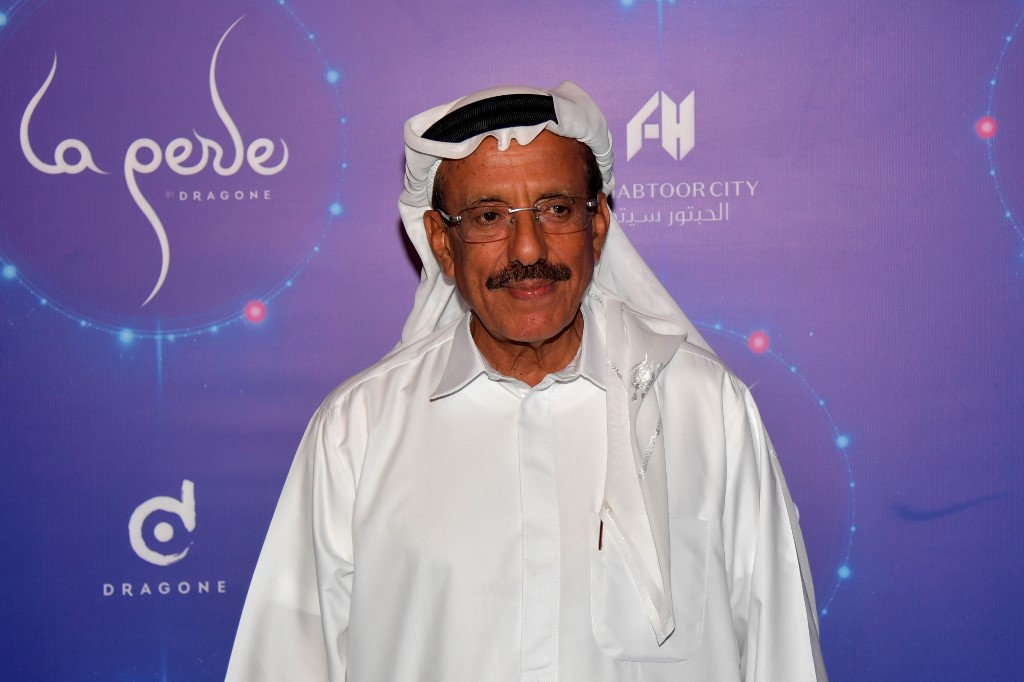


Khalaf Al-Habtoor, the founding chairman of Al-Habtoor Group, owns seven hotels in Dubai as well as car dealerships, residential properties and schools. (AFP)

The Dubai group has a growing list of hotel properties in Budapest including the iconic InterContinental Budapest, which offers a view of the Danube river and landmarks such as Széchenyi Chain Bridge, the former Royal Palace and the Parliament Building, as well as the historic Ritz-Carlton Budapest that it purchased in 2012 under the Le Méridien brand.

Among other European hotels under Al-Habtoor’s portfolio includes Hotel Imperial in Vienna, which it acquired from New York-listed Starwood Hotels and Resorts for $78.8 million, as well as the Hilton London Wembley. The company bought both properties in 2016.
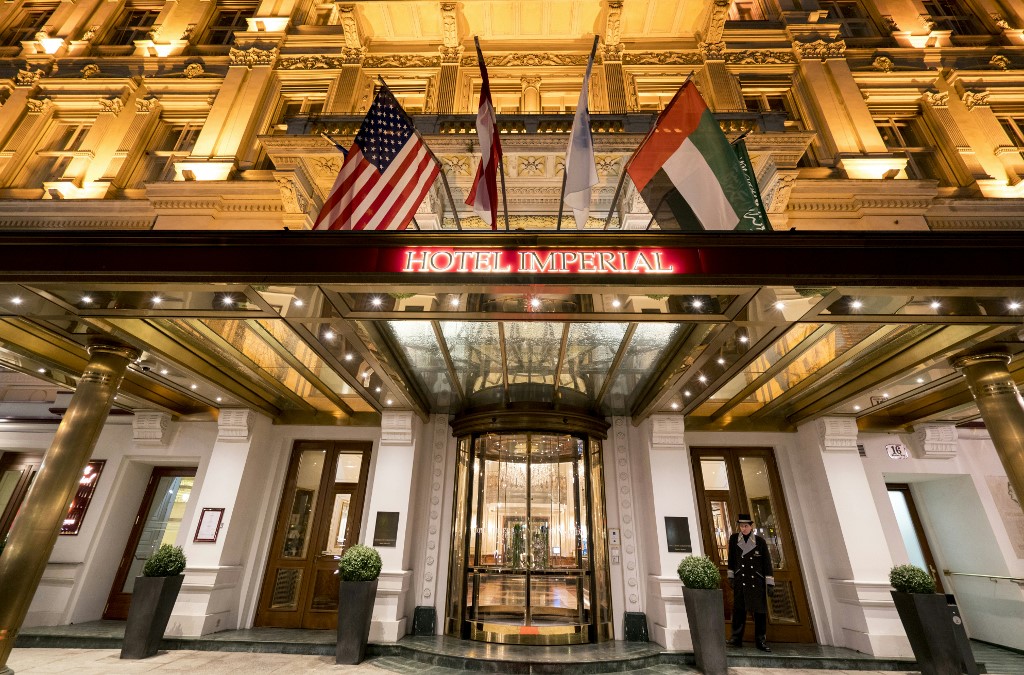


The 138-room Hotel Imperial in Vienna was originally built in 1863 as official residence of Prince Philipp of Württemberg. (AFP)

Hotel Imperial Vienna was originally built in 1863 as an official residence of Prince Philipp of Württemberg, before it transitioned into a hotel ahead of the World’s Fair in 1873. Hilton London Wembley overlooks the English national football stadium in Wembley Park.


Saudi-French cooperation to localize veterinary vaccine manufacturing

Updated 17 February 2026
Follow

Saudi-French cooperation to localize veterinary vaccine manufacturing

RIYADH: In the presence of sector leaders, the National Livestock and Fisheries Development Program signed a memorandum of understanding with French company Ceva under the patronage of Minister of Environment, Water and Agriculture Abdulrahman bin Abdulmohsen Al-Fadhli, who also chairs the program’s board.

The agreement aims to localize vaccine manufacturing, transfer technology and technical expertise, and expand the industrial and commercial production of veterinary vaccines across the Kingdom.

According to the MoU, the two parties will work to achieve high efficiency in mass production scale-up and establish a clear path for sustainable commercial operation that meets the needs of the local and national market, as well as strengthen the biosecurity and food security system.

The MoU also includes the development and modernization of messenger RNA vaccine technologies, along with joint research and development of a Middle East Respiratory Syndrome vaccine for camels. This involves designing, evaluating, and developing vaccines specifically tailored to combat the virus.

The agreement also covers the development of a rabies vaccine and related solutions, as well as supporting national efforts to control the disease through vaccine provision, capacity building, and the implementation of integrated prevention strategies.

The collaboration between the program and Ceva aims to meet the needs of the poultry vaccine market in the Kingdom, currently estimated at around SR750 million ($199 million).

The company will work to cover approximately 30 percent of this market with an initial investment of around SR250 million.

With continued government support for poultry projects and increased production in the sector, the market is expected to grow at a rate exceeding 10 percent annually, reaching approximately SR1.25 billion by 2030.

The addition of the world’s leading poultry vaccine manufacturer to Biotech Park highlights the program’s key role in developing new industries within the livestock and fisheries sector.

It also highlights the program’s commitment to building international partnerships with global companies, organizations, research centers, and universities to support advanced biotechnology industries and attract high-quality investments. It also seeks to create new economic sectors based on biotechnology, enhance veterinary health security, and support the sustainable economic development of the livestock sector, as well as empower national and emerging companies and provide advanced research and industrial infrastructure.

This will solidify the Kingdom’s position as a global hub for biotechnology industries and the development of national capabilities.

Ceva is the first international partner to join Biotech Park, the future veterinary biotechnology city launched by the program in Dhurma Governorate. The city is the world’s first specialized and fully integrated hub for veterinary biotechnology, serving as a benchmark for sector development and a platform supporting markets across the Kingdom, the Gulf, the Middle East, Africa and beyond.

The signing of Ceva is a significant step, given its position as the world’s leading manufacturer of poultry vaccines and medicines, and one of the most prominent international companies in the field of biotechnology.

The MoU aims to localize the veterinary vaccine industry, ensuring its compatibility with the strains of poultry diseases prevalent in Saudi Arabia. This includes the transfer of technology and technical expertise from Ceva, along with the implementation of specialized training programs to guarantee that manufacturing facilities comply with international Good Manufacturing Practice standards.